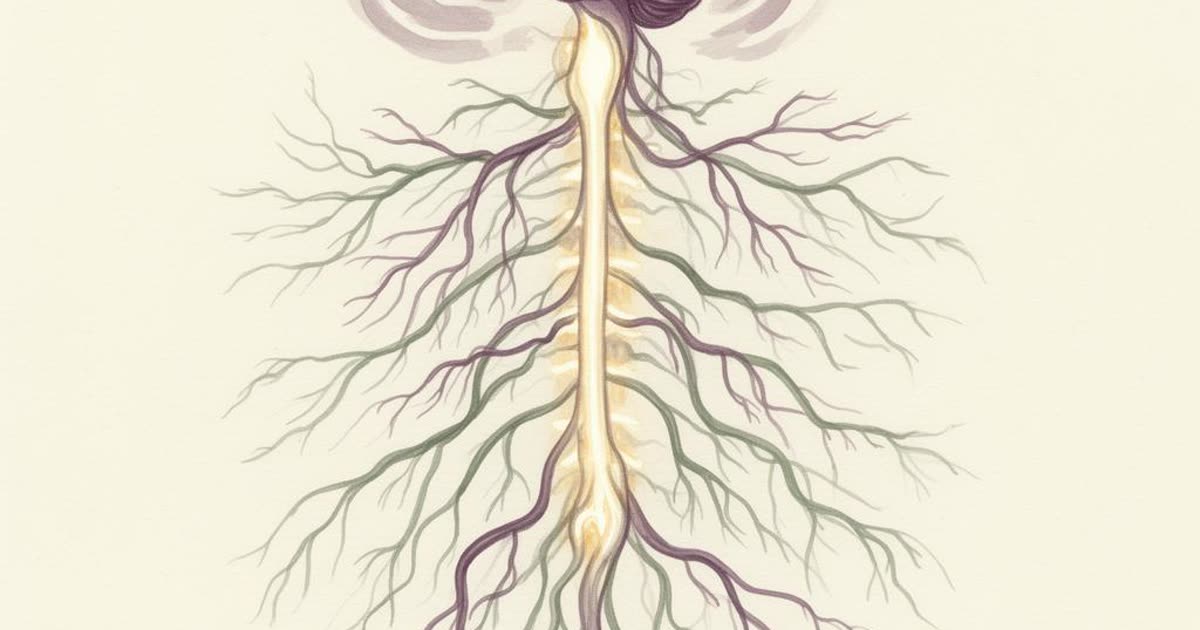
What a reset actually is
Why 'reset' is the wrong word — and the right one
Strictly, you cannot reset a nerve. The vagus is a physical cable running from your brainstem to your gut; it doesn't reboot. What you can do is rapidly shift the balance of autonomic tone from sympathetic dominance (mobilised, guarded, scanning) into ventral parasympathetic dominance (settled, socially available, digesting). That shift is what people are chasing when they Google "reset."
The shift is real, measurable, and trainable. Heart rate variability (RMSSD) rises within minutes of a well-run protocol. Respiratory sinus arrhythmia deepens. Digestion resumes. Facial affect softens. You feel it as: shoulders drop, the exhale gets long without you doing anything, the room stops looking like a threat surface.
Move 1 · Two minutes
Extended-exhale breathing (4-in, 8-out)
Inhale for four seconds through the nose. Exhale for eight seconds through slightly pursed lips. Repeat for two minutes. That is the entire instruction.
The mechanism is not mystical. Every exhale increases vagal outflow to the sinoatrial node, slowing the heart. Making the exhale twice as long as the inhale keeps the vagus dominant for a larger fraction of each cycle. Slow, deep breathing at ~6 breaths per minute maximises the coupling between breath and heart rate — this is the resonant frequency range where HRV rises fastest (Laborde et al., 2017, and the wider slow-breathing literature).
Move 2 · Two minutes
Humming or 'voo' on the exhale
Same breath cadence, but on the exhale, hum. Any pitch. Sustain the sound for the full eight seconds. Feel the vibration in the roof of your mouth, then in your chest.
Humming vibrates the vocal cords, larynx, and pharynx — all innervated by branches of the vagus. It also raises nasal nitric oxide dramatically (Weitzberg & Lundberg, 2002), which improves oxygen uptake and has a mild vasodilatory effect. Practically: humming turns a breath practice into a whole upper-body parasympathetic input.
Move 3 · Two minutes
Cold on the face (the mammalian dive reflex)
Fill a bowl with cold tap water — cold enough to sting, not painful. Hold your breath and submerge your face from lips to forehead for 15–30 seconds. Come up, breathe, repeat two or three times. No bowl? Press a cold pack wrapped in a thin cloth across the forehead, cheeks, and around the eyes.
Cold on the trigeminal-nerve territory of the face triggers the mammalian dive reflex: an immediate vagally mediated drop in heart rate, peripheral vasoconstriction, and a parasympathetic surge. This is one of the fastest interventions in the toolkit — the shift is often measurable in the first submersion.
Move 4 · Four minutes
Orientation — the move most protocols skip
Sit up. Slowly turn your head to look around the room. Let your eyes land on anything that isn't a screen — a plant, a corner of the ceiling, the texture of the wall. Stay on each object until you feel a small settling, then move on. Four minutes of this.
Orientation borrows from Somatic Experiencing (Peter Levine) and Polyvagal-informed practice (Deb Dana, following Stephen Porges). The nervous system needs sensory evidence that the environment is safe before it will drop guard fully. Breath alone can move state; orientation locks it in place. This is why the reset lasts longer if you include this step than if you don't.
The daily version
How to run it — and what changes over two weeks
Once a day is the minimum useful dose. Morning is fine; before a hard conversation is better; the 30 minutes after work is where most people feel the biggest shift because that's when the sympathetic hangover of the day is loudest.
Week one, you'll notice it inside the ten minutes: exhale lengthens, jaw releases, a wave of tiredness you didn't know you were holding. Week two, the baseline moves — you catch yourself breathing lower in the belly at your desk, your sleep-onset shortens, small stressors don't hijack the afternoon.
If ten minutes daily is your first structured intervention for your nervous system, this reset is a great door in. If you want the full architecture — how these levers interact with sleep, HRV, cortisol, and the tolerance window — the 7-Day Nervous System Reset is the sequenced version of this idea.
What not to do
The things that are theatre, not reset
Ear stimulators with no clinical dose. Transcutaneous auricular vagus nerve stimulation (tVNS) is real in a lab; the €40 clip you bought online almost certainly is not delivering a therapeutic waveform. Save the money.
"Vagal manoeuvres" for panic. Valsalva (bearing down), carotid massage, and eyeball pressure are used clinically to interrupt certain arrhythmias — not to calm anxiety. Do not use them as a daily reset.
One deep sigh. A single physiological sigh (double inhale, long exhale) genuinely reduces momentary arousal (Balban et al., 2023) — but it's a spot fix, not a reset. It won't move baseline tone the way ten sequenced minutes will.