Nervous System
Post-antibiotic anxiety is just eroded mucosal signaling
That sudden panic after antibiotics is not anxiety about missed emails. Your medication stripped your gut lining and exposed the vagus nerve to raw inflammatory signals.
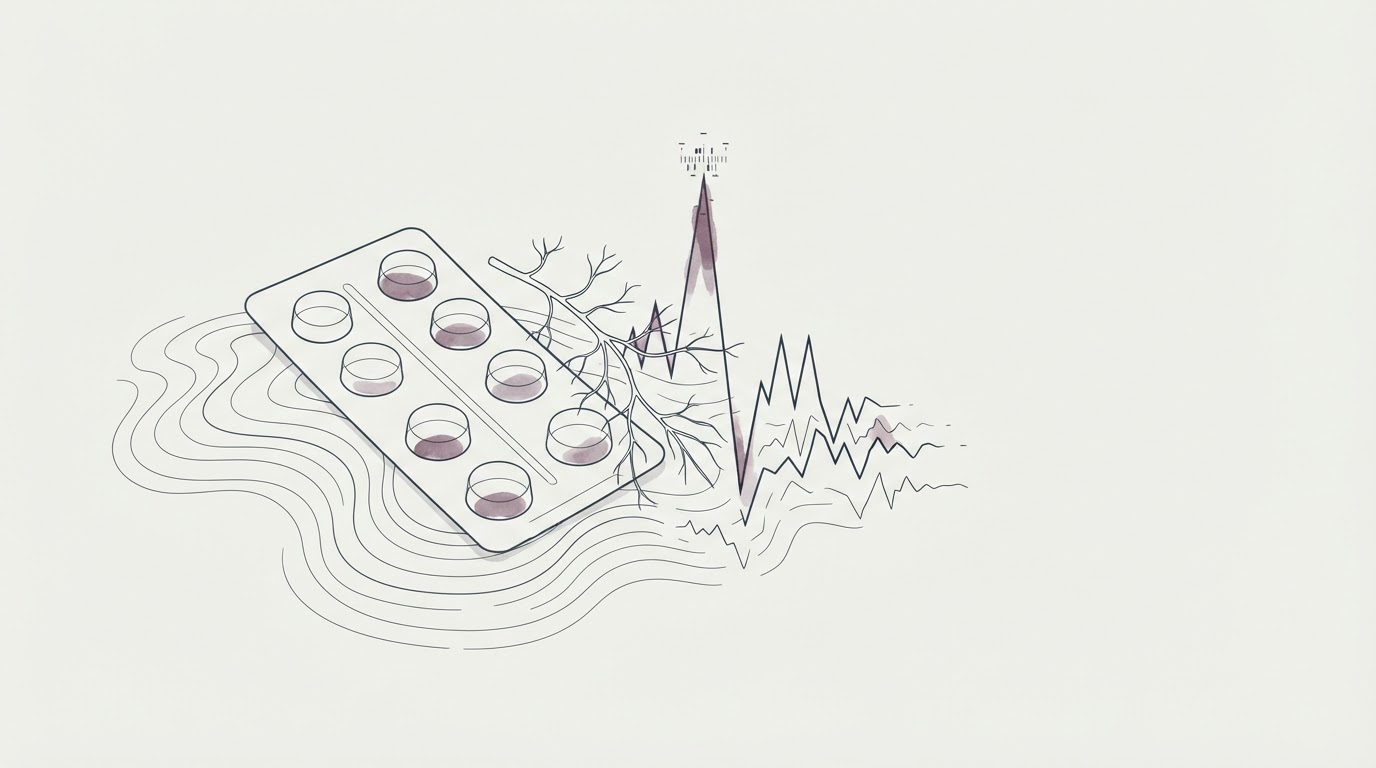
The acute, unexplainable panic you feel three days after finishing a Z-Pak is a direct mechanical readout of mucosal barrier erosion. The medical consensus assumes you're just stressed about catching up on the emails you missed while sick. A decade ago, I told clients to manage the post-illness anxiety with a whiteboard and a cognitive reframe. I genuinely believed that if you could just out-logic the panic, the body would eventually settle. I was completely wrong. The medication strips the protective lining of your gastrointestinal tract, exposing the vagal afferent nerves to raw inflammatory markers. The brain interprets this sudden influx of localized gut inflammation as a systemic threat, generating a state of high sympathetic arousal. It's a gut problem.
You're sitting in the living room in Delhi, surrounded by the remnants of a Diwali celebration, or perhaps just on your sofa in London after a heavy weekend. The noise of the street has finally settled, but your chest is tight and your heart is beating at 95 beats per minute for absolutely no reason. You finished a heavy course of broad-spectrum antibiotics last Tuesday for a persistent sinus infection. Tonight, you ate three pieces of kaju katli and a plate of fried snacks. Within an hour, a heavy, static dread settled behind your ribs. You try to trace the anxiety back to work stress or the family dynamics of the festival, but the timeline doesn't align. The panic is entirely physiological. The refined sugar from the sweets just hit a compromised gut lining, rapidly compounding the antibiotic injury and sending a massive inflammatory distress signal straight up the vagus nerve to your brain.
The mucosal barrier and vagal afferent signaling
The gastrointestinal tract is lined with a thick mucosal layer that dictates exactly what enters the bloodstream and what touches the enteric nervous system. When the barrier is intact, it acts as a highly selective border control, allowing nutrients to pass while keeping pathogens and inflammatory markers strictly contained. Broad-spectrum antibiotics operate like a localized bomb. They clear the bacterial infection in your sinuses or lungs, but they also severely degrade this mucosal layer in the gut. The vagus nerve has afferent fibers embedded just beneath this barrier, constantly sampling the gut environment and reporting the data back to the brain. When the barrier erodes, the physical distance between the gut contents and the nerve endings disappears. The wiring is exposed.
Without the mucosal buffer, inflammatory cytokines make direct contact with the vagal receptors. The vagus nerve transmits this raw chemical data upward as a critical emergency. The brain responds to the inflammatory reflex by triggering the release of adrenaline and cortisol to manage the perceived threat. You experience this neurochemical cascade as sudden, gripping anxiety, even when you're sitting quietly on the sofa. The symptom is psychiatric, but the mechanism is entirely gastrointestinal. The autonomic nervous system is simply running its default programming for a biological breach.
Think of the vagus nerve as a massive sensory cable. It doesn't know the difference between a looming work deadline and a sudden influx of pro-inflammatory cytokines in the duodenum. It only knows that the baseline environment has become hostile. When the gut lining is stripped, every minor fluctuation in local inflammation gets amplified and broadcast directly to the brainstem. You aren't losing your mind. Your brain is simply reacting to an alarm bell that the antibiotics accidentally wired to the "always on" position. This hyper-vigilance will persist as long as the mucosal barrier remains compromised, leaving your sympathetic nervous system stuck in a high-idle state. The physical exhaustion that follows these panic spikes is just the physiological toll of running the engine at maximum capacity while sitting perfectly still.
How refined sugar compounds the acute injury
The timing of your dietary inputs dictates the severity of the neuroinflammatory response. Refined sugar feeds opportunistic bacteria that survive the initial antibiotic sweep, and it directly increases intestinal permeability. During high-load periods like a sugar-heavy festival cycle or a long holiday weekend, a sudden spike in sucrose intake on top of a stripped gut lining creates a severe localized inflammatory event. It fuels the fire. The rapid influx of glucose creates an osmotic shift in the gut, drawing water in and further disrupting the fragile epithelial cells trying to rebuild the barrier. When you eat a plate of sweets on a compromised gut, you aren't just treating yourself; you're actively pouring a highly reactive substrate onto an open wound. The resulting cytokine storm is immediate and aggressive.
Dietary simple sugars actively alter intestinal epithelial function, compounding the mucosal injury left behind by the medication. To break the signaling loop, you have to stabilize the glucose load and reduce the localized inflammation. This is about mechanical damage control. Implement a vegetable-first eating sequence at every meal to blunt postprandial glucose spikes, and extend your overnight fasting window to fourteen hours. Borrowing from fasting-window biology allows the migrating motor complex (the electromechanical mechanism that sweeps the gastrointestinal tract) to clear debris and gives the mucosal lining uninterrupted time to begin repairing the barrier.
If you need to rapidly clear a metabolic spike after a heavy meal, you can use a VILPA stair sprint for metabolic clarity. A short, sharp burst of movement improves glucose uptake in the muscles, pulling the excess sugar out of circulation before it can sit in the gut and feed the inflammatory loop. By managing the glucose mechanically, you prevent the secondary inflammatory cascade from ever reaching the vagus nerve. You're essentially intercepting the signal before the brain has a chance to panic.
The neurochemical shadow of a stripped microbiome
Beyond the immediate vagal alarm, there's a secondary neurochemical shadow that follows a heavy course of antibiotics. The gut is responsible for manufacturing a massive percentage of the body's serotonin and dopamine precursors. Serotonin and dopamine is the chemical currency your brain uses to process stress, maintain focus, and signal safety. When the microbiome is leveled by medication, that production line grinds to a halt. The raw materials required to maintain a stable mood simply aren't being synthesized at their usual volume. The supply chain breaks. This deficit forces the brain to operate on depleted reserves, making it infinitely harder to regulate emotional responses or maintain focus during an otherwise normal workday.
This week, I was looking at the clinical data on how stalled gut microbiome maturation links to long-term autoimmune risks, and it highlights just how sensitive this system is to early disruption. While that data focuses on infancy, the adult nervous system is equally reliant on a mature, stable microbiome to regulate immune and autonomic function. When you wipe out the bacterial populations that keep localized inflammation in check, you aren't just altering digestion. You're fundamentally changing the chemical environment that your enteric nervous system relies on to feel safe.
The heavy, unshakeable brain fog you feel in the days after finishing the prescription is the direct result of neuroinflammation crossing the blood-brain barrier. Pro-inflammatory cytokines generated in the gut travel upward, actively suppressing the availability of dopamine in the brain. You feel unmotivated, anxious, and deeply fatigued because the physiological machinery required to generate drive and calm is temporarily offline. The structural integrity of the gut dictates the operational capacity of the brain.
The immediate priority isn't to force yourself back into high-output mode. The priority is to stop throwing gasoline on the fire. Before you try to out-work the brain fog, you have to lower the localized inflammatory load in the gut. You can't out-think a biological deficit, and you can't meditate away a mucosal breach.
Common Questions
How long do post-antibiotic gut anxiety symptoms typically last?
The acute neuroinflammatory phase usually peaks within the first two weeks after stopping the medication. Full mucosal barrier repair takes up to three months, depending on your dietary inputs and baseline vagal tone. You can accelerate this timeline by strictly managing your glucose inputs and prioritizing sleep, which is when the bulk of tissue repair occurs. The nervous system requires sustained, predictable safety signals to drop back into a parasympathetic state.
Can probiotics immediately fix the mucosal erosion?
Dropping high-dose probiotics into a highly inflamed, stripped gut often causes more bloating and distress. The immediate priority is reducing inflammation and repairing the mucosal lining before attempting to repopulate the microbiome. Think of it like trying to plant seeds in a hurricane; you have to wait for the weather system to calm down before the new bacteria can actually take root. Focus on barrier repair first, then bacterial diversity.
Why does sugar trigger panic attacks after antibiotics?
Refined sugar rapidly increases intestinal permeability and feeds opportunistic pathogens that thrive when your primary microbiome is depleted. This creates a sharp spike in localized inflammation, which the vagus nerve immediately relays to the brain as a threat. The brain responds to this physical threat by dumping adrenaline into your bloodstream, creating the physical sensation of a panic attack. You're experiencing a metabolic crisis, interpreted by the brain as an existential one.
Closing
To begin repairing the mucosal barrier and stabilizing your autonomic response, start here.
- The Gut-Brain Reset Protocol — A 14-day guided metabolic and autonomic stabilization track.
- Kokorology Clinic Intake — Book a 1:1 state mapping and personalized recovery plan.
- The Free Vagal Tone Baseline Guide — Map your current autonomic capacity without a wearable.
TL;DR
Post-antibiotic gut anxiety is a direct mechanical readout of mucosal barrier erosion and acute neuroinflammation. Broad-spectrum antibiotics strip the gut lining, exposing vagal nerve endings to inflammatory markers. Consuming refined sugar rapidly compounds this injury, creating a localized inflammatory spike. The brain interprets this gut-level distress as a systemic threat, resulting in unexplainable panic. Repairing the barrier requires stabilizing glucose inputs and extending fasting windows to lower the localized inflammatory load, rather than trying to out-logic a purely physiological alarm.
Sources
- Tracey KJ. The inflammatory reflex. Nature.
- Sun L. A simple meal sequence (vegetable-first) strategy to improve postprandial glycemic control in people with type 2 diabetes. BMJ Open Diabetes Research & Care.
- Visvabharathy L. Dysregulation of dopamine and serotonin availability in post-acute sequelae. Cell.
- Deutsches Ärzteblatt. Stalled Infant Gut Microbiome Maturation Linked to Type 1 Diabetes Risk.