EDITION 10 |
The Nervous State
I
|
Eight Hours, Still Exhausted
Why you can sleep eight hours and still wake exhausted — and what your daily stress has to do with it.
|  |
|
A note for this week
II
| A note for this week |  | Eight hours is such a tidy answer. Unfortunately, 'how long were you in bed?' and 'why are you still exhausted?' are different questions. This edition starts in that gap. I wanted to look at restoration without turning a recommended duration into proof that everything else must be fine.
The piece on dreams and energy takes a strong interpretive angle. I'm keeping a distinction between that framing and an established explanation for persistent fatigue: dreaming doesn't, by itself, tell us why someone wakes tired. Sleep continuity, timing, health and daytime strain remain important questions. The adaptogen review adds another: how much confidence does the evidence justify before a supplement gets presented as the answer?
This is what updating myself weekly involves — collecting ideas, but also checking how far they'll travel. I share the reading here with those limits intact. When Sleep Stops Working isn't a new bedtime commandment. It's a reason to investigate beyond the hours on the clock, and to seek proper care when exhaustion persists. A neat number shouldn't end an untidy conversation.
— Sabin |
|
The Masthead
III
| Kokorology | | What Kokorology means
Kokoro is Japanese for the alignment of heart, mind, body and soul. The -logy is the ambition: that wellness stops being a lifestyle aisle and becomes a school subject.
Who writes this
I'm Sabin — founder, builder and writer, working across wellness, AI, design and independent media. Kokorology brings my reading on the nervous system together with practices, protocols and tools for everyday life.
I update my understanding as I read. This magazine is where I share the threads worth following: research, daily reads, movement, routines and the questions behind them. | |
More about Kokorology and Sabin
kokorology.com/about
|
|
Contents
V
| Week of Monday 28 September |  | |
A note for this week
From Sabin
| |
The Masthead
Kokorology and who writes this
| |
Keep in touch
The conversation continues
| |
The Read
Your Dreams Are Running on an Energy Deficit
| |
The Week in Briefs
5 daily reads, one page each.
| |
Signals
What the headlines are really telling us about our collective nervous system capacity.
| |
The Verdict
Nuadapt daily adaptogen blend
| |
Evidence
Real studies, real mechanisms, zero spin: what the latest research actually means for your system.
| |
The Practice
Articulate the Ankle for Reflexive Grounding
| |
The Movement
Easy Zone 2 Walk for Low-Ferritin Days
| |
The Routine
Settle Before Your Iron Meal
| |
Also this week
78 pieces recapped.
| |
Correspondence
Where to go next.
|
|
The Read
VI
| Your Dreams Are Running on an Energy Deficit | Waking up exhausted isn't a sleep-quality problem. Your brain uses dreams to clear an overnight energy debt, and if you're waking up overdrawn, your system is struggling. | I've been there: you get your eight hours, you track your sleep cycles, but you still wake up feeling like you’ve run a marathon. The immediate thought is always, "My sleep quality must be terrible." But what if it’s not about the quality of your sleep, but the energy demands placed on your brain while you’re in it?
It's easy to assume that when we're asleep, our brain is mostly in idle. Quiet. Regenerating. But specific phases of sleep, particularly REM sleep—that vivid, narrative dream state—are anything but quiet. Your brain is a metabolic powerhouse, and during REM, it’s actively working through the day's events, consolidating memories, and even processing emotions. It's a huge energy spend.
Consider this: during REM sleep, your brain’s activity can rival or even exceed waking levels. If you’re coming into sleep with a depleted energy reserve, or if the day's mental and emotional load was exceptionally high, your brain is effectively trying to run a complex overnight operation on a shoestring budget. It's like trying to pay down a massive credit card bill with pocket change. You're not making progress, you're just treading water.
This isn't a sleep disorder; it's a readout of your overall energy balance. If you're consistently waking up exhausted after what should be enough sleep, your dreams aren't causing the problem. They're revealing a deeper, unresolved energy debt. Think of it as a biological version of being "tired but wired." Your body is trying to regulate, trying to process, but it simply doesn't have the metabolic capacity to complete the job efficiently.
It’s about understanding the demands on your system. A chronically elevated stress response, a high mental load from work, or even unresolved emotional static can all contribute to this overnight energy drain. Your brain uses sleep, especially REM, as a cleanup and processing phase. If the cleanup required is too extensive, or the energy available is too low, you're going to feel the deficit when you wake up. It’s like trying to download a huge file on a slow connection—it eventually finishes, but it takes all night and leaves your system sluggish.
So, what changes it? You need to reduce the incoming load and increase the available energy for processing. This might mean actively downshifting before bed, addressing sources of chronic stress, or even looking at your nutrition to ensure your brain has the right fuel. It's not about forcing yourself to sleep harder; it's about making sure your brain's nocturnal operations aren't constantly running at a deficit. Pay attention to those morning-after feelings. They’re a direct signal from your brain about its overnight workload and its capacity to meet it. | |
If you’re consistently waking up exhausted after what should be enough sleep, your dreams aren't causing the problem. They're revealing a deeper, unresolved energy debt.
| |
Read the original
www.kokorology.com/r/fw9ep6f
|
|
The Week in Briefs
VII
| Healthcare Policy Struggles While Biotech Accelerates | Global healthcare access faces policy hurdles, while biotech rapidly advances against disease and chemical exposures reshape health understanding. |  | Today's news highlights a fundamental disconnect. While biotech laboratories are pushing the boundaries with AI-driven discoveries against disease, the underlying public health system is struggling. Policy battles in places like Germany, concerning nursing care and child sickness benefits, signal an ongoing tension between social welfare and fiscal policy. Meanwhile, pervasive chemical exposures are quietly reshaping our understanding of health, demanding new approaches that policy isn't yet delivering.
This creates a double bind for the nervous system. On one hand, the promise of advanced treatments offers hope; on the other, the reality of fragmented access and environmental threats creates a low-grade, persistent stress. It’s a classic capacity problem: the burden on individuals to navigate complex systems and environmental loads is increasing, while the social safety nets often fray. | |
Biotech innovations outpace policy.
| |
Chemicals reshape health understanding.
| |
Social welfare policy struggles.
| |
Read the full daily read
www.kokorology.com/r/fk5mcc7
|
|
The Week in Briefs
VIII
| Longevity Tech Outruns Climate Reality in Health Policy | Longevity science advances, but policy lags on new tech regulation and ignores climate's direct impact on body systems. |  | The pursuit of extreme longevity continues its aggressive march, with biotech firms chasing measurable age reversal. Yet, policy remains sluggish, especially concerning the rapid emergence of new health technologies and, critically, the direct health implications of climate change. This creates a regulatory vacuum where innovation sometimes outpaces ethical and safety frameworks.
For the body, this means an uneven landscape: the promise of advanced therapies for some, juxtaposed with the foundational assaults of environmental degradation on others. Your nervous system is directly impacted by both the promise and the peril. The focus on what's 'new' often diverts attention and resources from the immediate, pervasive environmental stressors that deplete our baseline capacity and add significant load. | |
Longevity tech advances fast.
| |
Policy lags on tech regulation.
| |
Climate health impact overlooked.
| |
Read the full daily read
www.kokorology.com/r/ruac94z
|
|
The Week in Briefs
IX
| Biotech's Big Bets vs. Policy's Big Blinders | Biotech invests in longevity and targeted therapies, while policymakers miss crucial connections in health access and environment. |  | Today's shifts reinforce the week's theme: biotech is making significant bets on extending healthy lifespans and developing highly targeted therapies, but policymakers seem to be looking elsewhere. They continue to fumble on health access issues and environmental protection, often missing the clear links between a healthy environment, accessible care, and overall population well-being. It’s a focus on the distant horizon while tripping over what’s right in front of them.
This disjunction increases the load on individual nervous systems. The promise of scientific breakthroughs feels hollow when basic health services are out of reach or when environmental quality diminishes daily. The body's capacity for regulation is constantly challenged when its external systems—healthcare and environment—are under-supported or mismanaged. My view is that true longevity starts with a stable, accessible, and clean baseline. | |
Biotech targets longevity, therapies.
| |
Policy fumbles basic health access.
| |
Environment's health link ignored.
| |
Read the full daily read
www.kokorology.com/r/tbq2aog
|
|
The Week in Briefs
X
| AI's Deep Dive vs. Basic Access Battles | The market races for AI biological insights, but real health policy struggles over fundamental access and public health funding. |  | The market continues its sprint to harness AI for deep biological insights, aiming to revolutionize everything from drug discovery to personalized diagnostics. However, the real fights in health policy are still being waged over basic access to care and the adequate funding of public health initiatives. This tension between cutting-edge innovation and foundational needs creates a fractured system.
For your nervous system, this means a constant pull between potential and reality. The allure of personalized AI insights is strong, but the stress of navigating a system where basic care is a struggle is undeniable. Your body experiences this directly: the cumulative load of uncertainty and lack of access impacts your baseline capacity. What's the point of deep biological insight if you can't get basic preventative care? We need to fund prevention as robustly as we fund discovery. | |
AI for biological insights booms.
| |
Health policy fights basic access.
| |
Public health funding is neglected.
| |
Read the full daily read
www.kokorology.com/r/n2t5n2n
|
|
The Week in Briefs
XI
| Longevity Race Meets Public Health Struggle | The longevity industry pushes age reversal, while public health battles foundational issues like access and drug safety. | | While the longevity industry races towards verifiable age reversal with new therapies, public health systems are grappling with foundational issues that affect millions. Access to basic care and drug safety remain persistent challenges. This disparity creates a chasm between a future where some might 'live younger' and a present where many struggle with basic health needs.
This creates significant static for the nervous system. The promise of cutting-edge treatments like GLP-1s and mitochondrial therapies is exciting, but it exists against a backdrop of ongoing struggles for equitable access and concerns about drug safety. The individual's capacity to engage with these advancements is often contingent on a stable, regulated baseline that many don't have. My observation is that true progress happens when the fundamentals are solid, not when they're overlooked in pursuit of the spectacular. Oregon’s universal healthcare proposals are worth watching here. | |
Longevity aims for age reversal.
| |
Public health struggles with access.
| |
Drug safety remains a concern.
| |
Read the full daily read
www.kokorology.com/r/n7ophhq
|
|
Signals
XII
| What moved, and what it means | What the headlines are really telling us about our collective nervous system capacity. |  | |
US immigration rules tighten access to healthcare workforce
The Lancet · 02/10/2026
US immigration policy tightening access to healthcare workers creates critical staffing shortages. This directly increases the load on existing healthcare systems and individual nervous systems through longer wait times and reduced access to care.
| |
40% of health facilities failed disaster readiness drill
Ars Technica - Science & Health · 03/10/2026
40% of healthcare facilities failing a disaster readiness drill signals a profound capacity problem in crisis response. This erodes public trust and increases individual stress, as the societal safety net appears less reliable.
| |
Brandenburg pays 20M more for emergency service 'ghost calls'
Deutsches Ärzteblatt · 03/10/2026
Germany's Brandenburg state spending 20 million Euros on emergency service 'ghost calls' highlights how people use acute services for chronic stress. This siphons resources from true emergencies and reveals a system ill-equipped to manage baseline anxiety.
| |
US Medicaid changes to strip 100K immigrants of health coverage
KFF Health News · 01/10/2026
New US Medicaid changes stripping health coverage from 100,000 legal immigrants represent a direct assault on the nervous system. Losing care triggers chronic stress, leading to a cascade of untreated health issues and overwhelming individual capacity.
| |
Migration policy ignoring public health costs of racism
Croakey Health Media · 02/10/2026
Migration policy ignoring the public health costs of racism reveals a profound oversight. Chronic racism is a direct, sustained hit to the nervous system, elevating cortisol and impacting overall health baseline, which becomes a long-term societal load.
| |
UK patients push back on NHS data deal with Palantir
The Lancet · 02/10/2026
UK patient pushback against the NHS data deal with Palantir underscores public anxiety about data control. The consolidation of sensitive health records feels like a loss of personal autonomy, increasing the sense of being surveilled and adding mental load.
| |
Lancet says global health funding disempowers nations
The Lancet · 30/09/2026
The Lancet's critique of global health funding disempowering nations indicates a systemic failure. When local health ministries lack control, the specific nervous system needs of their populations can be overlooked, undermining long-term health capacity.
| |
German teens boost energy drink sales, risking nervous system load
Deutsches Ärzteblatt · 30/09/2026
German teens boosting energy drink sales is a red flag for developing nervous systems. The high stimulant load pushes them into a wired-but-tired state, disrupting sleep architecture and setting them up for dysregulated stress responses later in life.
|
|
Kokorology product
13
| Start with whatever is costing you most this week. Each protocol is €40; stacking more lowers the price. |  |
|
The Verdict
14
| Nuadapt daily adaptogen blend | Does this adaptogen blend truly help manage stress, or is it just another supplement chasing symptoms? |  | I've reviewed Nuadapt's daily adaptogen blend, and frankly, I'm underwhelmed. The formula is a 'kitchen sink' approach, typical of many stress supplements: a little ashwagandha here, some rhodiola there, a sprinkle of reishi. While these ingredients individually have some evidence for modulating the stress response and supporting the HPA axis, the dosages in Nuadapt's blend are often sub-therapeutic. It's like having a team of good musicians, but each is playing at one-tenth volume; you can't really hear the song.
My primary issue with these broad-spectrum adaptogen blends is they rarely address the specific load creating the static in your nervous system. Are you exhausted from sleep debt? Overtrained? Dealing with chronic inflammation? Nuadapt offers a vague 'stress support' without the targeted approach needed for real change. The 6/10 score feels about right. It might provide a minimal effect for someone with very low stress, but for anyone facing significant physiological or psychological load, it's just not enough to move the needle on their baseline capacity. You'd be better off identifying the specific root causes of your stress and addressing those directly, rather than hoping a mild blend will magically regulate your system. | |
Nuadapt
neutral · 6/10
| |
Read the full review
kokorology.com/product-reviews/nuadapt-review
|
|
Kokorology product
15
| A daily record of what your system is actually doing. Includes the complete hacks library. €25/mo. |  |
|
Evidence
16
| The studies underneath | Real studies, real mechanisms, zero spin: what the latest research actually means for your system. |  | |
Brief Structured Respiration Practices Enhance Mood and Reduce Physiological Arousal
Kokorology Research Library
A Stanford study (NCT05304000) found that 5 minutes of daily cyclic sighing (prolonged exhalations) improved mood and reduced respiratory rate more effectively than other breathing exercises or meditation. The mechanism is that longer exhales increase parasympathetic tone via the baroreflex, stretching the vagal brake for rapid down-regulation.
| |
Muscle Mass Loss With GLP-1 Therapy: Clinical Relevance and Mitigation
Kokorology Research Library
A review of DXA data found that GLP-1 therapy leads to 25-40% of total weight loss coming from fat-free mass, similar proportionally to caloric restriction but larger in absolute terms due to greater overall weight loss. For individuals over 65 or with low baseline muscle, this can cross the sarcopenia threshold, necessitating 1.2–1.6 g/kg protein and 2–3 resistance sessions weekly from the start to maintain capacity.
| |
Gastrointestinal Tolerability of Semaglutide: Titration Strategy and Nutrition Guidance
Kokorology Research Library
Consensus guidance from clinicians managing GLP-1s indicates that gastrointestinal symptoms peak two weeks after dose escalation. Key strategies to improve tolerability and reduce nervous system load include extending dose steps to 6-8 weeks, capping portions at 'fist-size,' prioritizing protein and soluble fiber, consuming warm meals, and ensuring 2 liters of daily water intake.
| |
Hepcidin: how inflammation and stress lock iron away
Kokorology Research Library
Hepcidin, the master regulator of iron, binds to ferroportin (the only known iron export channel) and triggers its degradation. When inflammation or chronic psychological stress elevate IL-6, hepcidin rises, trapping iron in cells and reducing its availability for the body. This mechanism explains why stress can keep ferritin low despite adequate dietary intake, directly impacting energy production and nervous system function.
|
|
The Practice
17
| Articulate the Ankle for Reflexive Grounding | When you feel disconnected, this simple exercise re-establishes a clear connection with the ground, reducing internal static. | 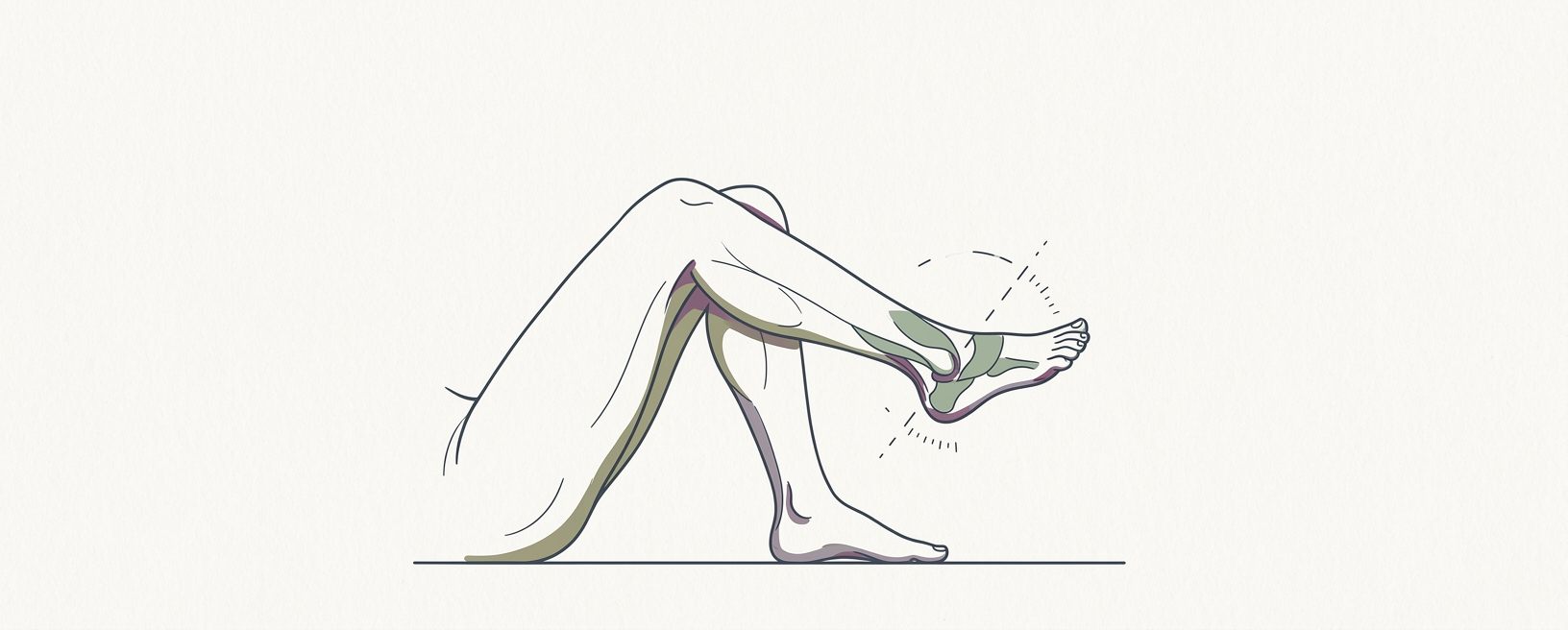 | When your system feels adrift or disconnected, it often registers as a subtle, pervasive hum of internal static. Your capacity to meet small challenges diminishes, leaving you reactive rather than responsive. This practice re-establishes a direct, clear line of communication with the ground beneath you.
- Find a stable, low stool or a thick book. Sit upright with your feet flat on the floor.
- Cross your right leg over your left knee, allowing your right foot to hang freely.
- Using your right hand, gently cup your right heel. With your left hand, hold the top of your right foot just below the toes.
- Slowly circle your ankle clockwise five times, guiding the movement through its full, comfortable range. Feel the small bones and tendons articulating.
- Reverse the direction, circling counter-clockwise five times, moving with deliberate control.
- Uncross your legs, place both feet on the floor, and take a moment to notice the difference in sensation between your right and left ankles and feet.
- Repeat the entire sequence on the left side.
Notice the newfound solidity and calm in your stance. This simple, concrete input helps regulate your entire system. | |
Practise it in full
www.kokorology.com/r/2pm47dd
| |
Log this in your Nervous System Journal →
|
|
The Movement
18
| Easy Zone 2 Walk for Low-Ferritin Days | Movement that supports your energy systems without adding unnecessary load when your ferritin is low. |  | Movement for anyone, of any gender, chasing a ferritin number that won't move. Pair with the Settle Before Your Iron Meal routine and read the ferritin post on the Kokorology blog.
- Aim for 30-45 minutes at a pace where you can comfortably hold a conversation, but not sing. Your breathing should be slightly elevated, but not strained.
- Choose a flat, familiar route. Avoid hills or uneven terrain that might add unnecessary physical or mental load.
- Focus on gentle rhythmic breathing. Inhale for a count of 3-4, exhale for a count of 4-5. Lengthening the exhale helps regulate your nervous system.
- Bring a small water bottle. Hydration is key, especially when your system is working to improve iron absorption.
- Listen to your body. If you feel more fatigued than usual, shorten the duration or reduce the intensity. The goal is supportive movement, not pushing through a deficit.
This isn't about training hard; it's about consistent, low-load activity that supports your body's energy systems without triggering an inflammatory response that could further impact hepcidin. | |
See the movement in full
www.kokorology.com/r/9eb9bzo
| |
Log this in your Nervous System Journal →
|
|
The Routine
19
| Settle Before Your Iron Meal | A pre-meal reset to optimize iron absorption, built for anyone struggling with low ferritin. |  | A pre-meal reset built for anyone chasing a ferritin number that won't move. It pairs a slow mineral drink, a long-exhale downshift and a few food-sequencing choices. It supports your bloods plan; it doesn't replace it. Keep your clinician in the loop on ferritin, haemoglobin, transferrin saturation and CRP.
Read the full thinking in Stress, hepcidin and the ferritin that won't budge on the Kokorology blog.
- 20 minutes before eating, sip 150ml of warm water with a pinch of sea salt and a squeeze of lemon. This gently prepares your digestive system and adds minerals.
- Engage in 2 minutes of cyclic sighing. Inhale slowly through the nose, take a second shorter inhale to top off the lungs, then exhale slowly and completely through the mouth, making a soft 'whoosh' sound. Repeat for two minutes. This downshifts your nervous system, reducing the stress response that impacts hepcidin.
- Start your meal with a small portion of easily digestible vegetables. Think steamed greens or a simple broth. This prepares your gut for the main course.
- Consume your iron-rich food. Pair it with a source of Vitamin C (e.g., bell peppers, berries) to enhance absorption.
- Avoid coffee or tea immediately after. Tannins can inhibit iron absorption. Wait at least an hour.
This routine aims to reduce the systemic load that can impede iron absorption, allowing your body to better utilize the nutrients it needs to build up its baseline capacity. | |
Follow the routine in full
www.kokorology.com/r/7jb6jk4
| |
Log this in your Nervous System Journal →
|
|
Kokorology product
20
| Every Anchor and every care package, without making your symptoms audition for separate subscriptions. |  |
|
Kokorology product
24
| Twenty packages, one per load: cortisol, sleep, recovery, hydration, peptides, cycle, immunity. |  |
|
Kokorology product
28
| Level 1 through certification. The mechanism, then the practice, then the proof you can teach it. |  |
|
Kokorology product
32
| The studies underneath every claim on this site, in plain English, with the numbers left in. |  |
|
Kokorology product
36
| One eight-minute repair a day. Free to read; included with the Nervous System Journal. |  |
|
Kokorology product
38
| For teams whose output keeps outrunning their recovery. Capacity, measured — not vibes. | 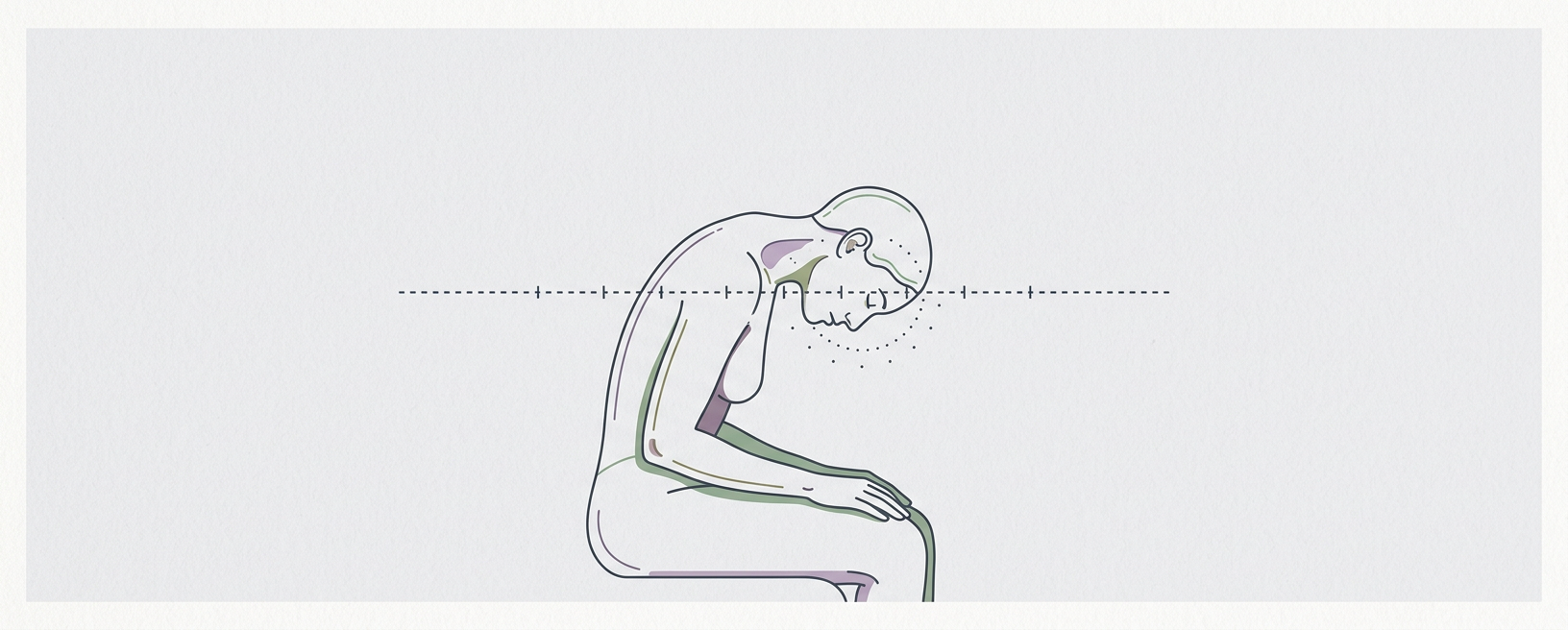 |
|
From the house
39
| Two prompts in the morning, three at night, and the whole hacks library alongside them. €25/mo, cancel whenever. |  |
|
Correspondence
40
| What's Next for Your Baseline? |  | This week's edition has really hammered home one truth for me: our systems are often running at their limits, if not beyond. Whether it’s our personal energy stores or global health infrastructure, capacity is under load. My hope is that the Read on energy debt in dreams, paired with the insights from the Signals and Evidence sections, gives you a clearer picture of your own internal landscape.
The real work isn't always about adding more; sometimes it's about strategically removing load, or about supporting your existing capacity. Take a moment to articulate your ankles, regulate your breathing, or simply notice where your own system feels overdrawn. What small adjustment can you make this week to reduce some static? Head to the blog for more on hepcidin and iron, or explore the Nervous System Journal to track your personal regulation. We'll be back next week. | |
The Nervous System Journal — €25/mo
Two prompts in the morning, three at night. Includes the full hacks library.
| |
All Access — every anchor and care package
The whole system, one pass.
| |
Anchor protocols — €40 each
One protocol for the season you are actually in.
|
|