Daily movement
Orienting the Gaze to Ground the System
Shift your visual attention to present-moment surroundings to down-regulate nervous system static.
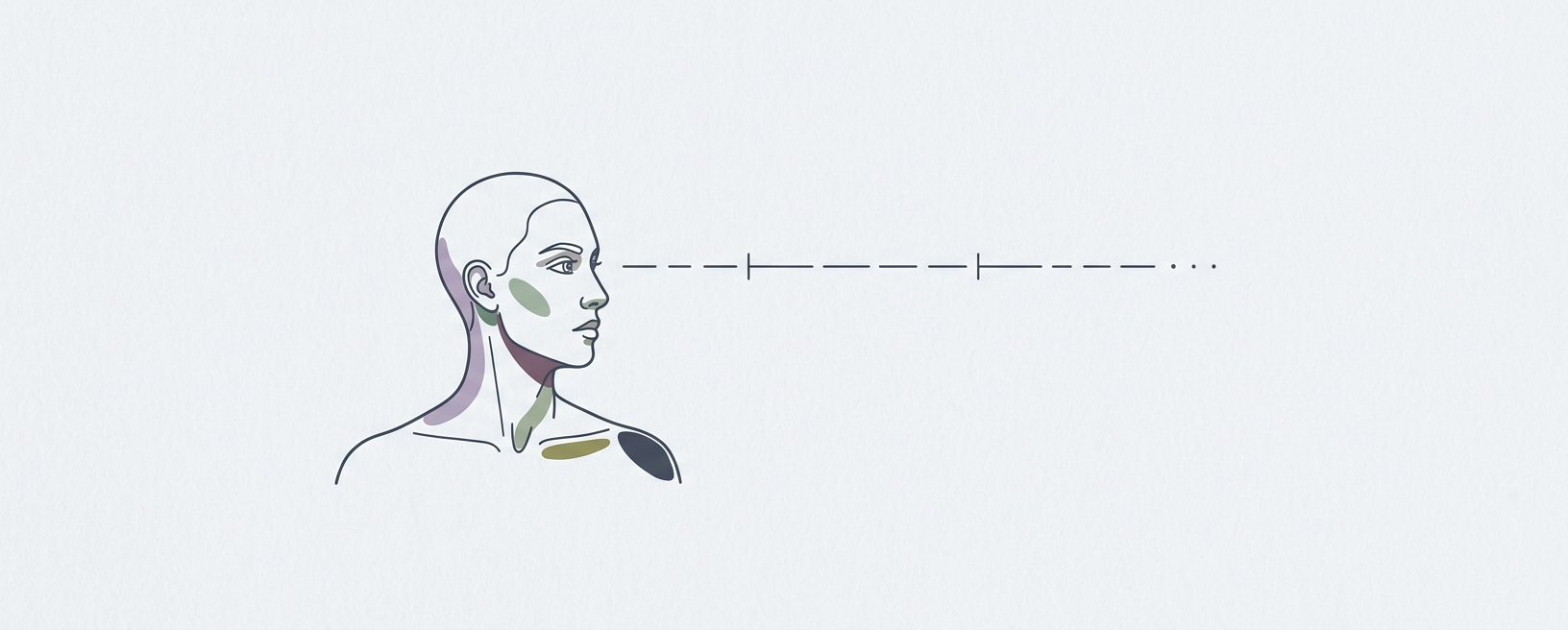
Shift your visual attention to present-moment surroundings to down-regulate nervous system static.
somatic experiencing · Somatic Experiencing (Peter Levine) · This practice meets states of diffuse anxiety, feeling "stuck in your head," or generalized nervous system activation without a clear threat. · 3–5 cycles, scanning each side once
Why it works
Orienting is a foundational Somatic Experiencing practice that leverages the visual system to inform the nervous system. When the eyes scan the environment without a specific threat target, the optic nerve sends signals to the vagus nerve, initiating a ventral vagal response. This activates the parasympathetic nervous system, shifting the body from a state of hypervigilance or freeze into a more regulated, social engagement state. From a tissue perspective, this deliberate, non-goal-oriented scanning releases tension in the ocular muscles, which are often implicitly strained when fixated on threats or internal rumination. The broader effect is a reduction in muscle bracing throughout the neck and shoulders, as the body perceives a safe, navigable environment. This allows for a deeper diaphragmatic breath and a softening of the fascial lines connecting the cranium, neck, and chest.
How to practice
Find a comfortable position. Sit upright or stand with your feet grounded. Let your hands rest wherever they're comfortable. Take a slow exhale to begin.
Soften your gaze. Without searching or targeting anything specific, allow your eyes to gently explore the space in front of you. Let your periphery soften.
Slowly turn your head. Turn your head gently to one side, allowing your eyes to continue scanning what naturally enters your visual field. Notice colors, shapes, light, and shadows. Don't try to name things; just perceive them.
Pause and sense. Hold your head briefly at the edge of its comfortable turn. Pause, and notice any sensations in your body—a shift in breath, a softening in your shoulders, a tingling. There's no right or wrong sensation.
Return to center. Slowly, bring your head back to the middle. Take another gentle exhale. You might close your eyes for a moment to integrate what you felt.
Repeat on the other side. Turn your head slowly to the opposite side, continuing to let your eyes explore. Again, pause at the edge of your comfortable range, sensing any shifts. Return to center.
Complete the cycle. End by resting your gaze forward. Notice the difference in your present state compared to before you started.
Find a comfortable position. Sit upright or stand with your feet grounded. Let your hands rest wherever they're comfortable. Take a slow exhale to begin.
Soften your gaze. Without searching or targeting anything specific, allow your eyes to gently explore the space in front of you. Let your periphery soften.
Slowly turn your head. Turn your head gently to one side, allowing your eyes to continue scanning what naturally enters your visual field. Notice colors, shapes, light, and shadows. Don't try to name things; just perceive them.
Pause and sense. Hold your head briefly at the edge of its comfortable turn. Pause, and notice any sensations in your body—a shift in breath, a softening in your shoulders, a tingling. There's no right or wrong sensation.
Return to center. Slowly, bring your head back to the middle. Take another gentle exhale. You might close your eyes for a moment to integrate what you felt.
Repeat on the other side. Turn your head slowly to the opposite side, continuing to let your eyes explore. Again, pause at the edge of your comfortable range, sensing any shifts. Return to center.
Complete the cycle. End by resting your gaze forward. Notice the difference in your present state compared to before you started.