Daily movement
Post-Exercise Nasal Breathing for Parasympathetic Activation
Calm your nervous system and accelerate recovery after intense exercise with controlled nasal breathing.
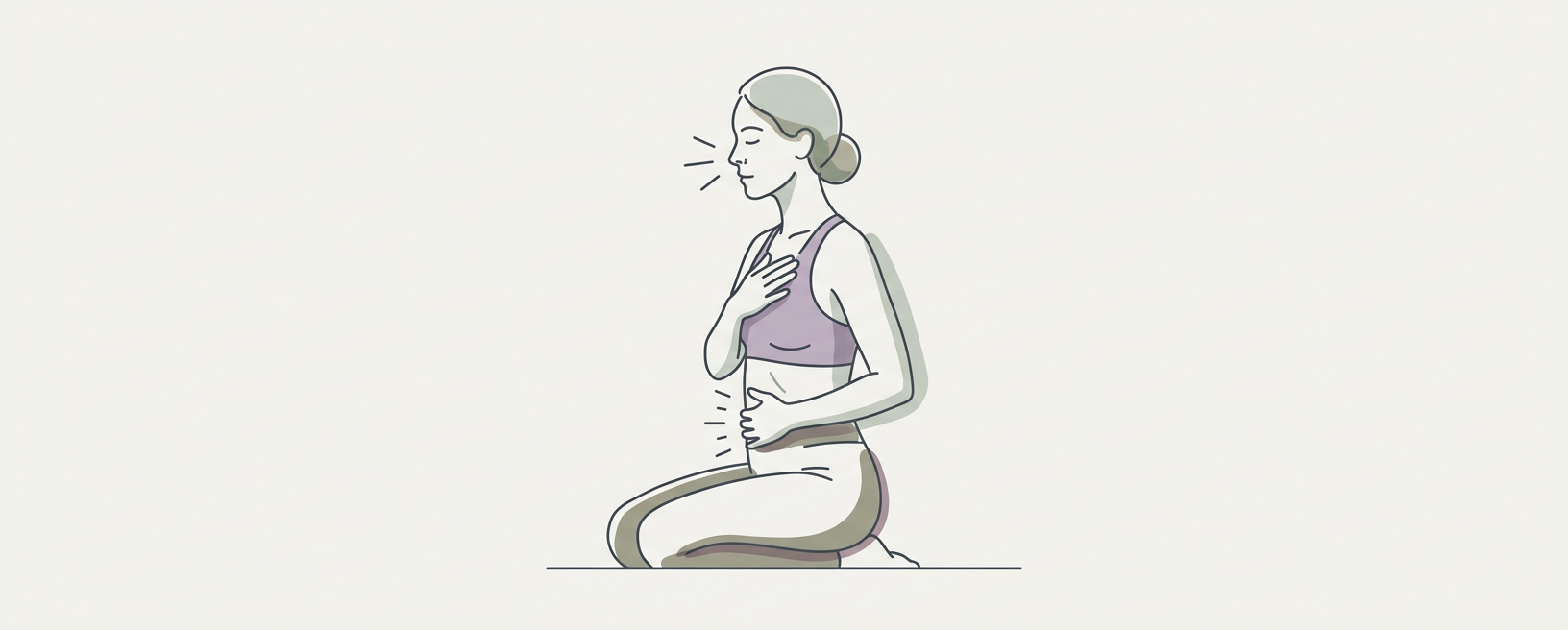
Calm your nervous system and accelerate recovery after intense exercise with controlled nasal breathing.
athlete recovery / readiness · Sports Physiology (Dr. Stephen Seiler) · This meets the "tired but wired" state following high-intensity exercise, where the sympathetic nervous system remains elevated, hindering recovery. · 10 minutes post-workout
Why it works
After intense exercise, the sympathetic nervous system often remains dominant, keeping the body in a 'fight or flight' state. This isn't optimal for recovery. Prioritizing nasal breathing in the cool-down phase actively down-regulates sympathetic activity and promotes parasympathetic return. The nasal passages filter, warm, and humidify air, which also triggers nitric oxide release, improving blood vessel dilation and oxygen delivery to recovering tissues. The diaphragm's rhythmic movement during deep nasal breathing massages visceral organs and stimulates the vagus nerve. This direct vagal stimulation is key to shifting the autonomic nervous system into a 'rest and digest' state, which optimizes hormone balance, reduces inflammation, and facilitates tissue repair by enhancing nutrient transport and waste removal.
How to practice
Immediately after your training session, find a comfortable seated or lying position. This isn't a stretch, just a chance to be still.
Close your mouth gently and commit to breathing only through your nose for the entire duration. Keep your tongue resting on the roof of your mouth, just behind your front teeth.
Place one hand on your chest and the other on your belly. As you inhale, aim to feel your belly rise first, followed by a gentle expansion of your ribs. Exhale slowly, feeling your belly soften.
Take a slow, deep breath in through your nose for a count of 4. Focus on the cool air entering and the sensation of your diaphragm descending.
Exhale even more slowly through your nose for a count of 6 or 8. Make this exhale quiet and complete, feeling your body soften with each release.
Maintain this deliberate, prolonged exhalation for the prescribed duration. Don't strain; just allow the rhythm to emerge.
Immediately after your training session, find a comfortable seated or lying position. This isn't a stretch, just a chance to be still.
Close your mouth gently and commit to breathing only through your nose for the entire duration. Keep your tongue resting on the roof of your mouth, just behind your front teeth.
Place one hand on your chest and the other on your belly. As you inhale, aim to feel your belly rise first, followed by a gentle expansion of your ribs. Exhale slowly, feeling your belly soften.
Take a slow, deep breath in through your nose for a count of 4. Focus on the cool air entering and the sensation of your diaphragm descending.
Exhale even more slowly through your nose for a count of 6 or 8. Make this exhale quiet and complete, feeling your body soften with each release.
Maintain this deliberate, prolonged exhalation for the prescribed duration. Don't strain; just allow the rhythm to emerge.