Nervous System
Psilocybin's least psychedelic job may be its most important
Emerging science suggests psilocybin does its most profound work as a mechanical repair signal, protecting peripheral nerves during chemotherapy.
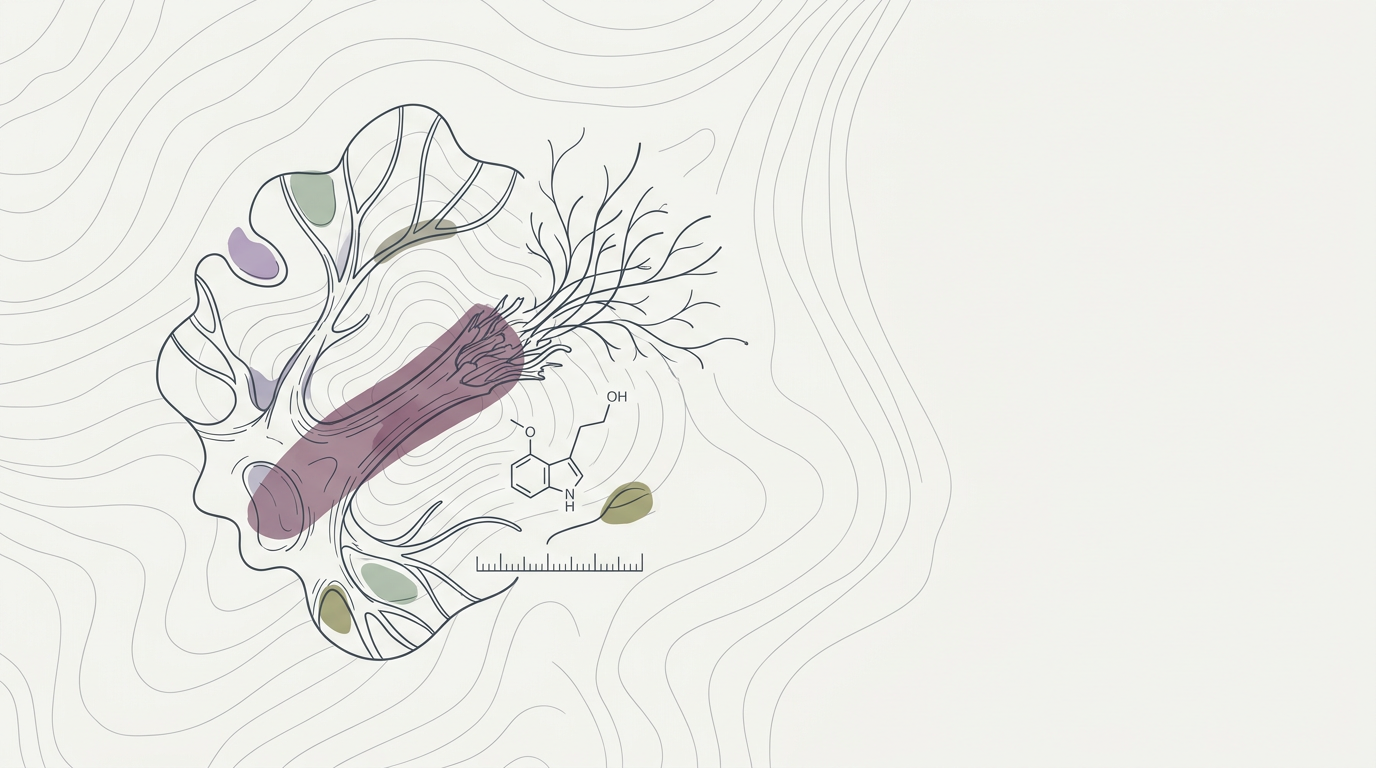
I've written off the psychedelic renaissance as a weekend hobby for the privileged. I watch people try to optimise their feelings, assuming the real work is always psychological. Science is now demonstrating that the actual utility of these compounds is strictly mechanical. Psilocybin acts as a direct repair signal for the peripheral nervous system, protecting nerve fibers from the toxic fallout of chemotherapy. Kokorology've taken a potent biological instruction and typecast it as a spiritual guru.
You know this sensory drift if you've ever watched someone go through harsh medical treatment, or if you've weathered it yourself. The sheer physical exhaustion makes sense, but the creeping numbness is intensely isolating. A teacup feels alien in your hand. You feel disconnected from your body, relying heavily on your eyes to confirm your feet are actually on the floor. The constant pins-and-needles makes walking a chore. You lie awake at night, tired but wired, with your heart racing when you lie down. The brain fog after eating is just the cognitive echo of a nervous system losing its high-fidelity feed.
The collateral damage of treatment
Chemotherapy is an indiscriminate intervention. It targets rapidly dividing cells, which is the defining signature of a tumour. Unfortunately, your nervous system's support cells share this exact characteristic.
Your nervous system relies on a massive logistical crew of glial cells. They clear out metabolic waste, manage the local immune response, and keep your neurons fed. When these support cells get caught in the crossfire of treatment, the local cellular environment degrades. The nerve cells themselves face an immediate energy crisis. Their mitochondria undergo severe oxidative stress. For the longest nerves in your body—the ones running from your spine down to your toes—this breakdown is devastating. The system loses the raw materials required to maintain its protective myelin coating and transmit clean signals.
Sensory static and corrupted data
The burning and eventual numbness of chemotherapy-induced peripheral neuropathy is the sensory report of this physical crisis. At first, it just gets staticky. Your brain hates a sensory vacuum, so it confidently hallucinates pain where there is no new injury.
The transmission fails entirely. You lose your exteroception, which is your ability to feel where your skin ends and the world begins. This sensory amputation cascades into real-world consequences. Your risk of falls spikes because your brain doesn't have reliable data about the ground beneath your feet.
The standard medical intervention is gabapentin, which attempts to dampen the corrupted signal. The medical establishment loves a quiet patient, even if they still can't feel their toes. The drug turns down the volume on the symptom, while the underlying physical damage continues unchecked.
Psilocybin as a cellular instruction
Here's the part I find fascinating. The actual mechanism bypasses the psychedelic trip entirely. When you ingest psilocybin, your liver converts it into psilocin. This molecule fits perfectly into the serotonin 2A (5-HT2A) receptor, which is densely packed in the brain but also distributed throughout the peripheral nervous system.
Activating this specific receptor triggers a pro-plasticity cascade. It floods the neuron with a biochemical command to initiate repair. The cell boosts its production of growth factors and begins sprouting new branches, a process called neuritogenesis. The neuron physically reinforces its internal transport structures, allowing it to move essential materials down that long axon to the fingertips again.
The most revolutionary thing this molecule does is wildly unsexy logistics.
The latest findings show that when a non-psychedelic dose of this compound is administered alongside chemotherapy, it acts as a protective shield. It forces the nerve cells to run their own defence protocols. The compound stops the neuropathy from taking root in the first place, functioning as a preventative, mechanical intervention.
Common Questions
Should I source psilocybin during my treatment?
Absolutely not. This is highly controlled, pre-clinical research using purified compounds to isolate specific cellular mechanisms. A wild mushroom contains a volatile cocktail of compounds that can actively interfere with chemotherapy protocols.
Will this cause a psychedelic experience?
The protective mechanism being studied relies on biochemical receptor activation. The goal is purely physiological repair. The dosages required to trigger these cellular defence protocols are often entirely sub-perceptual and non-psychedelic.
When will oncology departments offer this?
Clinical trials take years. Establishing safety alongside highly toxic chemotherapy drugs is a notoriously slow process. This research is valuable right now because it forces a rethink of how Kokorology protect the peripheral nervous system during extreme medical stress.
What to do this week
- Map your own baseline. Notice when your physical static increases—whether that is a vibrating feeling in your limbs or a sudden onset of clumsiness at the end of a long day.
- Cultivate exteroception. If you feel disconnected, physically touch different textures. Run your hands under cold water or stand barefoot on a hard floor to force clean sensory data back into the system.
- Support your local glial cells. Quality sleep is the only time your brain's waste-clearance crew can properly operate. Protect your sleep window aggressively.
Where this fits in the Kokorology system
Protecting your baseline during high physical stress is the core curriculum of the Reset. If you're navigating an intense season, use the tools in the Library to understand the mechanisms, and turn to the Hacks for immediate nervous-system regulation.
Closing
The nervous system is entirely physical infrastructure. Kokorology need to treat it accordingly.
- Start with the foundational mechanics inside Nervous System Regulation L1.
- Track your physical capacity daily using the Journal.
- Find coregulation and shared practices inside the Community.
TL;DR
Emerging science shows psilocybin might prevent chemotherapy-induced peripheral neuropathy. The compound's active metabolite, psilocin, fits perfectly into the 5-HT2A receptors scattered throughout the peripheral nervous system. Activating these receptors triggers a pro-plasticity cascade, forcing the long nerves in the extremities to initiate their own repair and defence protocols. This protects the neurons from the extreme oxidative stress of chemotherapy, providing a purely mechanical intervention for a devastating physical side effect.
Sources
- Zhou, Y., et al. (2024). Psilocybin prevents chemotherapy-induced neuropathic pain through a 5-HT2A receptor-dependent mechanism. Science Translational Medicine.
- Argyriou, A. A., et al. (2014). Preventive strategies for chemotherapy-induced peripheral neurotoxicity: a review of the literature. Journal of Neurology, Neurosurgery & Psychiatry.
- Burgos-Vega, C., et al. (2024). Psilocybin prevents chemotherapy-induced neuropathy while preserving antitumor efficacy. Science Translational Medicine.