Daily routine
Re-orient attention after digital intake
Shift from a post-feed doomscroll comedown to present-moment engagement by gently re-orienting your attention.
Shift from a post-feed doomscroll comedown to present-moment engagement by gently re-orienting your attention.
post-feed doomscroll comedown · after digital consumption · 12 minutes
Why it works
The brain responds to novelty and movement to shift focus. By introducing small, deliberate actions—a cold stimulus, specific eye movements, and body awareness—we disrupt the neural loops associated with digital overload. This engages the orienting reflex, drawing attention away from the screen-induced static and back to the body and its immediate environment. It encourages a mild vagal tone shift, moving you from passive consumption to active presence. Research by Stephen Porges on polyvagal theory highlights how sensory input can recalibrate the nervous system.
Cold rinse — Swish cold water in your mouth for 30 seconds. Feel the sensation across your tongue and gums.
Peripheral vision scan — Stand and slowly scan your peripheral vision, without moving your head. Look for four distinct objects at the edges of your visual field. Take 3 slow breaths.
Feel Your Feet, Calibrate Your State — Engage the 'Feel Your Feet, Calibrate Your State' practice. Notice the contact of your feet with the ground and the texture beneath you. Feel Your Feet, Calibrate Your State
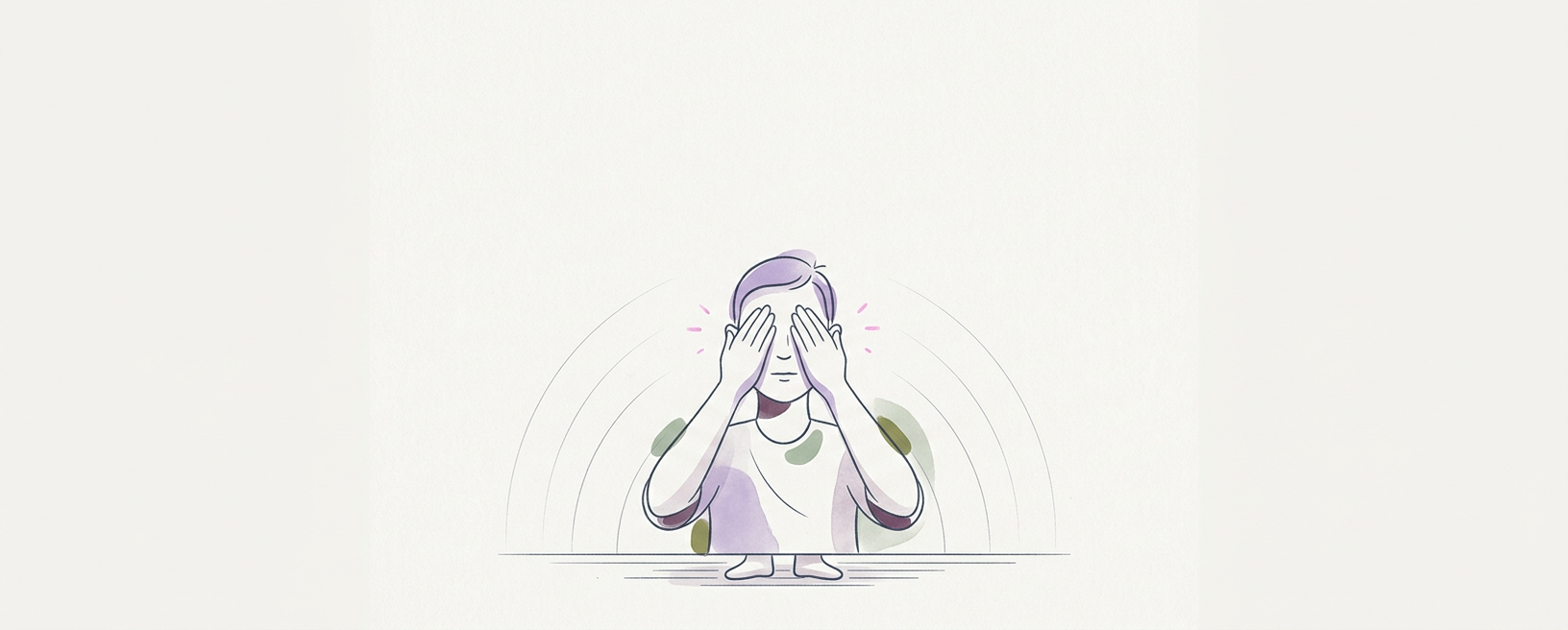
Eye softening — Close your eyes. Gently place the heels of your palms over your eyelids, applying light pressure. Hold for 90 seconds, then slowly remove your hands, allowing your eyes to adjust to the dimness.
Supported recline — Lie on your back with a pillow under your head and knees slightly bent, feet flat on the floor. Rest your hands on your lower abdomen. Breathe gently for 3 minutes, noticing the rise and fall of your breath.