EDITION 9 |
The Nervous State
I
|
READ THE ROOM: YOUR OWN
Why your body's signals are never wrong — and how to tune in for a calmer, stronger you.
|  |
|
A note for this week
II
| A note for this week |  | An anti-inflammatory shopping list is much easier to sell than a conversation about the conditions of someone's life. That's the useful provocation in this week's main piece. It moves the discussion beyond individual foods and asks us to consider the wider system. I don't take that to mean food is irrelevant, or that inflammation has only one cause.
The essential-proteins review keeps nutrition in the picture, which is precisely where it belongs. Widening the frame shouldn't require throwing away a part of it. I wanted these pieces together because they make a better question possible: what does a nutritional intervention address, and what might still be sustaining the problem around it?
My weekly reading is a way to keep improving those questions. Sharing it is more useful than pretending I've found the final answer. Read Your Own Room is about attending to context, not treating every sensation as an infallible message. Bodies provide clues. Clues still need interpretation. Ideally with a little less certainty than the person selling the shopping list.
— Sabin |
|
The Masthead
III
| Kokorology | | What Kokorology means
Kokoro is Japanese for the alignment of heart, mind, body and soul. The -logy is the ambition: that wellness stops being a lifestyle aisle and becomes a school subject.
Who writes this
I'm Sabin — founder, builder and writer, working across wellness, AI, design and independent media. Kokorology brings my reading on the nervous system together with practices, protocols and tools for everyday life.
I update my understanding as I read. This magazine is where I share the threads worth following: research, daily reads, movement, routines and the questions behind them. | |
More about Kokorology and Sabin
kokorology.com/about
|
|
Contents
V
| Week of Monday 21 September |  | |
A note for this week
From Sabin
| |
The Masthead
Kokorology and who writes this
| |
Keep in touch
The conversation continues
| |
The Read
Inflammation Is a System Property, Not a Food Group Problem
| |
The Week in Briefs
6 daily reads, one page each.
| |
Signals
What the week's news tells you about the state of your nervous system.
| |
The Verdict
Essential Proteins: Fueling Your Nervous System
| |
Evidence
New research illuminates the mechanisms behind your body's signals.
| |
The Practice
Chew for Interoceptive Grounding
| |
The Movement
Resistance Band Face Pull
| |
The Routine
Restore Coherence After Conflict
| |
Also this week
79 pieces recapped.
| |
Correspondence
Where to go next.
|
|
The Read
VI
| Inflammation Is a System Property, Not a Food Group Problem | Your anti-inflammatory diet is failing because the problem isn't your food. Chronic inflammation is a nervous system signal, not a grocery list error. | I've heard it a hundred times: "I'm eating perfectly, why am I still inflamed?" This usually comes from someone meticulously tracking their macros, avoiding nightshades, and spending a small fortune on turmeric lattes. They're trying to solve a nervous system problem with a shopping list. It's like trying to fix a faulty circuit breaker by changing the wallpaper.
Chronic inflammation is a signal. It’s a message from your immune system, often amplified by your brain, that your internal environment is under static. The load is too high. This isn't just about the occasional flare-up; it's the persistent hum, the low-grade warmth you can't quite identify. You might call it brain fog, a lingering fatigue, or a general sense of being 'off.' I call it your body screaming, and you’re just trying to change the channel.
Traditional approaches to inflammation often focus on food as the primary culprit, or the primary solution. Cut out gluten, eliminate dairy, go low-FODMAP, try a strict anti-inflammatory diet. These can provide temporary relief, but they rarely get to the root of the issue if the root isn't in your fridge. The problem isn't necessarily what you're eating, but how your system is processing everything around it, including your food, your thoughts, your schedule. This isn't to say diet doesn't matter – it absolutely does. But it's usually part of a larger equation.
Consider the work of Dr. Candace Pert, who pioneered the field of psychoneuroimmunology. She showed that the immune system and the nervous system are not separate entities, but an interconnected network, communicating through molecules of emotion like neuropeptides. Your gut, for instance, isn't just digesting food; it's a massive immunological and neurological hub, constantly talking to your brain. So, if your gut feels off, it’s not just a digestive issue; it’s a systemic signal.
For example, studies show that chronic stress, even perceived stress, significantly impairs skin barrier recovery and increases trans-epidermal water loss. In a controlled human study with 64 participants, researchers found that stressed individuals had 37% higher TEWL 24 hours after a tape-strip, with suppressed ceramide synthesis. Their salivary cortisol AUC correlated linearly with recovery time (r=0.61). This isn't about eating an inflammatory food; it's about the internal state dictating cellular repair, all mediated by the HPA axis. Your body keeps score, even on your skin.
So, if your anti-inflammatory diet isn't working, maybe it's time to shift your focus from your plate to your overall load. What other sources of static are taxing your system? Is it chronic sleep debt, unresolved conflict, or persistent digital noise? Perhaps the subtle ache in your joints isn't just about what you ate for lunch, but about the accumulated weight of unacknowledged stressors on your nervous system. That’s a harder fix than cutting out sugar, but it’s the only real path to a regulated state. The answer is rarely a single ingredient.
Instead of hunting for a new superfood, consider tending to your baseline. Are you getting enough sleep? Are you managing your digital input? Are you allowing for genuine periods of quiet? These are the upstream interventions that regulate your nervous system, allowing your immune system to quiet down. When your internal state is regulated, the inflammation often resolves itself, not because you found the perfect diet, but because you removed the unnecessary load. | |
Your anti-inflammatory diet is failing because the problem isn't your food. Chronic inflammation is a nervous system signal, not a grocery list error.
| |
Read the original
www.kokorology.com/r/pucu7pi
|
|
The Week in Briefs
VII
| Policymakers Create Future Problems; Tech Chases Recovery | Decisions today shape tomorrow's stress load, while consumer tech offers quick fixes. |  | Today’s news highlights a fundamental disconnect: policy decisions in critical areas like healthcare, climate, and public safety are actively setting up future problems. Think about how Australia is overlooking climate's health burden, or policy backlash in Germany impacting healthcare access. These macro-level choices directly influence the systemic load on our collective nervous system. At the same time, the consumer market is buzzing with 'recovery tech,' offering personalized data and solutions. It's a tale of two systems: one creating more static, the other attempting to regulate individual states. The consequence? More reliance on personal tech to cope with broader societal stressors. I'm watching to see if this trend deepens, pushing individuals to self-optimize against a backdrop of increasing policy-induced pressure. | |
Policy adds to systemic load.
| |
Recovery tech is booming.
| |
Individuals bear the burden.
| |
Read the full daily read
www.kokorology.com/r/xs9ggwn
|
|
The Week in Briefs
VIII
| GLP-1 Drugs Reshape Industry; Regulators Struggle to Keep Up | Innovation outpaces policy, with new drugs influencing entire markets and health approaches. |  | The rapid ascent of GLP-1 drugs isn't just about weight loss; it’s altering entire industries, from how food companies plan their product lines to the future of healthcare. Regulators are caught flat-footed, trying to keep up with both innovation and demand. Meanwhile, the consistent signal that 'exercise is medicine' persists, often overshadowed by the latest pharmaceutical breakthrough. German policy debates are a key indicator of how established healthcare systems will grapple with these changes. This week, we're seeing the tension between powerful new tools and the slow, grinding machinery of governance. My focus is on how these new medicines shift the baseline for chronic disease management, and whether policy adapts to truly support health outcomes or merely contain costs. The impact on individual nervous system capacity is immense. | |
GLP-1s are game-changers.
| |
Regulators play catch-up.
| |
Exercise is still essential.
| |
Read the full daily read
www.kokorology.com/r/eovzhkx
|
|
The Week in Briefs
IX
| Radical Longevity Moves Beyond Biohacking, Policy Lags | The future of anti-aging shifts to biotech, leaving policy behind on access and validation. |  | The quest for radical longevity is moving beyond the realm of expensive supplements and unproven 'biohacks.' This week signals a shift towards validated diagnostics and robust biotech solutions. We're seeing more consolidation in the regenerative medicine space, driven by increasing clarity in regulatory hurdles. But the critical problem remains: policy and equitable access are trailing far behind the science. Think about the ethical considerations of embryo editing or the future of brain protein restoration – these aren't just scientific questions; they're societal ones. The challenge is ensuring that these advances don't exacerbate existing health disparities. I'm watching how Medicare's RPM policy changes impact chronic disease management, as these often signal broader shifts in healthcare access. For the nervous system, equitable access to health advances means a lower collective load. | |
Longevity is science-backed.
| |
Policy struggles with access.
| |
Inequity looms large.
| |
Read the full daily read
www.kokorology.com/r/wi4ryea
|
|
The Week in Briefs
X
| Wellness Goes Corporate; Hormones Influence Brains | Corporate benefits embrace wellness, while new science links hormones to brain function. |  | This week, the wellness industry continues to carve out significant space in corporate benefits and home fitness, signaling a mainstreaming of practices once considered niche. Employers are realizing that a regulated workforce is a productive workforce. Simultaneously, new science is clearly mapping the intricate influence of hormones on brain function and disease pathways. This isn't just about mood swings; it's about deep neurological processes. For instance, the discussion around inflammation as a system property, not just a food issue, resonates here. Your hormonal balance directly impacts your nervous system's capacity to regulate. AI's role in healthcare, especially in translating hormone research into new mental health interventions, is poised to unlock further understanding. It's clear: the body isn't a collection of separate parts; it's a dynamic, integrated whole. | |
Wellness enters corporate.
| |
Hormones shape brain health.
| |
AI will connect the dots.
| |
Read the full daily read
www.kokorology.com/r/947duxz
|
|
The Week in Briefs
XI
| Integrity Crisis in Health Tech; Trust Becomes Scarce | The line between innovation and questionable science blurs, making trust harder to earn. |  | Today marks a worrying trend: the line between health tech innovation and outright scientific fraud is dissolving. AI-generated fake research is a real threat, undermining the credibility of the entire 'science-backed' product market. This isn't just an abstract problem for academics; it creates significant static for consumers trying to make informed health decisions. How do you trust a product claim if its foundational research might be fabricated? This erosion of trust directly impacts your nervous system. Every decision becomes a battle against manufactured uncertainty. Regulatory bodies must respond aggressively, or the market for genuine health solutions will be choked by noise. I'm watching to see how startups blending health tech and biotech into direct-to-consumer longevity plays navigate this crisis of confidence. The bottom line: if you can't trust the science, your capacity to make clear choices diminishes. | |
Fake research is rising.
| |
Consumer trust is eroding.
| |
Regulation must catch up.
| |
Read the full daily read
www.kokorology.com/r/qeumvks
|
|
The Week in Briefs
XII
| Brain Science Advances; Basic Health Gaps Persist | Rapid neurotech progress contrasts with persistent failures in fundamental public health. | | The contrast today is stark: on one hand, we're seeing rapid advancements in brain science—needle-thin implants that record, stimulate, and deliver drugs, and AI mapping Alzheimer's subtypes. On the other, basic infrastructure failures, like the Bihar floods leaving 5 million women without menstrual hygiene, highlight egregious wellness gaps. This isn't about luxury; it’s about the fundamental load on the nervous system. When basic needs are unmet, the body operates under constant, profound stress. The brain's capacity to regulate, to heal, to even dream (REM sleep drains energy, after all), is compromised. While neurotech pushes boundaries, we cannot ignore the foundational physiological stressors affecting millions. My bet is that true progress requires addressing both the cutting-edge and the completely neglected, because a system cannot be regulated if its fundamental needs are in crisis. This dichotomy is a raw signal of global health inequity. | |
Neuroscience is booming.
| |
Basic hygiene fails many.
| |
Inequality impacts regulation.
| |
Read the full daily read
www.kokorology.com/r/mwcva8r
|
|
Signals
13
| What moved, and what it means | What the week's news tells you about the state of your nervous system. |  | |
Type 2 diabetes patients see heart and kidney issues worsen over time
Inside Precision Medicine · 27/09/2026
Persistent metabolic dysregulation from Type 2 diabetes creates cumulative damage over years, hitting heart and kidneys. This isn't just about A1C; it's a chronic load on your entire system.
| |
Oscar Mayer's revamp weighs 'clean-label' against nostalgia
The Food Institute · 27/09/2026
Legacy food brands are scrambling to balance 'clean-label' demands with nostalgia and affordability. Your microbiome doesn't care about nostalgia; it cares about what you feed it, and it's sending signals about processed food.
| |
Google Ads deliver scareware, targeting mental peace
Ars Technica - Science & Health · 27/09/2026
Scareware delivered via Google Ads directly impacts your sense of safety and calm, triggering a cortisol spike and taking a toll on your nervous system, even if it's not a real threat.
| |
Kashmir Nature School connects 30 kids to wetlands each Sunday
The Better India (Health) · 26/09/2026
Spending time in natural, unstructured environments, like wetlands, directly regulates the nervous system, reducing cortisol and building resilience. It’s a biological upgrade for growing bodies.
| |
REM sleep drains brain energy even as blood flow surges
ScienceDaily - Mind & Brain · 26/09/2026
REM sleep, crucial for dreaming, runs your brain's metabolism into a deficit, using more ATP than increased blood flow can replenish. This intense internal processing comes at a high metabolic cost.
| |
Bihar floods expose menstrual hygiene crisis for 50 lakh women
The Better India (Health) · 26/09/2026
Floods causing a menstrual hygiene crisis create profound, chronic stress for women, leading to cortisol spikes, inflammation, and HPA axis dysregulation due to fundamental dignity failures.
| |
Brain axons aren't smooth tubes, they're pearl-shaped
ScienceDaily - Mind & Brain · 26/09/2026
Brain axons, previously thought to be smooth, are pearl-shaped, changing dynamically to regulate how electrical signals travel. This 'disorder' adds stability to complex systems like your brain.
| |
Natural variation makes complex systems more stable, study finds
ScienceDaily - Mind & Brain · 26/09/2026
Intentional variation, or 'disorder,' makes complex systems more stable, suggesting perfect uniformity isn't the goal for your nervous system. Trying to optimize every aspect might make you more fragile.
|
|
Kokorology product
14
| Start with whatever is costing you most this week. Each protocol is €40; stacking more lowers the price. |  |
|
The Verdict
15
| Essential Proteins: Fueling Your Nervous System | When whole foods aren't enough, understanding your amino acid profile can make a difference. |  | The review on Essential Amino Acids (EAAs) and complete protein blends, covering brands like BodyHealth PerfectAmino, Kion Aminos, Momentous, Naked Whey, Ritual, Thorne, and Vega Sport, consistently rated them around 7/10. This isn't a groundbreaking endorsement, but it’s a practical signal. For most people, whole food sources are the gold standard for protein. But there are specific times when the body's load is high, its capacity is compromised, or its dietary inputs are restricted where supplemental amino acids or highly bioavailable protein can make a tangible difference.
Think about recovery from intense training, periods of high cognitive demand, or when managing a specific health condition. Your nervous system, and every cell in your body, requires a constant supply of these building blocks. The verdict isn't about replacing whole foods, but augmenting them strategically. The consistent scores suggest that while these products deliver what they promise – a complete amino acid profile – none is a 'magic bullet.' It's about filling a specific nutritional gap to support cellular function and a regulated state when your baseline is taxed. I still prefer a high-quality protein from actual food, but I know when a targeted supplement is the smarter move. | |
BodyHealth PerfectAmino
recommended · 7/10
| |
Kion Aminos
recommended · 7/10
| |
Momentous Essential Amino Acids
recommended · 7/10
| |
Momentous Whey Isolate
recommended · 7/10
| |
Naked Whey
recommended · 7/10
| |
Ritual Essential Protein 18+
recommended · 7/10
| |
Thorne Amino Complex
recommended · 7/10
| |
Vega Sport
recommended · 7/10
| |
Read the full review
kokorology.com/product-reviews/eaa-complete-protein-bodyhealth-kion-thorne-momentous-review
|
|
Kokorology product
16
| A daily record of what your system is actually doing. Includes the complete hacks library. €25/mo. |  |
|
The Practice
18
| Chew for Interoceptive Grounding | Re-engage with your meals and calm your system with mindful chewing. | 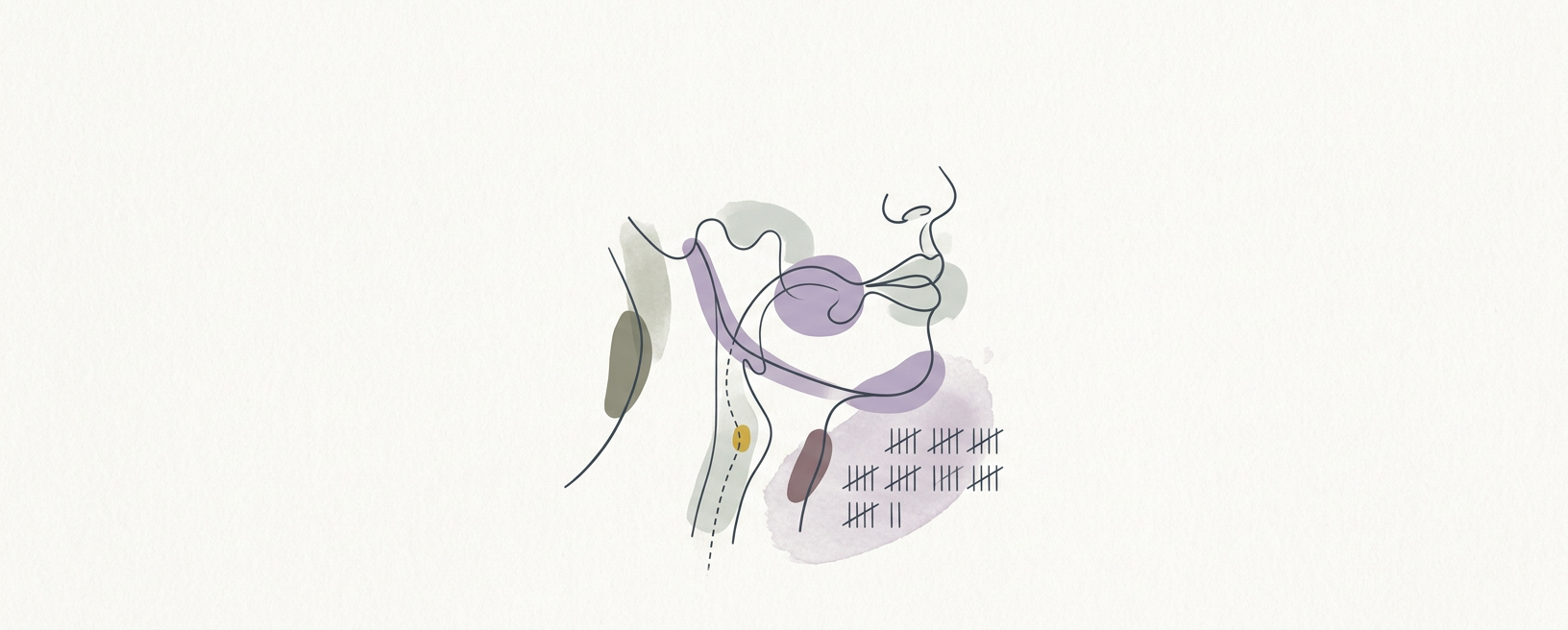 | When you find yourself moving through a meal on autopilot, detached from the experience of eating, it signals a quiet nervous system drift. This practice invites a return to the direct sensations of consumption. It asks for a brief, intentional pause within the meal you are already eating.
- Select a piece of food. It could be a slice of carrot or a bite of bread.
- Place it into your mouth. Do not immediately chew or swallow. Instead, notice its texture, temperature, and initial taste on your tongue for three seconds.
- Begin chewing slowly. Count aloud or silently to 15 chewing cycles. Pay attention to the action of your jaw, the shifting consistency of the food, and the evolving flavours.
- Swallow deliberately, feeling the descent of the food down your throat.
- Take one full, relaxed breath before reaching for the next bite. Repeat for the first two to three bites of any meal.
Afterwards, observe any subtle shift in your level of presence or the pace of your meal. | |
Practise it in full
www.kokorology.com/r/cqq3f4h
| |
Log this in your Nervous System Journal →
|
|
The Movement
19
| Resistance Band Face Pull | Integrate your upper back and improve posture with this targeted exercise. |  | Your upper back and rear shoulders are critical for stable posture and overall movement capacity. This movement helps to counter the forward-slump often associated with desk work and digital device use, directly impacting your physical baseline.
- Anchor the band: Loop a light-to-medium resistance band around a sturdy anchor point at chest height—a door frame, a squat rack, or even a heavy furniture leg. The anchor should be stable. My preferred option is a pull-up bar, if available.
- Grip the band: Stand facing the anchor, holding one end of the band in each hand with an overhand grip (palms down). Step back until there's light tension in the band with your arms extended forward.
- Initiate the pull: Take a deep breath in, brace your core, and on the exhale, pull the band directly towards your face. Your elbows should lead, flaring out wide and ending up higher than your hands. Imagine pulling your shoulder blades together and down your back. Gaze remains forward.
- Hold and return: Pause briefly at the peak of the pull, feeling the contraction in your upper back and rear shoulders. Then, slowly and with control, reverse the movement, allowing the band to pull your arms back to the starting position.
| |
See the movement in full
www.kokorology.com/r/nfw5oe9
| |
Log this in your Nervous System Journal →
|
|
The Routine
20
| Restore Coherence After Conflict | A simple routine to down-regulate your nervous system after a challenging interaction. | 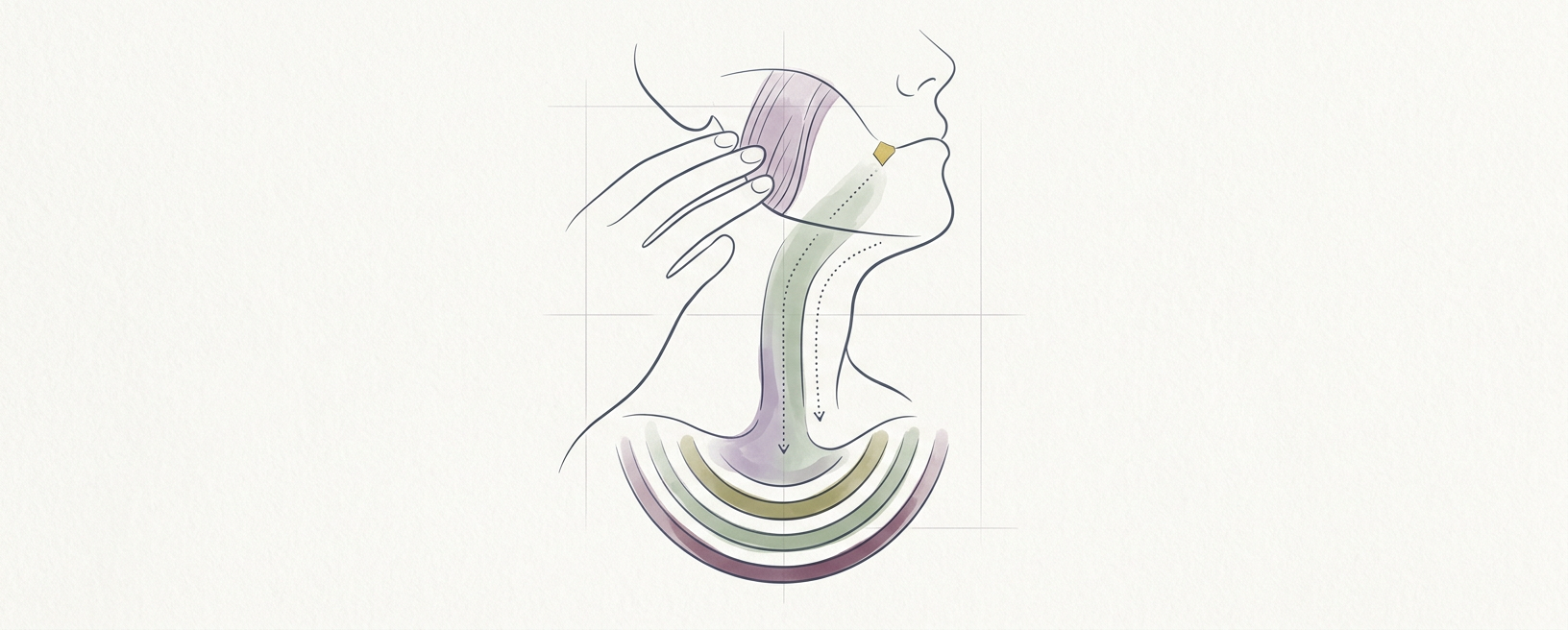 | Conflict, even minor, creates static and raises your internal load. This routine helps to gently guide your nervous system back to a regulated state, allowing you to process the event without getting stuck in a prolonged stress response. It's about bringing your baseline back online.
- Oral Rehydration — Slowly drink 8-12 oz of water. Add a pinch of sea salt or a few drops of electrolyte concentrate. Notice the sensation of the cool liquid moving down your throat.
- Masseter and Jaw Release — Place your fingertips on your masseter muscles, just below your cheekbones. Apply gentle, sustained pressure, then slowly open and close your mouth a few times, feeling the muscle soften. Repeat this motion for 60 seconds.
- Chew for Interoceptive Grounding — Access today's daily hack: [Chew for Interoceptive Grounding](/practices/chew-for-interoceptive-grounding-2026-09-27). Follow the instructions for purposeful chewing to ground your system.
- Supported Diaphragmatic Breath — Lie supine with knees bent and feet flat, or sit comfortably with feet grounded. Place one hand on your chest and one on your abdomen. Inhale slowly through your nose, feeling your abdomen rise before your chest. Exhale gently and fully, allowing your abdomen to fall. Focus on the sensation of your belly moving. Repeat for 2-3 minutes, aiming to slow your exhale.
| |
Follow the routine in full
www.kokorology.com/r/tskcqgm
| |
Log this in your Nervous System Journal →
|
|
Kokorology product
21
| Every Anchor and every care package, without making your symptoms audition for separate subscriptions. |  |
|
Kokorology product
25
| Twenty packages, one per load: cortisol, sleep, recovery, hydration, peptides, cycle, immunity. |  |
|
Kokorology product
29
| Level 1 through certification. The mechanism, then the practice, then the proof you can teach it. |  |
|
Kokorology product
33
| The studies underneath every claim on this site, in plain English, with the numbers left in. |  |
|
Kokorology product
37
| One eight-minute repair a day. Free to read; included with the Nervous System Journal. |  |
|
Kokorology product
40
| For teams whose output keeps outrunning their recovery. Capacity, measured — not vibes. |  |
|
From the house
41
| Two prompts in the morning, three at night, and the whole hacks library alongside them. €25/mo, cancel whenever. |  |
|
Correspondence
42
| Your Body's Unspoken Language |  | This week has been a deep dive into the language your body speaks. It's not always loud, and it's rarely convenient, but those signals — the inflammation, the fatigue, the subtle shifts in your mood — are never arbitrary. They are precise communications from a system designed for survival and adaptation. My hope is that this edition has given you new tools, or at least new ways of thinking, to interpret these messages not as flaws, but as data points.
Don't just read the signals; act on them. Whether it's adjusting your sleep, re-evaluating your digital diet, or consciously bringing presence to your meals, every small intervention helps regulate your nervous system. What's one signal you've been ignoring? And what's the smallest step you can take to address it today? Until next time, listen well. | |
The Nervous System Journal — €25/mo
Two prompts in the morning, three at night. Includes the full hacks library.
| |
All Access — every anchor and care package
The whole system, one pass.
| |
Anchor protocols — €40 each
One protocol for the season you are actually in.
|
|