Daily movement
Resistance Band Face Pull for Upper Back Integration
This movement integrates the upper back and shoulders, improving posture and reducing neck and shoulder load.
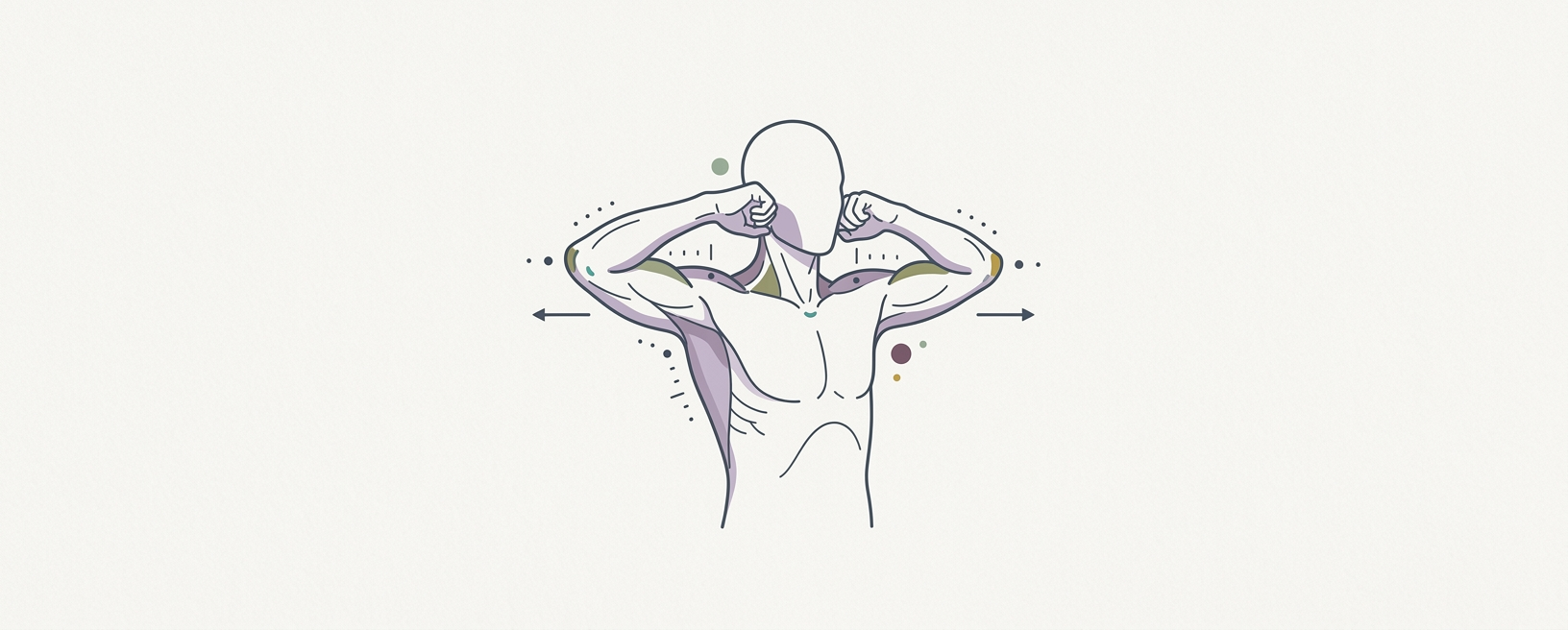
This movement integrates the upper back and shoulders, improving posture and reducing neck and shoulder load.
resistance band · functional strength training (Kelly Starrett) · When shoulders round forward, the upper back feels weak, or you carry tension in the neck and traps. · 3 sets of 10–15 repetitions, with a 2-second concentric pull and a 3-second eccentric return.
Why it works
The resistance band face pull engages the entire posterior chain of the shoulder girdle—rhomboids, rear deltoids, and lower trapezius. This counteracts the common anterior dominance from prolonged sitting and screen use. Mechanistically, it provides external rotation and scapular retraction under load, improving joint centration of the humerus within the glenoid fossa. This action sends proprioceptive feedback to the central nervous system, promoting a more balanced muscle activation pattern around the shoulder joint. On a tissue level, the controlled eccentric phase lengthens and strengthens the posterior musculature, increasing their capacity to resist protraction. The constant tension from the band also improves interoceptive awareness of shoulder position, helping to reset resting posture.
How to practice
Anchor the band: Loop a light-to-medium resistance band around a sturdy anchor point at chest height—a door frame, a squat rack, or even a heavy furniture leg. The anchor should be stable. My preferred option is a pull-up bar, if available.
Grip the band: Stand facing the anchor, holding one end of the band in each hand with an overhand grip (palms down). Step back until there's light tension in the band with your arms extended forward.
Initiate the pull: Take a deep breath in, brace your core, and on the exhale, pull the band directly towards your face. Your elbows should lead, flaring out wide and ending up higher than your hands. Imagine pulling your shoulder blades together and down your back. Gaze remains forward.
Hold and return: Pause briefly at the peak of the pull, feeling the contraction in your upper back and rear shoulders. Then, slowly and with control, reverse the movement, allowing the band to pull your arms back to the starting position over a count of three seconds. Don't let the band snap you back.
Repeat: Maintain constant tension throughout. Avoid shrugging your shoulders towards your ears. Keep your neck long and relaxed.
Anchor the band: Loop a light-to-medium resistance band around a sturdy anchor point at chest height—a door frame, a squat rack, or even a heavy furniture leg. The anchor should be stable. My preferred option is a pull-up bar, if available.
Grip the band: Stand facing the anchor, holding one end of the band in each hand with an overhand grip (palms down). Step back until there's light tension in the band with your arms extended forward.
Initiate the pull: Take a deep breath in, brace your core, and on the exhale, pull the band directly towards your face. Your elbows should lead, flaring out wide and ending up higher than your hands. Imagine pulling your shoulder blades together and down your back. Gaze remains forward.
Hold and return: Pause briefly at the peak of the pull, feeling the contraction in your upper back and rear shoulders. Then, slowly and with control, reverse the movement, allowing the band to pull your arms back to the starting position over a count of three seconds. Don't let the band snap you back.
Repeat: Maintain constant tension throughout. Avoid shrugging your shoulders towards your ears. Keep your neck long and relaxed.