EDITION 7 |
The Nervous State
I
|
Capacity Under Load
Why your body struggles to adapt — and how to keep your system regulated.
|  |
|
A note for this week
II
| A note for this week |  | Brain fog, a sour stomach and an unanswered email don't look like a coherent collection. That's why the main piece in Load-Bearing caught my attention: it puts experiences usually filed in separate compartments into the same nervous-system conversation. There is value in looking for connections. There is also a risk of making one explanation do every job.
I want to hold both thoughts while I read. The nervous system coordinates a great deal; it isn't a reason to stop considering other causes or seeking care. The Pulsetto review adds a concrete question to the wider argument: where might an external tool help, and what support still needs to exist around it?
These are the connections I try to sharpen in my weekly learning, then make available here. What this edition leaves me thinking about is support rather than persuasion. If someone is struggling, 'try harder' is an unusually incurious response. I'd rather ask what is making the day difficult to carry, what is missing, and whether the proposed help addresses either. Determination is useful. It shouldn't have to impersonate everything else.
— Sabin |
|
The Masthead
III
| Kokorology | | What Kokorology means
Kokoro is Japanese for the alignment of heart, mind, body and soul. The -logy is the ambition: that wellness stops being a lifestyle aisle and becomes a school subject.
Who writes this
I'm Sabin — founder, builder and writer, working across wellness, AI, design and independent media. Kokorology brings my reading on the nervous system together with practices, protocols and tools for everyday life.
I update my understanding as I read. This magazine is where I share the threads worth following: research, daily reads, movement, routines and the questions behind them. | |
More about Kokorology and Sabin
kokorology.com/about
|
|
Contents
V
| Week of Monday 24 August |  | |
A note for this week
From Sabin
| |
The Masthead
Kokorology and who writes this
| |
Keep in touch
The conversation continues
| |
The Read
Everything Is Nervous System
| |
The Week in Briefs
6 daily reads, one page each.
| |
Signals
How external factors impact your internal state this week.
| |
The Verdict
Pulsetto: A Device to Borrow Regulation
| |
Evidence
New research showing direct physiological impact.
| |
The Practice
Interlock Fingers, Lengthen Spine
| |
The Movement
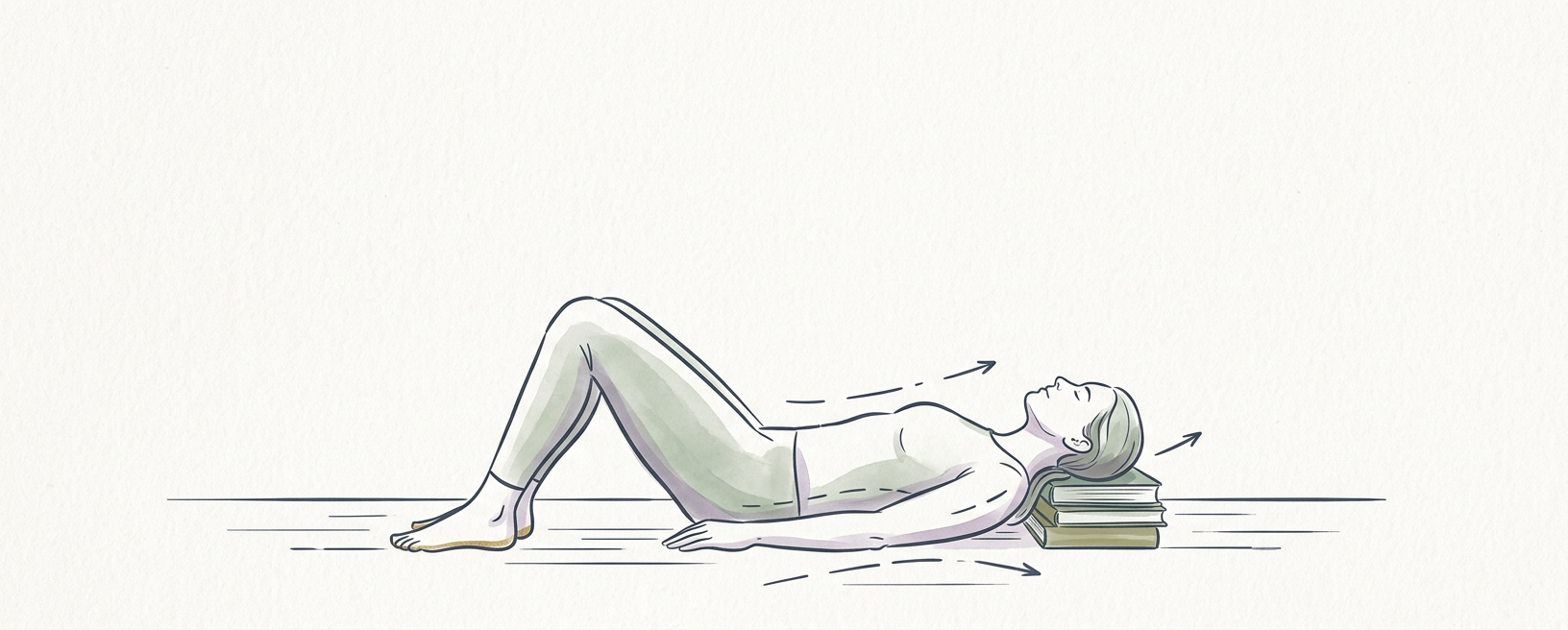
Semi-Supine Constructive Rest for Spinal Freedom
| |
The Routine
Anchoring for Articulating Your Limits
| |
Also this week
79 pieces recapped.
| |
Correspondence
Where to go next.
|
|
The Read
VI
| Everything Is Nervous System | Your brain fog, sour stomach, and email paralysis are dispatches from a single operating system. Understanding this unified system is your first step to regulation. | I often hear people talk about their 'mental health' or their 'gut issues' as if these were entirely separate entities, managed by different operating systems. But my body tells me a different story every single morning. That morning after a deadline? It’s not just a fuzzy head, it’s a full-body broadcast. The brain fog, the sour stomach, the email paralysis – those aren't disparate problems. They're dispatches from a single, deeply integrated operating system: your nervous system.
We’ve been conditioned to compartmentalize. A stiff neck is a physiotherapy problem. Anxiety is a therapist problem. Brain fog is a coffee problem. But this siloed thinking misses the point. Your body is an interconnected network. When one part is under load, the ripple effect hits everything. Dr. Stephen Porges, with his Polyvagal Theory, gave us a map for this. He showed how the vagus nerve acts like a kind of central command, monitoring and influencing everything from your heart rate to your digestion to your emotional state. It’s not just about 'fight or flight'; it’s about a constant, nuanced assessment of safety and threat, playing out beneath your conscious awareness.
Consider the concept of load. Your nervous system is constantly processing inputs – external demands from your job, internal signals from your gut microbiome, the static from too much screen time. Each of these adds to the overall load. When the load exceeds your system's current capacity, you don’t just get one symptom. You get a symphony of dysregulation. That low-grade headache isn't just about tension; it's part of the global systemic response. Your sleep quality suffers, your digestion slows, your capacity for patience shrinks. It’s all interconnected.
I’ve watched clients cycle through specialist after specialist, trying to fix isolated symptoms, only to find the core issue persists. They’re trying to fix a single instrument in an orchestra when the entire conductor is having a bad day. The solution isn't more fragmentation; it’s a return to viewing the body as a whole. My approach has always been to ask: what is the actual felt state here? Is it agitation, a sense of being 'tired but wired'? Is it a collapse, a feeling of utter exhaustion despite minimal effort? These aren't just labels; they're direct readouts from your system.
Take the example of chronic inflammation, which news signals often discuss. We see it as a separate issue, perhaps an immune problem. But inflammation isn't just a local event; it’s a systemic signal that impacts your brain, your gut, your sleep. It adds significant load to your nervous system. When your system is taxed by internal inflammatory signals, its capacity to handle external stressors — a demanding boss, a challenging conversation — diminishes. Your fuse gets shorter. Your ability to focus deteriorates. It's not about being weak; it's about finite capacity.
The real leverage comes from understanding this. Instead of chasing individual symptoms, we look at the system's baseline. How much static is present? What’s regulating it, and what’s putting it under pressure? When I acknowledge that my brain fog and sour stomach are linked dispatches, I stop fighting them as separate battles. I start looking for common levers that impact the whole system. Hydration, movement, connection, sleep – these aren't just 'good habits.' They are direct inputs that either reduce the load or expand the capacity of your nervous system to handle what life throws at it. It’s a pragmatic, rather than punitive, approach.
Ultimately, everything truly is nervous system. Your entire experience of the world, from the taste of your morning coffee to the frustration of traffic, is filtered through this lens. When you understand this, you stop blaming yourself for 'failing' and start seeing yourself as a system doing its best under specific conditions. And with that understanding, you can begin to make meaningful changes that actually register in your felt state. | |
Your entire experience of the world, from the taste of your morning coffee to the frustration of traffic, is filtered through your nervous system.
| |
Read the original
www.kokorology.com/r/ye6pzoz
|
|
The Week in Briefs
VII
| Policy Roadblocks for New Therapies | State-level policies are slowing access to biotech innovations. |  | It's a frustrating paradox: biotech is constantly pushing the boundaries of what's treatable, yet state-level policies often act as roadblocks, gumming up access to these new therapies. My read on this isn't about Luddism; it’s about the sheer inertia of regulation trying to keep pace with innovation. The body needs solutions, but the system struggles to deliver them.
This isn't just an abstract policy debate; it has direct implications for patient care and the baseline health of communities. When state policies, for example, slow the approval or reimbursement of a new targeted therapy for a chronic inflammatory condition, it leaves people stuck with older, less effective treatments. That sustained inflammation translates to a higher allostatic load on their nervous system. It's a prime example of how external policy decisions directly impact internal physiological states, delaying relief and exacerbating suffering. Keep an eye on states like California; their implementation of healthcare cost controls will set a precedent for others, influencing future access to cutting-edge treatments. | |
Policy often lags biotech.
| |
Delays impact patient access.
| |
External policy affects internal health.
| |
Read the full daily read
www.kokorology.com/r/3a7bafr
|
|
The Week in Briefs
VIII
| Medical-Grade Tech Outpaces Policy | Consumers are using medical tech daily, policy can't keep up. |  | Today's news highlights a clear trend: consumers are pushing medical-grade solutions into daily life, while policy scrambles to keep up with both tech innovation and basic access. Think about those 'medical-grade' wearables now found on every wrist. They offer impressive data, but how that data is interpreted, regulated, and integrated into actual healthcare pathways is still a wild west.
My take? The nervous system benefits from data, but not static. When you get readings on your sleep architecture or heart rate variability, it can be useful for self-regulation, provided the information is accurate and actionable. But if these devices are generating clinical-level insights without clinical-level oversight, it adds another layer of load – from confusion to potential misdiagnosis. Policy makers are grappling with how to ensure public safety without stifling innovation. It’s a delicate balance. The challenge is ensuring that this rush of tech actually improves our baseline health, rather than just adding more data points to obsess over without a clear path forward. Watch for the next wave of 'medical-grade' wearables as AI interpretation improves and regulatory pathways adapt. | |
Tech adoption outpaces policy.
| |
Regulatory gaps create static.
| |
Focus on actionable data, not just data.
| |
Read the full daily read
www.kokorology.com/r/hx6cv6p
|
|
The Week in Briefs
IX
| Precision Biology Reshapes Anti-Aging | Anti-aging is now precision biology, not generic promises. |  | This isn't your grandma's anti-aging. Today's news shows a clear pattern toward deep biological precision, from single-cell mapping to targeted therapies. We're pushing past generic lifespan promises to understand the actual mechanisms of cellular decline. This is good news, because your body deserves precision, not vague marketing.
When we talk about 'precision biology,' we're talking about understanding, for instance, how individual cells age differently, or how specific inflammatory pathways contribute to age-related conditions. This focus means interventions become far more targeted. Instead of a general 'anti-aging supplement,' we might see compounds that specifically enhance cellular cleanup (like efferocytosis) or improve mitochondrial efficiency. This reduces the systemic load on your body, giving your nervous system a break from constantly trying to repair cumulative damage. It’s a move from broad-spectrum guesses to focused interventions, promising a healthier baseline for longer. Keep an eye on biotech firms developing precise diagnostics for chronic inflammation and neurodegeneration. | |
Aging science is precise.
| |
Targeted therapies emerge.
| |
Aims to reduce systemic load.
| |
Read the full daily read
www.kokorology.com/r/ajytw2x
|
|
The Week in Briefs
X
| Policy vs. Biology: The Cellular Battle | Policy makers and corporate interests clash over cellular science. |  | Today's moves show the growing battle between policy makers, corporate interests, and the hard science of human biology, especially at the cellular level. I see this as a constant push and pull over how much the body's fundamental needs are prioritized against economic models. It impacts everything from what treatments are developed to how accessible they are.
Take the example of new drugs that target specific cellular pathways. These innovations often come with high price tags, leading to regulatory debates about pricing controls, particularly in Europe. When EU bodies debate subsidies for pharma or pricing for digital health apps, it directly impacts the business models that bring these solutions to market. For the average person, this means that even if a therapy exists that could reduce a chronic inflammatory load or regulate a dysregulated nervous system, its availability might be hampered by policy decisions. It's a reminder that political will, or lack thereof, can be a direct contributor to the physiological state of a population. These decisions will directly impact the business models for digital wellness and pharmaceutical production in Europe. | |
Policy, profit, and biology clash.
| |
Impacts drug pricing, app regulation.
| |
Affects access to cellular-level health.
| |
Read the full daily read
www.kokorology.com/r/k3fmbga
|
|
The Week in Briefs
XI
| Longevity's Unregulated Frontier | Global policy fails basic access as biotech chases longevity. |  | Today's moves show a clear disconnect: global health policy can't get basic access right, even as biotech chases longevity with new drugs and diagnostics. This isn't a moral failing; it's a systemic one that creates significant load on individual bodies. My bet is that this gap creates more static, not less.
On one hand, we have fundamental issues like equitable access to basic medical care. On the other, we have companies pitching 'young blood' injectables, often outside traditional regulatory pathways. This blurring line between wellness and medicine is a concern because it can lead to unproven and potentially harmful interventions. When policy isn't clear on where health ends and enhancement begins, it leaves consumers navigating a minefield of claims. Your body is not a playground for unregulated experiments. The lack of clarity around these longevity markets means less signal and more noise for those genuinely trying to optimize their health. The line between wellness and medicine is blurring rapidly, and someone's going to draw it, probably with lawyers. | |
Basic access vs. longevity tech.
| |
Unregulated 'young blood' market.
| |
Blurred lines add consumer load.
| |
Read the full daily read
www.kokorology.com/r/j5ihixo
|
|
The Week in Briefs
XII
| Systemic Failures, Gut Vulnerability | Policy fails, gut health suffers, mental health stalls. | | Today’s market patterns show policy promises falling apart, the gut becoming a central vulnerability, and biopharma hitting a wall on mental health treatments. This trifecta is a direct hit to our collective nervous system capacity. When the external environment becomes less predictable, your internal state takes the brunt.
Consider the gut. It's not just for digestion; it's a key communication hub for your nervous system. When policy failures impact food safety or access to nutrient-dense foods, your gut microbiome takes a hit, which in turn affects your mental state. Biopharma's struggles with mental health treatments, as seen in AstraZeneca's failed psychedelic trial, show that one-size-fits-all pharmaceutical solutions aren't always the answer. We need more integrated, gut-nervous system solutions that acknowledge the deep connection between physical symptoms and internal states. This isn't just about 'feeling good'; it’s about reducing the physiological static that constantly drains our capacity. Watch for how the market responds to the ongoing demand for integrated, gut-nervous system solutions that connect physical symptoms to internal states. | |
Policy failures impact gut.
| |
Gut vulnerability affects mind.
| |
Biopharma struggles with mental health.
| |
Read the full daily read
www.kokorology.com/r/ksjch6s
|
|
Signals
13
| What moved, and what it means | How external factors impact your internal state this week. |  | |
Bad Breath: Most Cases Start in the Mouth, Not the Gut
Drauzio Varella · 30/08/2026
Most bad breath is oral, not gut. This matters because people often chase expensive, complex gut protocols for a simple dental hygiene problem, adding unnecessary load to their system and wasting resources. The mechanism is local oral bacteria, not systemic dysbiosis.
| |
Study: 40% of Cancers Preventable with 8 Lifestyle Shifts
Drauzio Varella · 30/08/2026
40% of cancers are preventable through lifestyle shifts. This signal underscores that the body is not a passive recipient; consistent inputs like diet and movement increase the immune system's capacity to handle cellular abnormalities, reducing systemic inflammatory load.
| |
India Cracks Down on Unsafe Food, Dairies, and Kitchens
The Better India (Health) · 30/08/2026
India's food safety crackdown is crucial because adulterated or badly handled food directly impacts the gut microbiome and, by extension, the nervous system. Chronic exposure to such food triggers inflammation and impacts nutrient absorption, making it harder for the body to maintain its baseline.
| |
Chennai Residents Restore 50-Acre Lake, Replenish Groundwater
The Better India (Health) · 30/08/2026
Community lake restoration in Chennai removed a major environmental stressor. Chronic water scarcity and pollution create a constant drain on nervous system capacity through elevated cortisol; resolving this improves overall well-being and reduces physiological load.
| |
Delhi Couple Launches High-Protein Soya Chaap After Food Scare
The Better India (Health) · 30/08/2026
A Delhi couple's high-protein soya chaap initiative is a direct response to public health needs, addressing disrupted blood sugar and lack of satiety from low-quality processed foods. This innovation reduces metabolic load by offering accessible, higher-quality protein.
| |
Australia launches national Million Moves physical activity challenge
Croakey Health Media · 30/08/2026
Australia's 'Million Moves' campaign aims to shift the collective baseline for daily physical activity. Reducing static load and increasing incidental movement nudges vagal tone up, preventing the nervous system from locking into a fight-or-flight state from prolonged inactivity.
| |
Fuel costs could keep food prices high through 2027
The Food Institute · 29/08/2026
High fuel costs mean food prices remain elevated through 2027, leading to reduced access to diverse, nutrient-dense foods. This creates sustained inflammation from poor diet, plus the stress of budgeting, directly taxing the nervous system and metabolic function, raising the baseline load.
| |
Mossy is a desk plant that wilts to remind you to take breaks
Product Hunt — Health & Fitness · 29/08/2026
Mossy, a wilting desk plant, provides an analog signal for taking breaks. This helps regulate the HPA axis *before* hitting the redline, offering micro-interventions throughout the day to downregulate the nervous system and preserve capacity.
|
|
Kokorology product
14
| Start with whatever is costing you most this week. Each protocol is €40; stacking more lowers the price. | 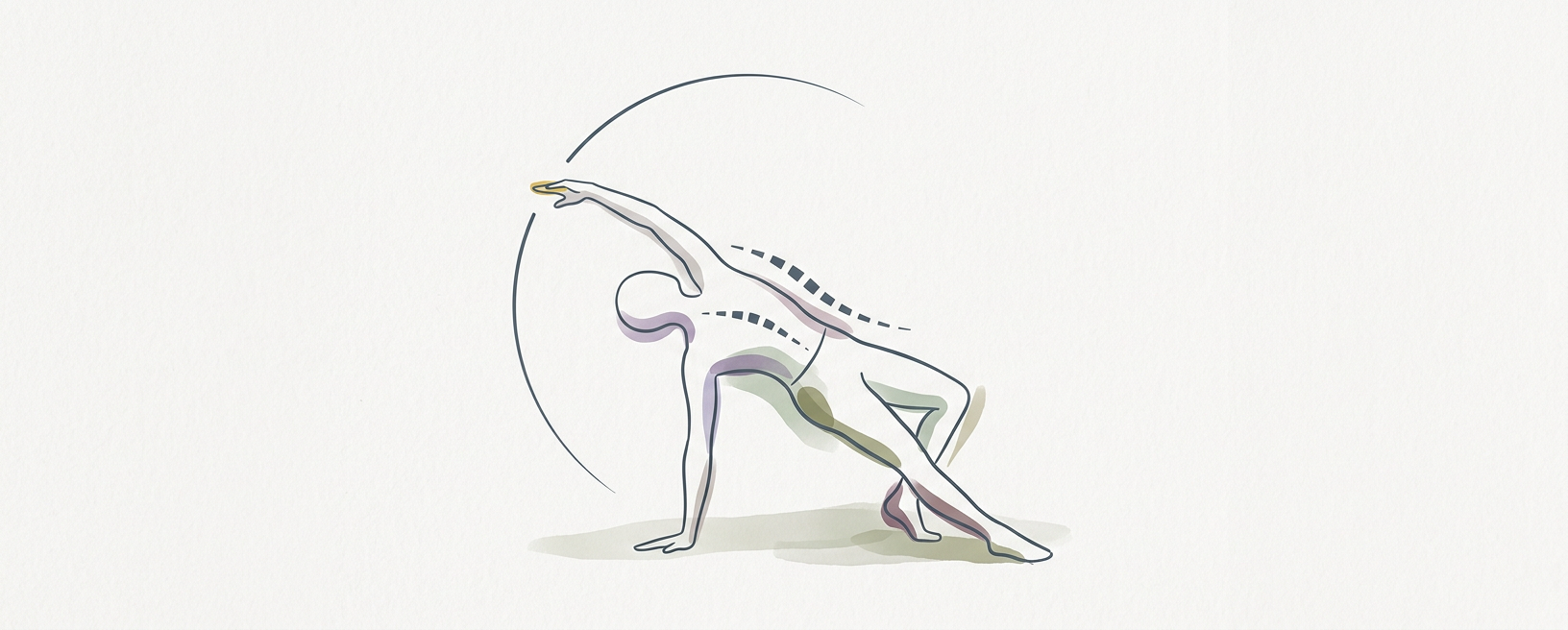 |
|
The Verdict
15
| Pulsetto: A Device to Borrow Regulation | Sometimes, you just need a helping hand to get your vagus nerve on board. |  | I've reviewed many vagus nerve stimulation devices, and they all make big promises. Pulsetto, a transcutaneous auricular vagus nerve stimulator (taVNS), is no different. The theory is solid: stimulating the vagus nerve, particularly through the outer ear, can boost parasympathetic tone, calming the nervous system. The mechanism is rooted in reducing static and improving regulation.
My take? It works for some, but not for everyone, and it's not a magic bullet. I scored it a 6.5/10 with a 'use-with-care' label. In moments where you feel 'tired but wired,' a quick 10-minute session with Pulsetto might help nudge your system back towards a more regulated state. It's borrowing regulation, essentially. For folks who struggle with chronic low vagal tone, it offers a tangible, non-invasive tool. But it doesn't replace the foundational work: sleep, nutrition, movement, and genuine human connection. It's a tool, not a fix. The capacity it builds is temporary unless integrated into a broader strategy for reducing overall load. | |
Pulsetto
use with care · 6.5/10
| |
Read the full review
kokorology.com/product-reviews/pulsetto-review
|
|
Kokorology product
16
| A daily record of what your system is actually doing. Includes the complete hacks library. €25/mo. |  |
|
Evidence
17
| The studies underneath | New research showing direct physiological impact. |  | |
Brief Structured Respiration Practices Enhance Mood and Reduce Physiological Arousal
Kokorology Research Library
Cyclic sighing, with its prolonged exhalations, produced the largest daily mood improvement and respiratory rate reduction in a Stanford trial. This effect demonstrates how lengthening the vagal brake via baroreflex increases parasympathetic tone, offering a rapid, portable down-regulation mechanism for the nervous system.
| |
A Gradient of Childhood Self-Control Predicts Health, Wealth, and Public Safety
Kokorology Research Library
A Dunedin study found a strong gradient: higher childhood self-control predicted better adult health, wealth, and public safety outcomes across the entire population. This effect, which persisted after controlling for genetics and environment, suggests that early self-regulation skills significantly build long-term physiological and social capacity.
| |
Semaglutide and Cardiovascular Outcomes in Obesity Without Diabetes (SELECT)
Kokorology Research Library
The SELECT trial showed semaglutide reduced major cardiovascular events by 20% in non-diabetic individuals with pre-existing CVD. This benefit emerged early and independently of weight loss, suggesting direct vascular and inflammatory effects beyond calorie deficit, reducing metabolic load on the heart.
| |
GLP-1 Receptor Agonists and Kidney Outcomes: Meta-analysis of Cardiovascular Outcome Trials
Kokorology Research Library
A meta-analysis of GLP-1 trials found a 21% reduction in composite kidney outcomes, driven mostly by albuminuria reduction and flattened eGFR slope. This indicates GLP-1s directly reduce renal load, improving kidney function and signaling a protective effect on systemic health.
|
|
The Practice
18
| Interlock Fingers, Lengthen Spine | A quick physical reset to expand your internal space. | 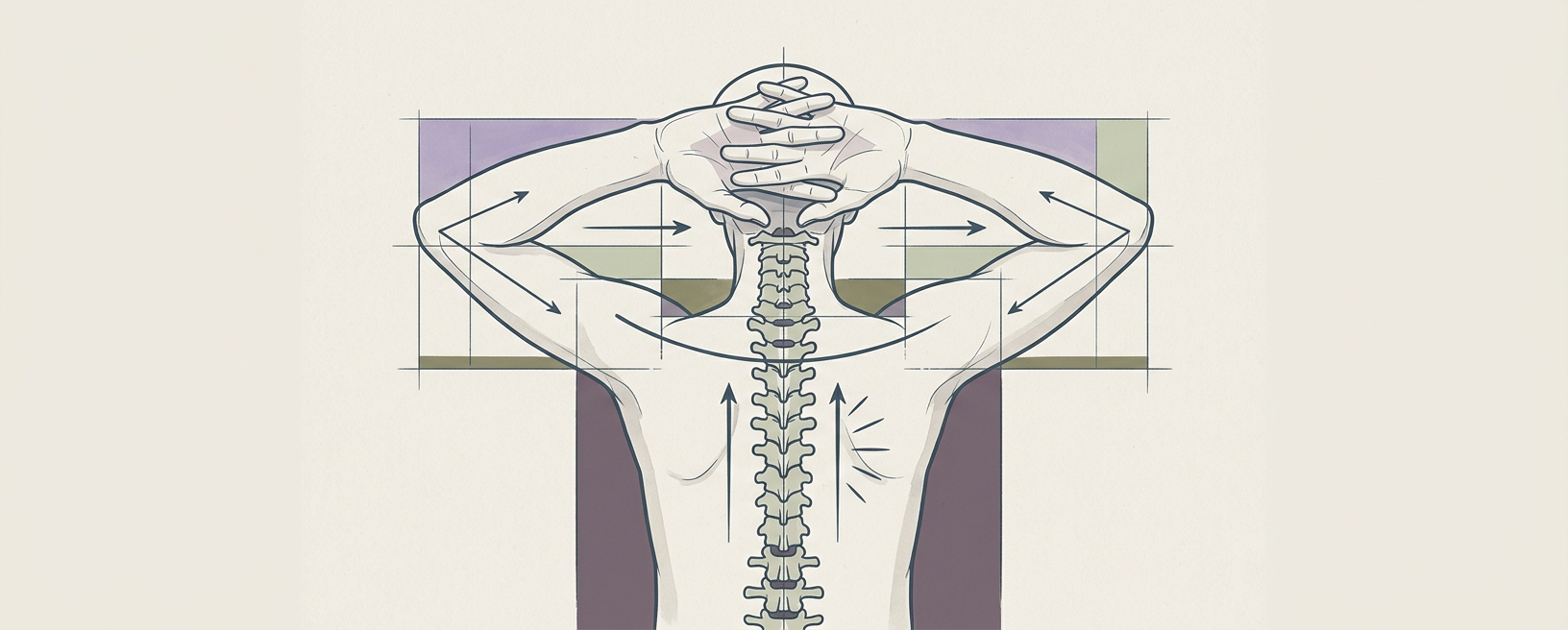 | This small movement is about consciously shifting your physical state when you feel constrained or anticipatory. It's a signal to your nervous system that it's safe to expand.
- Interlock your fingers, palms facing away from you, at about chest height.
- Inhale slowly, as you press your palms away and gently extend your arms forward.
- As you exhale, bring your interlocked hands just behind your head, elbows pointing gently outward.
- On your next inhale, press your hands upward, feeling a subtle lengthening through your spine. Keep your shoulders relaxed, away from your ears.
- Exhale slowly, letting your hands return to just behind your head. Repeat this upward press and release three times.
- Release your hands and notice the subtle recalibration in your torso and breath. Notice a slight expansion in your awareness.
| |
Practise it in full
www.kokorology.com/r/ym5g5tq
| |
Log this in your Nervous System Journal →
|
|
The Movement
19
| Semi-Supine Constructive Rest for Spinal Freedom | Release tension and find support for your nervous system. | 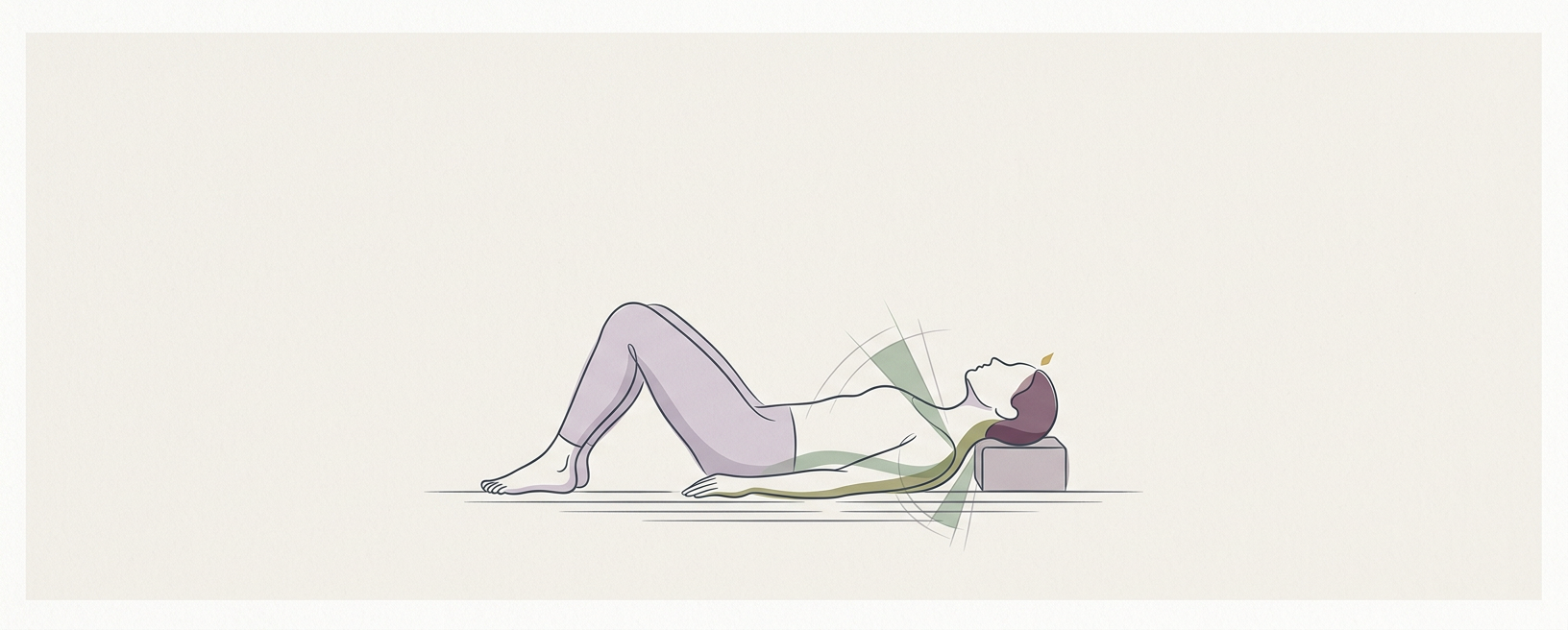 | This practice is about allowing gravity and self-awareness to release chronic tension in your spine and improve your body's overall sense of support, which directly impacts your nervous system's capacity.
- Lie on your back. Find a firm, flat surface—the floor is ideal. Place a few paperback books under your head so that your nose points to the ceiling, not toward your chin or the ceiling behind you. Your knees should be bent, feet flat on the floor, about hip-width apart, and far enough from your body that your knees can stand up without effort. Let your hands rest comfortably on your abdomen or by your sides.
- Allow the surface to support you. For several minutes, bring your attention to the contact points of your body with the floor. Notice the weight of your head on the books, your shoulders, your pelvis, and the soles of your feet. Let gravity do its work. Resist the urge to adjust or "correct" your posture. I often just note where I feel any subtle pressure.
- Think "neck free." Begin to give gentle, non-striving directions to yourself. Start with the thought, "My neck is free to allow my head to go forward and up." This isn't a muscular effort; it's a mental suggestion to release tension at the base of your skull. You'll often feel subtle shifts in your breathing and a softening across your shoulders.
| |
See the movement in full
www.kokorology.com/r/3gjeeo5
| |
Log this in your Nervous System Journal →
|
|
The Routine
20
| Anchoring for Articulating Your Limits | A sequence to regulate your nervous system before tough conversations. |  | Before you articulate a boundary or prepare for a challenging discussion, regulating your own state is crucial. This routine builds internal spaciousness and reduces physiological static, helping you communicate from a place of capacity.
- Hydrate and Mineralize — Take 3-4 slow sips of cool water with a pinch of sea salt. Notice the sensation of the liquid moving down your throat, reaching your stomach. This micro-intake supports neural conductivity and cellular hydration.
- Masseter and Jaw Release — Gently massage your masseter muscles with your fingertips for 90 seconds per side. Open and close your jaw slowly, feeling for any restriction. Allow your tongue to rest on the roof of your mouth, just behind your front teeth. This reduces unconscious tension often held during anticipation.
- Interlock Fingers, Lengthen Spine — Perform the 'Interlock Fingers, Lengthen Spine' practice described in today's hack. Focus on the grounded sensation through your sit bones and the active lengthening through your crown, creating internal spaciousness.
- Shoulder Blade Awareness — Gently roll your shoulders back and down a few times. Then, bring awareness to the space between your shoulder blades. Imagine a warm, heavy blanket settling there, releasing any residual tension. This signals safety to your nervous system, improving your capacity to hold your ground.
| |
Follow the routine in full
www.kokorology.com/r/ero9i8d
| |
Log this in your Nervous System Journal →
|
|
Kokorology product
21
| Every Anchor and every care package, without making your symptoms audition for separate subscriptions. |  |
|
Kokorology product
25
| Twenty packages, one per load: cortisol, sleep, recovery, hydration, peptides, cycle, immunity. |  |
|
Kokorology product
29
| Level 1 through certification. The mechanism, then the practice, then the proof you can teach it. |  |
|
Kokorology product
33
| The studies underneath every claim on this site, in plain English, with the numbers left in. |  |
|
Kokorology product
37
| One eight-minute repair a day. Free to read; included with the Nervous System Journal. |  |
|
Kokorology product
40
| For teams whose output keeps outrunning their recovery. Capacity, measured — not vibes. |  |
|
From the house
41
| Two prompts in the morning, three at night, and the whole hacks library alongside them. €25/mo, cancel whenever. | 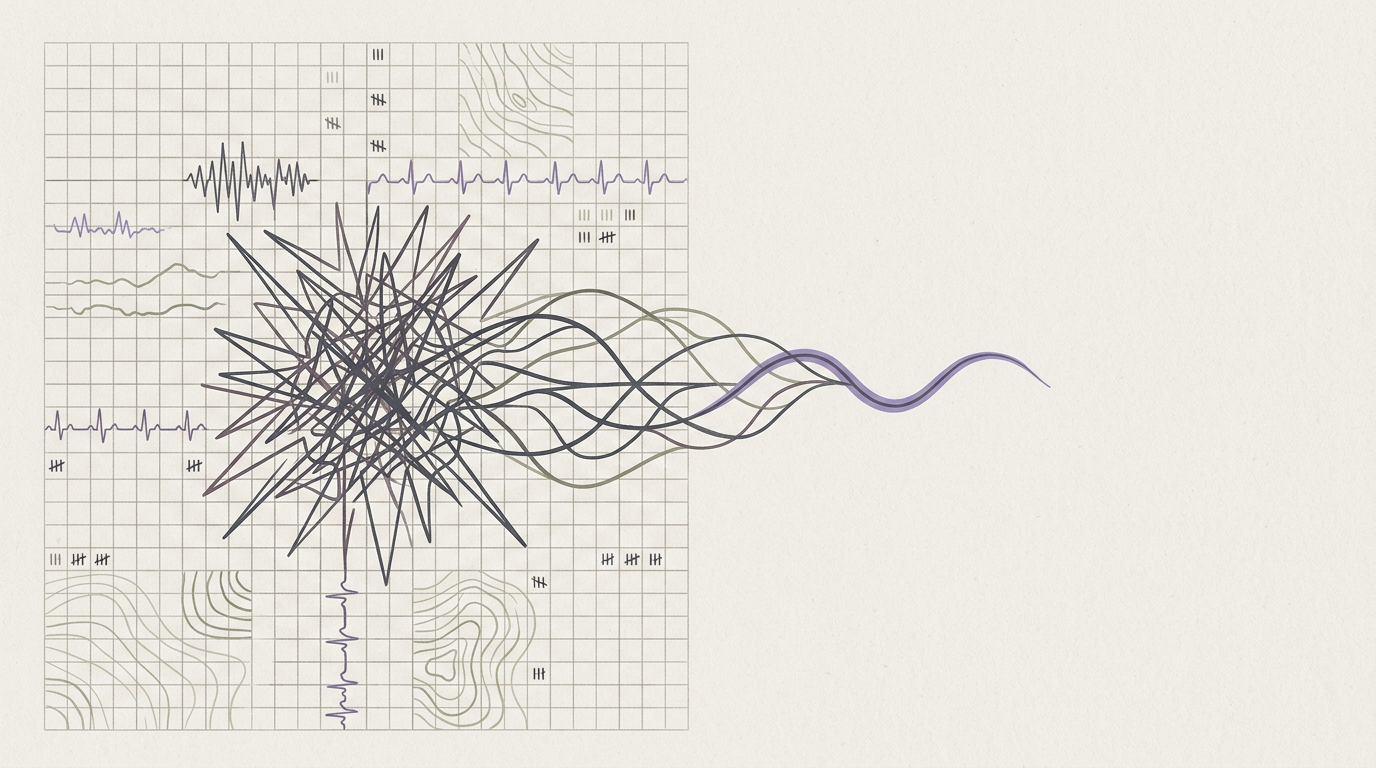 |
|
Correspondence
42
| What's Your Capacity? | 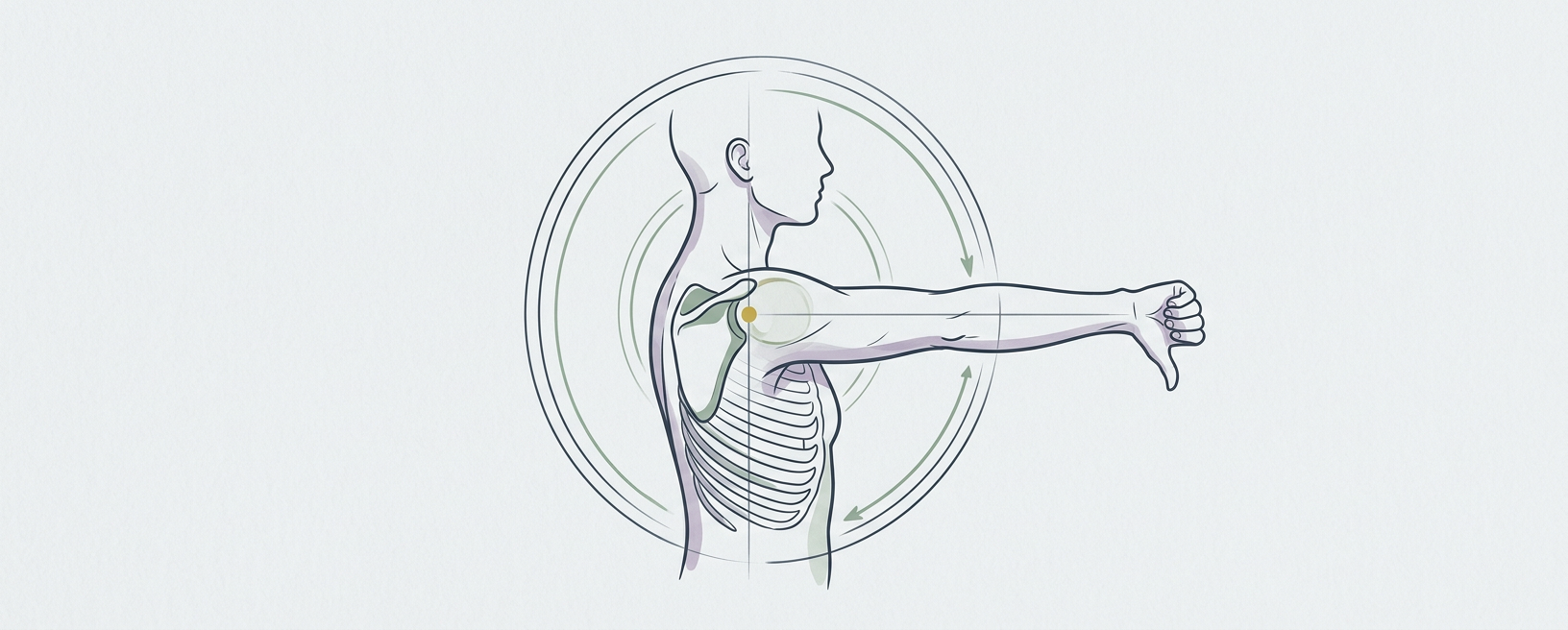 | This week, we've looked at everything from El Niño to breast cancer screening, all through the lens of nervous system capacity. It’s easy to feel overwhelmed by the sheer volume of inputs, but that’s the point. Your body isn't a machine; it's a dynamic system with finite resources. Understanding what adds to your load, and more importantly, what expands your capacity, is the real work.
Don’t just skim the headlines; notice how they land in your body. Does the news of rising food prices or policy inertia create a subtle hum of static? Does a practical tip like cyclic sighing offer a moment of quiet? Keep reading, keep observing, and consider starting a Nervous System Journal to track your own felt states. That’s where the real insights for managing your capacity emerge. | |
The Nervous System Journal — €25/mo
Two prompts in the morning, three at night. Includes the full hacks library.
| |
All Access — every anchor and care package
The whole system, one pass.
| |
Anchor protocols — €40 each
One protocol for the season you are actually in.
|
|