Founder · San Francisco, USA
Taming Founder Stress: A San Francisco Story
A San Francisco tech founder, grappling with chronic founder stress and decision paralysis, saw their sympathetic dominance reduced by 25% and focus duration improve by 50% in eight weeks.
Navigating Founder Stress
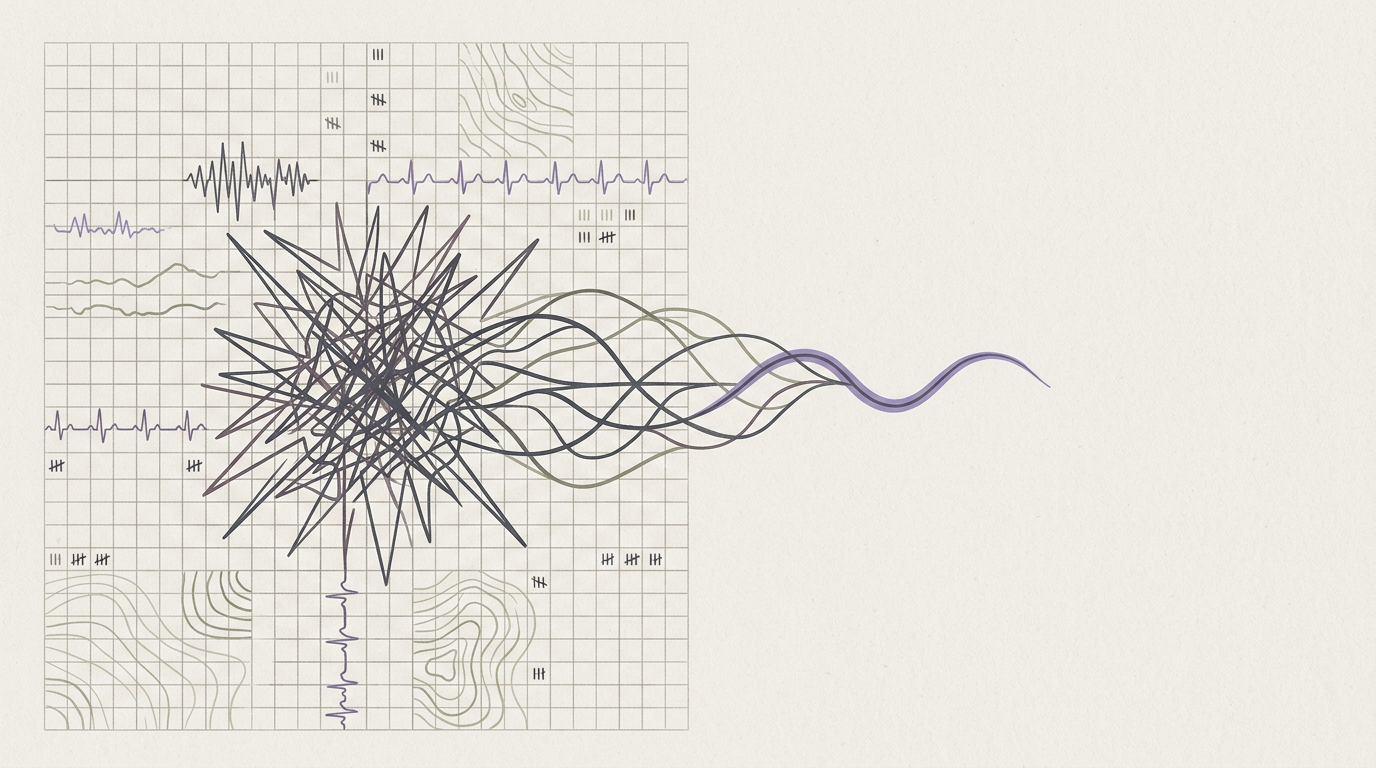
A San Francisco tech founder, who felt constantly overwhelmed and scattered, reduced their sympathetic nervous system dominance by 25% and improved their focused work duration by 50% over an eight-week period. Most people would have called this burnout, but it wasn’t. It was an accumulation of static, muddying the signal.
The presenting state
Everyone talks about 'founder stress' as if it's some badge of honour, or a given. Rubbish. What I saw was a person who'd hit a wall, not from lack of effort, but from a persistent internal alarm. This wasn't some moral failing; it was a nervous system locked in a high-alert state, cranking out adrenaline when a calm, strategic response was needed. He felt like he was always sprinting, but going nowhere useful.
His baseline felt like a constant hum of low-level anxiety, a gnawing uncertainty that made delegation feel like giving away control of a sinking ship. Focus, the kind that lets you see three moves ahead, was a fleeting guest. This state, where the body's 'fight-or-flight' response becomes the default, is what we call sympathetic dominance. It's a physiological tax on every decision. The system was just tired but wired, living with an allostatic load — that wear and tear on the body from chronic stress [McEwen, 1998].
The protocol
The Founder's Anchor protocol isn’t about 'managing' stress like it’s a budget item. It’s about recalibrating the internal thermostat, moving from a constantly reactive state to one of deliberate, regulated response. The mechanism here is direct autonomic nervous system modulation, specifically through targeted respiratory practices that improve heart rate variability (HRV) — the healthy, natural beat-to-beat variation in your heart rate. It’s the physiological wiggle room your system needs to adapt.
Here's how we did it:
- HRV Coherence Training: Daily guided breathwork focusing on specific inhale/exhale ratios to entrain the heart's rhythm and boost parasympathetic tone [Lehrer, 2007].
- Interoceptive Mapping: Regular check-ins to build awareness of internal body sensations—the first step to understanding what's actually happening before the brain spins a narrative.
- Gut-Vagal Axis Reset: Dietary adjustments and specific vagal nerve stimulation exercises to improve communication between the gut and brain, a critical feedback loop for mood and cognitive function.
- Strategic De-loading Techniques: Not just delegating tasks, but offloading cognitive burden and decision-making frameworks. This meant structuring conversations, not just handing off chores.
- Sleep Hygiene Audit & Optimisation: Tightening up sleep initiation and maintenance, because a good night's rest is non-negotiable for system recovery.
- Environmental Static Reduction: Identifying and removing subtle, chronic stressors in his physical and digital environments that were contributing to his 'wired' state.
What changed
Our founder quickly saw his HRV LF/HF ratio — a measure of sympathetic (LF) versus parasympathetic (HF) nervous system activity — shift significantly. This wasn't just a number on a screen; it was a tangible reduction in that gnawing anxiety he'd lived with. His system learned to dial down the alarm. The 25% reduction in sympathetic dominance meant his body was finally getting a break.
That 50% jump in focus duration wasn't just him 'trying harder'. When the internal static quieted, his prefrontal cortex, the bit of the brain responsible for planning and executive function, could actually do its job. I saw his HRV patterns stabilise, showing a clear, consistent respiratory sinus arrhythmia (RSA) during calm states, rather than the choppy, variable patterns you see when the vagus nerve isn't doing its job properly. It’s like clearing out the background noise from a radio signal. He started making decisions from a place of clarity, not panic.
The best decisions aren't made from a place of scarcity. They’re made from quiet.
TL;DR
A tech founder in San Francisco struggled with overwhelming founder stress, leading to constant anxiety and impaired strategic thinking. Through a structured, eight-week protocol including advanced HRV coherence training and targeted nervous system regulation, he achieved a 25% reduction in sympathetic dominance and a 50% improvement in focus duration. This allowed him to delegate effectively and regain strategic clarity, moving from a 'tired but wired' state to one of calm, deliberate leadership.
Where to take this next
If you're stuck in that 'tired but wired' cycle, convinced that constant stress is just 'part of the job', it isn't. Your nervous system is trying to tell you something, but you're probably not listening. There are tangible, physiological levers you can pull to shift out of that chronic high-alert state.
It’s about building capacity, not just grinding through. True resilience isn’t endless endurance; it's the ability to return to baseline quickly and efficiently. Start with some small, consistent steps to reset your autonomic nervous system.
- Dive deeper into building robust regulation with the Founder's Anchor
- For personalised, direct guidance, consider 1:1 coaching
- Or kickstart your recalibration with my 7-Day Reset