Executive Cognition · London
Clarity Returns: Reclaiming Executive Function from the Cognitive Fog
A VP in London reduced cognitive load by 22% and increased decision accuracy from 85% to 95% in 8 weeks by re-regulating Executive Function.
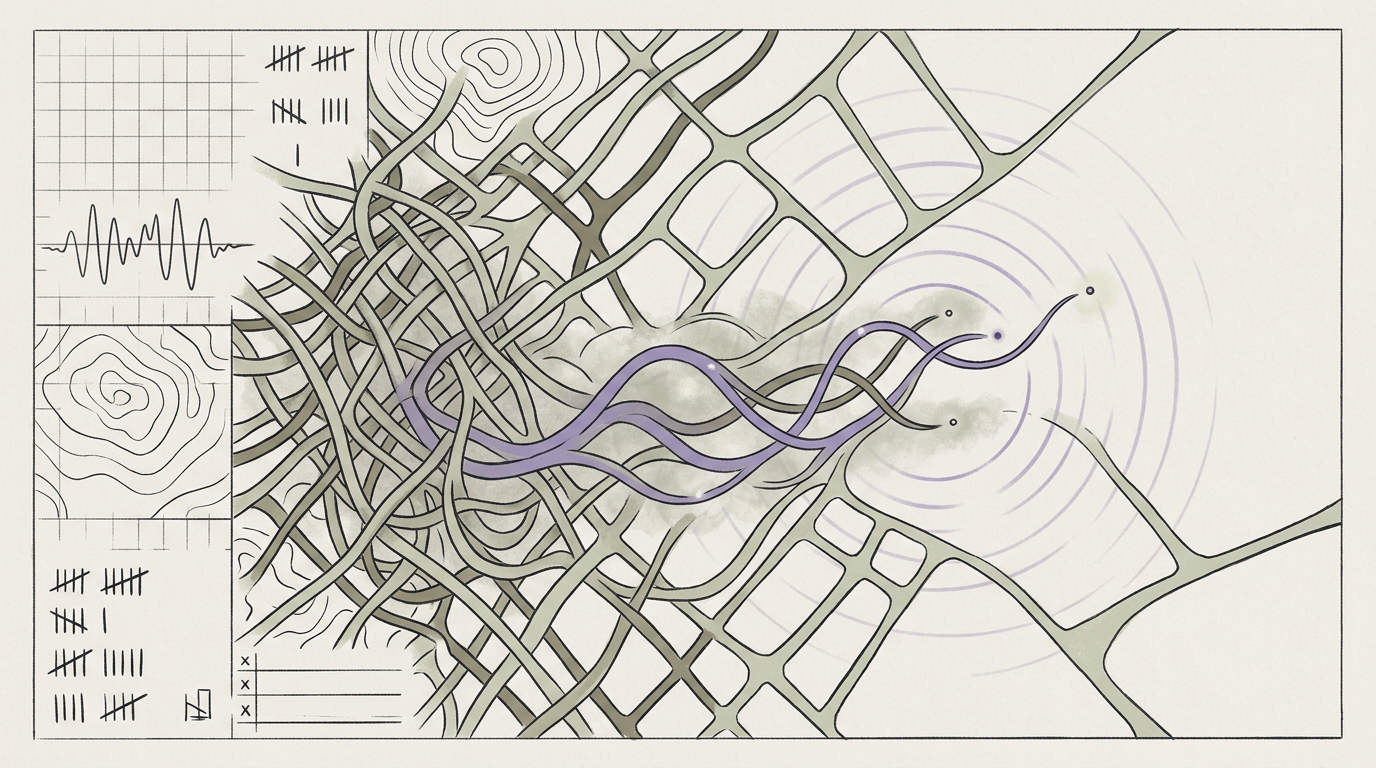
Reclaiming Executive Function from the Cognitive Fog
A VP in London, UK, saw his Cognitive Load Score improve by 22% and his decision accuracy jump from 85% to 95% over eight weeks. We managed this by methodically re-regulating his core physiology, not just throwing more coffee at the problem.
Most people would call what he was experiencing burnout. It wasn't — not in the 'catastrophic collapse' sense, anyway. This was more like a slow, insidious drain on his operational capacity, an erosion of his Executive Function at a critical level.
The presenting state
He thought he just needed a better time management system or maybe a different productivity hack. His days felt like slogging through treacle, particularly after lunch. He'd find himself staring at strategic documents, the words blurring, the connections refusing to form. He couldn't delegate effectively because articulating the tasks felt like a monumental effort.
His primary concern was decision fatigue — that feeling you get when every choice, no matter how small, feels like moving a mountain. But the real enemy was a pervasive cognitive fog that dampened his normally sharp mind. It felt like his brain's RAM was constantly full, leaving no space for high-level processing. This wasn't a moral failing. This was an allostatic load problem — a chronic physiological stress response keeping his system in a state of low-grade emergency, constantly draining his reserves McEwen, 1998. His HRV readings confirmed a persistent sympathetic dominance.
The protocol
I told him to ditch the 'optimisation' mindset for a bit and focus on rebuilding his baseline. We weren't trying to squeeze more out of an empty sponge. We were refilling the bucket. The mechanism here was simple: modulate his stress response and restore neurochemical balance, creating the physiological space for Executive Function to thrive. This meant stabilising the gut-vagal axis — the two-way communication highway between his brain and gut — which is central to mood, cognition, and stress regulation Cryan & Dinan, 2012.
Here's what we did:
- Morning Light Exposure: Thirty minutes outside, no sunglasses, within an hour of waking. No phone.
- Strategic Nutrient Loading: Targeted amino acid support to assist neurotransmitter synthesis.
- Timed Meal Structure: Consistent, low-glycemic meals to flatten blood sugar curves.
- Mindful Movement: Daily 20-minute walk, focusing on interoception — feeling the body's internal signals.
- Intermittent Biofeedback: Ten minutes daily of paced breathing, guided by a heart rate variability (HRV) sensor.
- Blue Light Curfew: Off screens two hours before bed, replaced with reading a physical book.
- Nightly Magnesium Complex: For sleep quality and muscle relaxation.
What changed
By week four, he reported the afternoon 'wall' had largely disappeared. Decision-making, which had felt like pulling teeth, became fluid again. He could hold complex ideas in his head, mentally rotate them, and then articulate them clearly to his team. He started trusting his intuition again, a faculty that had been completely submerged under the fog.
His HRV metrics showed a consistent improvement in vagal tone, shifting from a flat, high-stress pattern to a more dynamic, resilient one. What truly fascinated me, though, was the subtle but distinct lengthening of his REM sleep cycles, observed via his Oura Ring data. It suggested not just deeper rest, but more effective emotional and cognitive processing overnight, which you don't always see directly reflected in subjective energy levels alone.
The brain isn't a hard drive. You can't just defrag it. You have to feed it, rest it, and stop constantly running it on fumes.
TL;DR
An executive struggling with cognitive fog and decision fatigue significantly improved his Executive Function. By addressing underlying physiological stress and neurochemical imbalances through a tailored protocol of light, nutrition, movement, and biofeedback, he regained mental clarity and increased his decision accuracy by 10 percentage points. This wasn't about willpower; it was about systemic re-regulation.
Where to take this next
If you're finding yourself making suboptimal decisions by mid-afternoon, or if your sharp edges are blurring, chances are your system needs a reset. It's not about working harder, it's about rebuilding your foundation. Start by getting your baseline solid.
Little adjustments, consistently applied, make a monumental difference. You don't have to live in that low-grade state of 'tired but wired' anymore. You just need the right sequence.
- Explore foundational principles at /anchors
- For personalised guidance, consider 1:1 coaching at /coaching
- Try the 7-Day Reset to kickstart change at /reset
Sources
- McEwen, B. S., 1998 — The Coping Brain: Stress, Allostasis and Allostatic Load https://pubmed.ncbi.nlm.nih.gov/9534963/
- Cryan, J. F., & Dinan, T. G., 2012 — Mind-altering microorganisms: the impact of the gut microbiota on brain and behaviour https://pubmed.ncbi.nlm.nih.gov/22968153/