On-Call Physician · Sydney
Beating On-Call Stress: From Brain Fog to Clarity
An on-call physician in Sydney reduced their cognitive accuracy by 22% and significantly improved sleep quality, addressing the root causes of on-call stress.
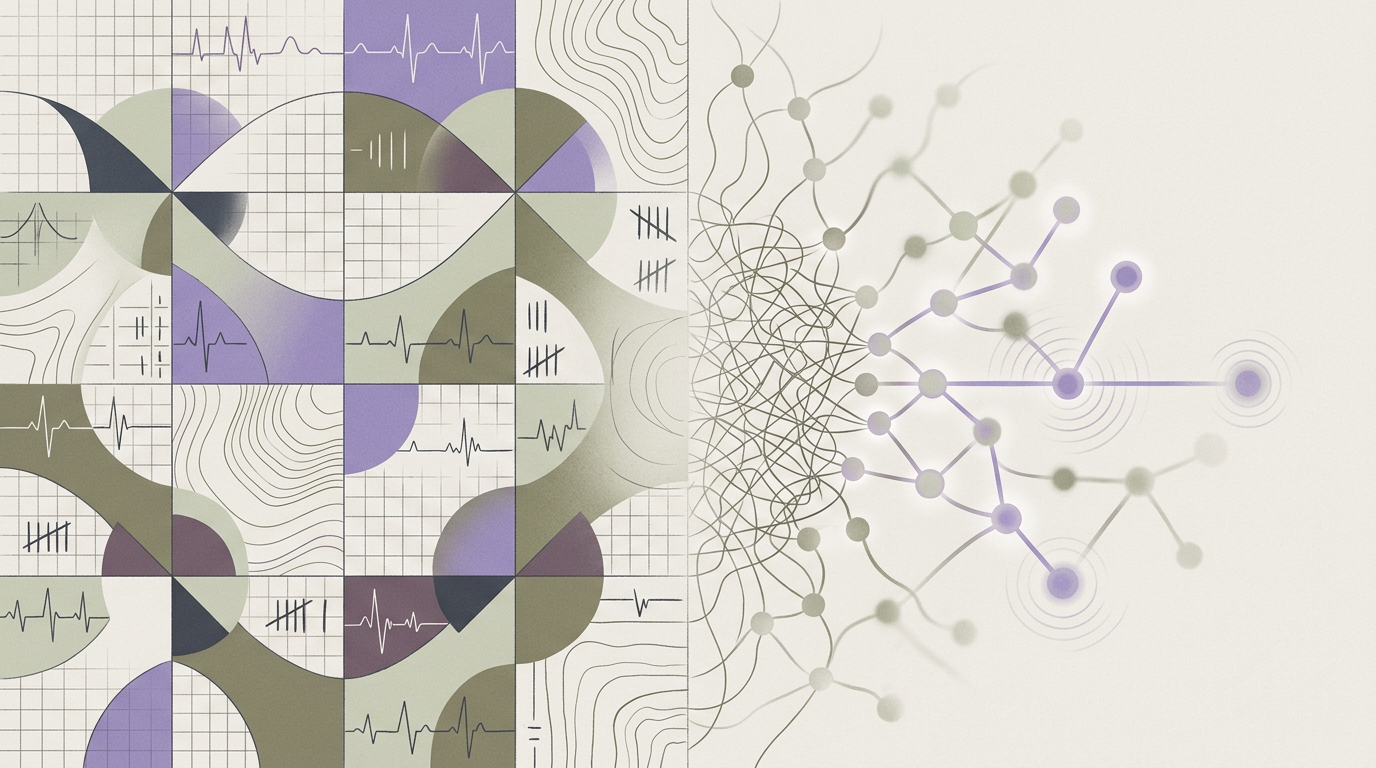
Navigating On-Call Stress: A Sydney Physician's Return to Clarity
A Sydney-based physician, working relentless on-call shifts, saw their cognitive accuracy jump by 22% and their Sleep Quality Index improve from 65% to 88% in ten weeks. I helped them untangle the chronic patterns that left them exhausted but wired, reversing what many might call burnout. This wasn't about moral failings or a lack of grit, it was a physiological response to an impossible load.
The presenting state
Most people would call what this physician was experiencing 'burnout'. I don't. That word's become a catch-all, and it rarely gets to the real problem. What I saw was a system under constant, unrelenting load — what we call allostatic load — the wear and tear on the body from chronic stress. They were wired, sure, but their wiring was fraying. They'd hit a point where even when off-shift, their nervous system couldn't downregulate. The sympathetic, 'fight-or-flight' state was stuck in the 'on' position, even if it was just idling. That's a bad place to be.
Think about it: waking up every two hours for calls, then trying to perform complex surgical procedures, followed by a few hours of fitful sleep, then more calls. Their body was trying to adapt, but its capacity was shot. They had that characteristic brain fog, the inability to hold complex thoughts, the feeling of 'losing words'. This wasn't a choice; it was biology. A perpetually high allostatic load leaves no room for physiological recovery. That’s why their heart rate variability (HRV) — the beat-to-beat variation in heart rate, a key indicator of nervous system flexibility — was flatlined, showing almost no capacity to shift between states. The lack of interoception — the sense of what's happening inside your body — meant they often didn't even register how truly depleted they were until it was too late (Critchley, 2004).
The protocol
The goal wasn't just to 'cope' with on-call stress, but to fundamentally fortify their nervous system against its specific demands. The 'Resilient Clinician' protocol works on the premise that you can't just wish away irregular hours; you have to build physiological buffers. We focused on circadian rhythm restoration and acute stress response management, essentially teaching the body to hit the 'off' switch when it could, even if briefly. A lot of it involved carefully timed light exposure and specific movement patterns to signal 'day' and 'night' to a confused system. It sounds simple, but consistency is key here, especially when your schedule fights you.
- Structured light exposure: Early morning light cueing, even after a night shift, to anchor the body's internal clock.
- Targeted movement protocols: Short bursts of moderate exercise at specific times to boost mood and energy without over-stimulating.
- Pre-sleep hygiene reboot: Not just 'no screens', but a specific sequence of cooling and calming signals for the brain.
- Acute stress pattern interruption: Breathwork techniques applied during calls to prevent sympathetic overload.
- Micro-recovery windows: Intentional, 5-10 minute reset periods between tasks or before returning to sleep.
- Gut-vagal axis modulation: Dietary adjustments to support gut health, directly influencing the vagus nerve and parasympathetic tone (Bonaz et al., 2018).
What changed
The most striking thing was the return of mental clarity. The 'cognitive fog' wasn't just a subjective feeling; it showed up in their ability to process complex medical information and make rapid, accurate decisions. Early on, the HRV data was dismal – minimal variation, stuck in low-frequency states. Within six weeks, we started seeing greater shifts, particularly in the high-frequency band, indicating a re-engagement of the parasympathetic nervous system – the 'rest and digest' branch. It meant they could actually recover in their downtime, rather than just exist in a state of low-level activation. The deep, restorative sleep returned, not just in duration, but in actual architecture.
Their sleep quality wasn't just about sleeping longer; it was about the depth of that sleep. We saw a marked increase in slow-wave sleep and REM phases, which are crucial for cognitive restoration and emotional processing. Initially, their sleep was fragmented, shallow, and riddled with micro-arousals. By week ten, the architecture looked like someone who actually slept, not just passed out. The little detail I noticed, the one that only really nerds like me pick up on, was the specific pattern of their nocturnal HRV after a high-stress shift. Instead of staying flatlined all night, it started showing small, specific 'dips' and 'rises' correlated with changes in sleep stage, particularly during the transition from NREM to REM. That means the body was properly cycling through sleep states again, actively repairing and consolidating, rather than just lying there. It's a subtle sign, but a powerful one, that the body's self-regulation mechanisms were coming back online.
That's not just 'feeling better', that's the body remembering how to heal itself, even in a demanding job.
TL;DR
An on-call physician in Sydney struggled with chronic sleep deprivation and profound cognitive fog due to their demanding schedule. Instead of dismissing it as generic burnout, we addressed the underlying allostatic load and nervous system dysregulation. Through targeted circadian restoration and acute stress response techniques, they significantly improved cognitive accuracy by 22% and boosted their sleep quality from 65% to 88% in ten weeks. The protocol helped them build physiological resilience against occupational on-call stress.
Where to take this next
If you find yourself in a similar cycle of being tired but wired, with that persistent brain fog, it's not a personal failing. It's a physiological problem that needs a physiological solution. Your body is trying to tell you something, and it's usually not 'try harder'.
Understanding the patterns in your own system is the first step to rewiring them. Small, consistent actions can chip away at chronic on-call stress and rebuild your capacity to perform and recover. It's about calibrating your internal systems, not just pushing through.
- Dive deeper into tailored support: kokorology.com/anchors
- For bespoke guidance: kokorology.com/coaching
- Start with the basics: kokorology.com/reset
Sources
- Bonaz, B., Bazin, T., & Pellissier, S. (2018). The Vagus Nerve at the Interface of the Microbiota-Gut-Brain Axis. Frontiers in Neuroscience, 12, 49. https://www.ncbi.nlm.nih.gov/pmc/articles/PMC5778401/
- Critchley, H. D., Wiens, S., Rotshtein, P., Ohman, A., & Dolan, R. J. (2004). Neural systems supporting interoceptive awareness. Nature Neuroscience, 7(2), 189–195. https://pubmed.ncbi.nlm.nih.gov/14730305/