All routines
Loading…
Previous routines
Previous routines open for members. Today's routine is always free.
Daily routine
Dampen protective muscle bracing and reset proprioceptive baseline before your first session back after an injury.
Dampen protective muscle bracing and reset proprioceptive baseline before your first session back after an injury.
guarded return to movement after injury · 15 minutes before your first light training session or walk · 11 minutes
When tissue heals, the sensorimotor cortex often keeps running an involuntary splinting pattern to prevent re-injury. That protective bracing increases antagonist co-contraction, which makes simple movement feel heavy and stiff. By loading the mechanoreceptors in your feet and activating the baroreceptors through unhurried lateral weight shifts, you feed clean afferent data back to the cerebellum. Adding a long humming exhale stimulates vagal efferents to the heart and diaphragm, dropping baseline sympathetic tone. Once the central nervous system registers that ground reaction forces are predictable and safe, it winds down peripheral muscle guarding so your joint kinematics can move naturally again.
Pre-movement mineral hydrate — Stir 300 mg of sodium chloride and a pinch of potassium into 250 ml of room-temperature water. Drink it steadily to give your muscle spindles baseline fluid volume before asking them to load.
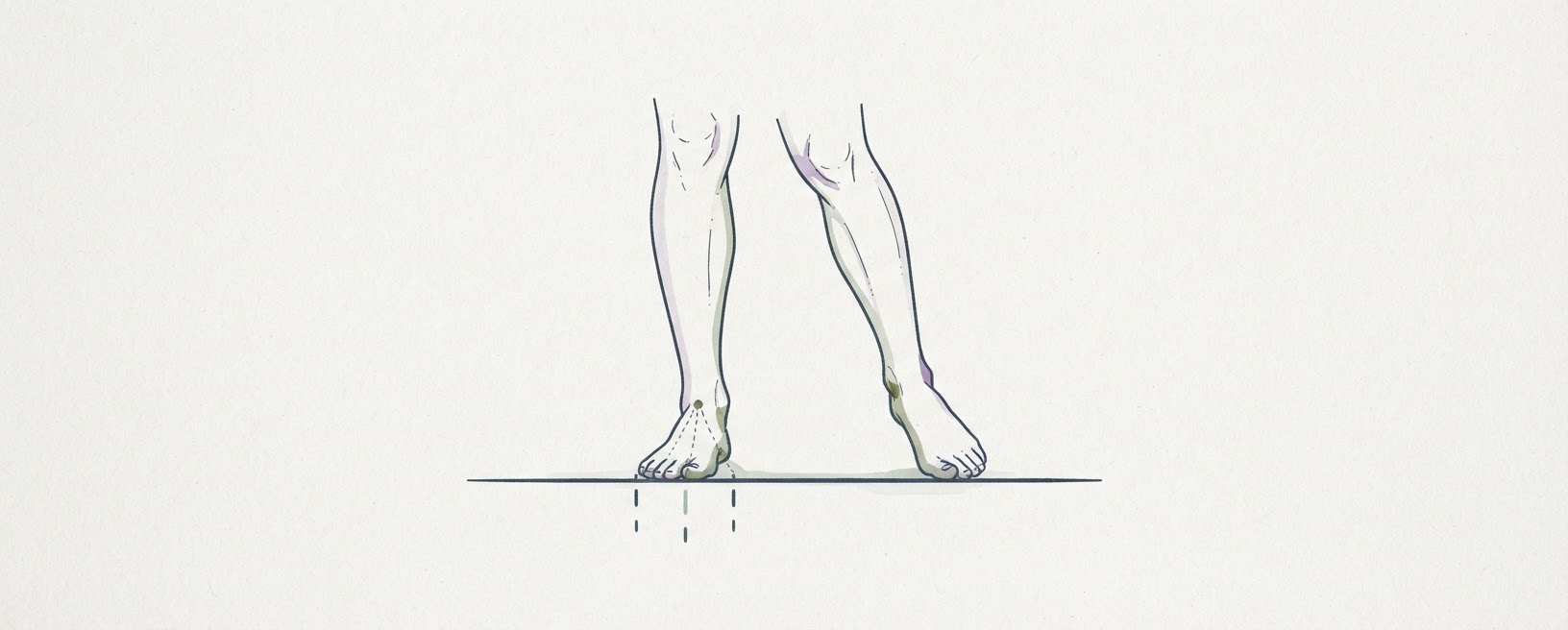
Compress Feet, Lengthen the Standing Baseline — Stand barefoot and run through Compress Feet, Lengthen the Standing Baseline. Press the tripod of each foot down for four counts, then let your ankle stabilizers register the floor without bracing your kneecaps.
Controlled lateral weight transfers — Take slow, deliberate lateral steps along a 4-metre line in your room, shifting your pelvis fully over each foot before transferring weight. Keep your hands relaxed by your sides and exhale as your lead heel meets the floor.
Bilateral temporal compression and hum — Place your palms over your temporal bones just above the ears and press inward with two pounds of pressure. Breathe in for four seconds through your nose and hum on a six-second exhale to quiet the guarding response in your neck and hip rotators.
Seated neutral stillness — Sit on the edge of a firm chair with both soles flat and your hands resting palm-down on your thighs. Let your eyes soften on an object across the room while you take five easy diaphragmatic breaths.