Daily routine
Neural Soothe After Conflict
Address the physiological aftermath of conflict to restore equilibrium.
Address the physiological aftermath of conflict to restore equilibrium.
post-conflict repair · immediately after conflict · 15 minutes
Why it works
Conflict activates the sympathetic nervous system, increasing heart rate, muscle tension, and cortisol. This sequence downregulates the sympathetic response through diaphragmatic breathing, somatic release, and proprioceptive input. These actions engage vagal afferents, promoting a parasympathetic dominant state and reducing the physiological residue of stress. The conscious act of re-centering helps to interrupt the HPA axis's prolonged stress response, fostering a return to baseline.
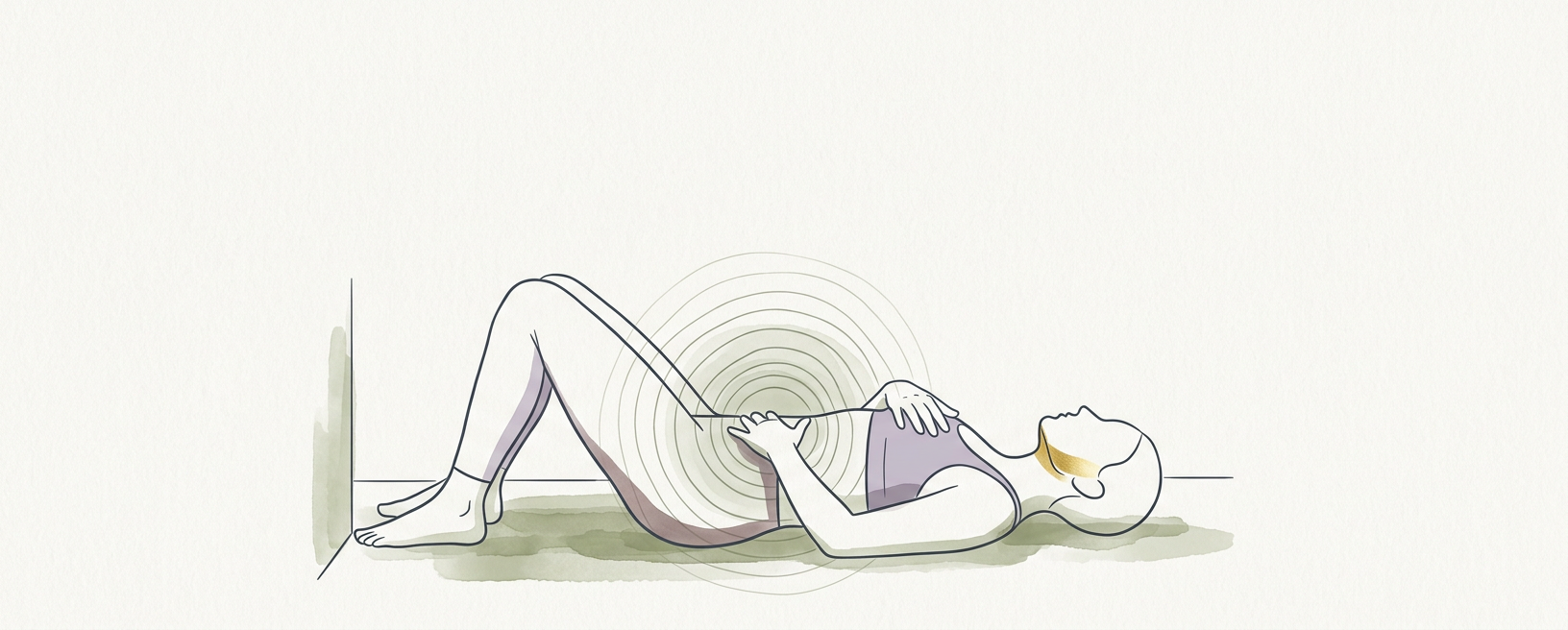
Diaphragmatic Re-centering — Lie supine with knees bent, feet flat on the floor, one hand on your chest, the other on your abdomen. Inhale slowly, feeling your abdomen rise. Exhale completely, allowing your abdomen to fall. Focus on a smooth, even breath for 5 minutes.
Jaw and Neck Release — Gently massage your masseter muscles with your fingertips in circular motions for 60 seconds. Then, slowly tilt your head side to side, feeling a stretch along your scalenes, holding each side for 30 seconds. Release tension, do not force the stretch.
Wall Sit For Grounding Proprioceptive Input — Engage the proprioceptive system for grounding. Follow the instructions outlined in the practice: Wall Sit For Grounding Proprioceptive Input.
Magnesium Glycinate Intake — Take 200-400mg of magnesium glycinate with water. This compound assists in muscle relaxation and supports nervous system regulation.
Supported Legs-Up-The-Wall — Sit with one hip against a wall, then swing your legs up the wall, lying on your back. Allow your arms to rest by your sides, palms up. Remain in this inversed posture for 2 minutes, focusing on the calm.