Daily routine
Neural Reset Following Conflict
This routine helps mitigate the physiological residue of conflict, supporting nervous system repair.
This routine helps mitigate the physiological residue of conflict, supporting nervous system repair.
post-conflict repair · immediately after a difficult interaction · 15 minutes
Why it works
Conflict often activates the sympathetic nervous system and the HPA axis, leading to elevated cortisol and adrenaline. This routine works by downregulating sympathetic arousal through focused vagal nerve stimulation and gentle somatic release. Activities like resonant vocalization and focused breathwork can stimulate afferent vagal pathways, signalling safety to the brainstem. This process helps to re-establish parasympathetic tone, reducing physiological stress markers and facilitating a return to baseline regulation, as observed by researchers like Stephen Porges.
Gentle Head Turns — Sit upright, spine elongated. Slowly turn your head to one side, holding for a breath, then return to center. Repeat on the other side. Move as though moving through water; five repetitions each side.
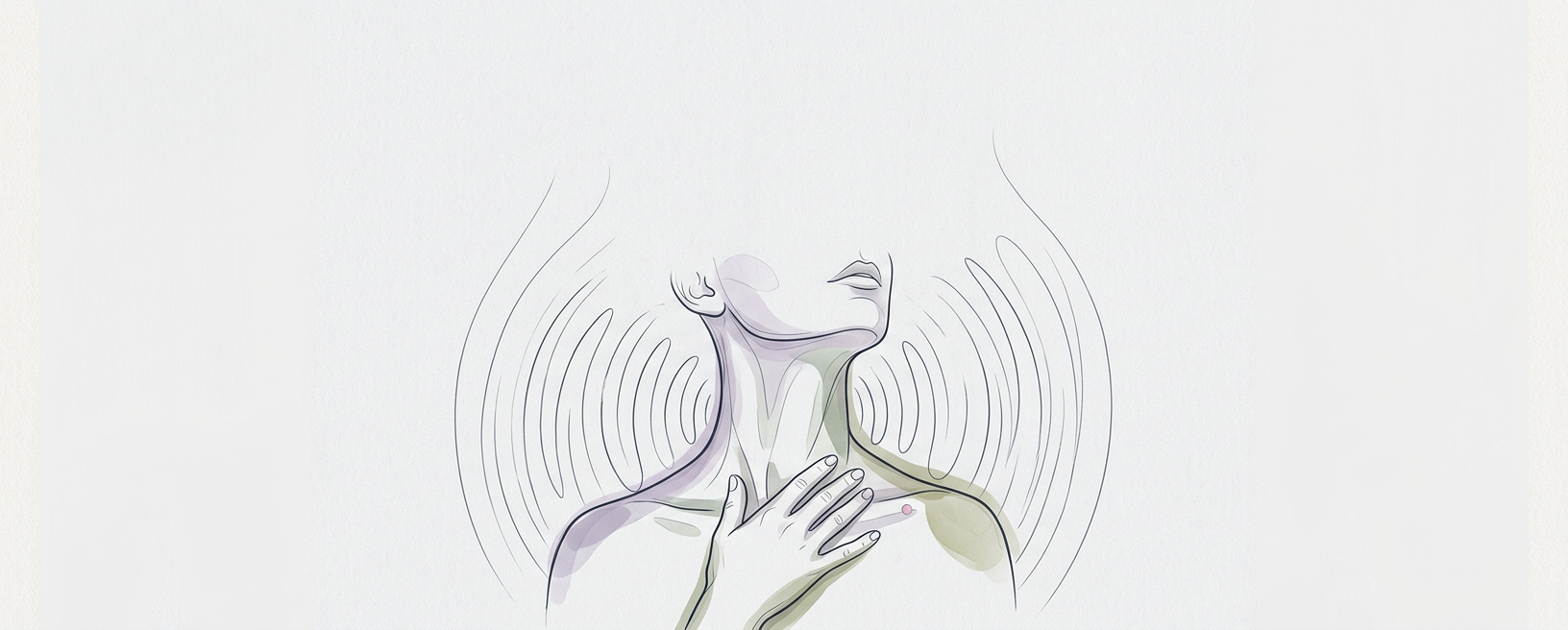
Scalene Release — Gently tilt your head to one side, bringing your ear toward your shoulder. Place your opposite hand on your collarbone, lightly anchoring the skin down. Take three slow, full breaths into this stretch, feeling for release along the side of your neck. Repeat on the other side.
Resonant Vocalization for System Regulation — Engage with the focused practice detailed in Resonant Vocalization for System Regulation. Follow the instructions for 5-7 minutes, paying attention to the vibrational feedback in your chest and throat.
Mineral-Rich Water — Slowly drink 8-12 ounces of filtered water with a pinch of sea salt or a few drops of electrolyte concentrate. Notice the sensation as it moves through your body, hydrating and replenishing.
Supported Supine Rest — Lie on your back with knees bent and feet flat on the floor, or with legs elevated over a cushion. Allow your eyes to close gently. Focus on the exhalation, letting your body soften into the support beneath you for several minutes.