All routines
Loading…
Previous routines
Previous routines open for members. Today's routine is always free.
Daily routine
A 13-minute sequence to quiet post-workout jitters, lower your heart rate, and step cleanly out of fight-or-flight mode.
A 13-minute sequence to quiet post-workout jitters, lower your heart rate, and step cleanly out of fight-or-flight mode.
post-workout overstimulation · Within 30 minutes of finishing a hard gym session or interval run · 13 minutes
Heavy lifts and interval training spike circulating adrenaline and noradrenaline to keep cardiac output high. If you jump straight into emails or traffic while your sympathetic branch is still firing, you stay stranded in a jittery, high-rev state. By increasing fluid volume and triggering the baroreflex through inverted trunk hang and lengthened exhalations, you prompt the vagal brake to re-engage. This slows resting heart rate, clears vascular constriction, and transitions muscle tissue into actual repair.
Mineral rehydration — Mix 250 ml of room-temperature water with 300 mg of sodium and 100 mg of potassium citrate. Drink it steadily in small sips rather than gulping. High plasma catecholamines keep peripheral vascular resistance high; steady electrolytes and fluid volume expand venous return so the baroreceptors can finally tell the heart to ease off.
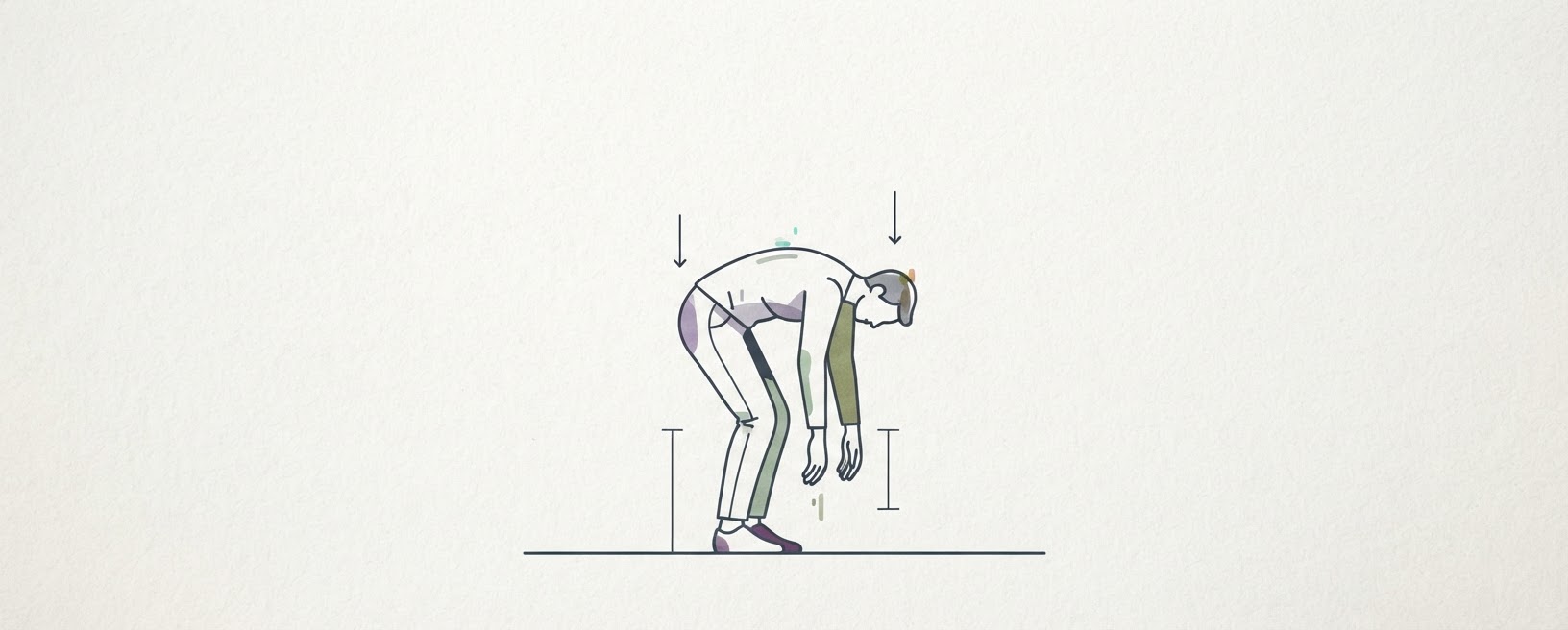
Ragdoll oscillation — Stand with your feet wide and your knees soft, then let your entire torso hang forward like a ragdoll. Shake your arms, wrists, and jaw gently for 30 seconds, pause for 10 seconds, and repeat twice. This gives the motor cortex a clear end-signal and dumps the lingering isometric muscle tone that heavy sets leave behind.
Palming with extended exhalation — Sit on a bench, cup your palms, and place them gently over your closed eyes without pressing on the globes. Inhale through your nose for 4 counts, then blow out through pursed lips for 8 counts. Sustained darkness combined with prolonged exhalation dials up parasympathetic tone via vagal afferents and the oculocardiac reflex.
Cervical vagal glide — Place two fingers on the soft depression behind your earlobe along the sternocleidomastoid muscle. Stroke downward along the side of your neck toward your collarbone using feather-light pressure, alternating sides with every exhale. This directly stimulates auricular vagal afferents and calms the carotid sinus after hard cardiovascular exertion.
Eat your greens before the starch arrives — Before you touch your post-workout rice or recovery oats, read Eat your greens before the starch arrives and set out a small handful of raw cucumber or greens to eat first. A quick fiber preload blunts the glucose spike that often triggers an extra cortisol bump in an already overstimulated system.