All routines
Loading…
Previous routines
Previous routines open for members. Today's routine is always free.
Daily routine
Clear sluggish waking fog and regain crisp mental focus in eleven minutes.
Clear sluggish waking fog and regain crisp mental focus in eleven minutes.
foggy morning · within thirty minutes of waking on slow mornings · 11 minutes
Morning fog happens when nocturnal blood pressure dips linger and sleep inertia keeps blood pooled in the lower extremities. Drinking mineral-rich fluid quickly shifts plasma volume, which stimulates baroreceptors in your carotid sinus to steady cerebral perfusion. Meanwhile, shifting the eyes sideways while keeping the head still releases the rectus capitis posterior muscles, unloading tension around the suboccipital nerves. Rhythmic heel impacts provide strong vestibular and proprioceptive inputs directly to the ascending reticular activating system, lifting cortical alertness without spiking adrenaline. Pairing this with vocal humming stimulates laryngeal branches of the vagus nerve, balancing your autonomic baseline so you feel clear and awake rather than jittery.
Mineral baseline hydration — Dissolve a generous pinch of sea salt (about 1 gram) in 350 ml of room-temperature water. Drink it slowly while standing by an open window. Feel the cool air on your cheeks.
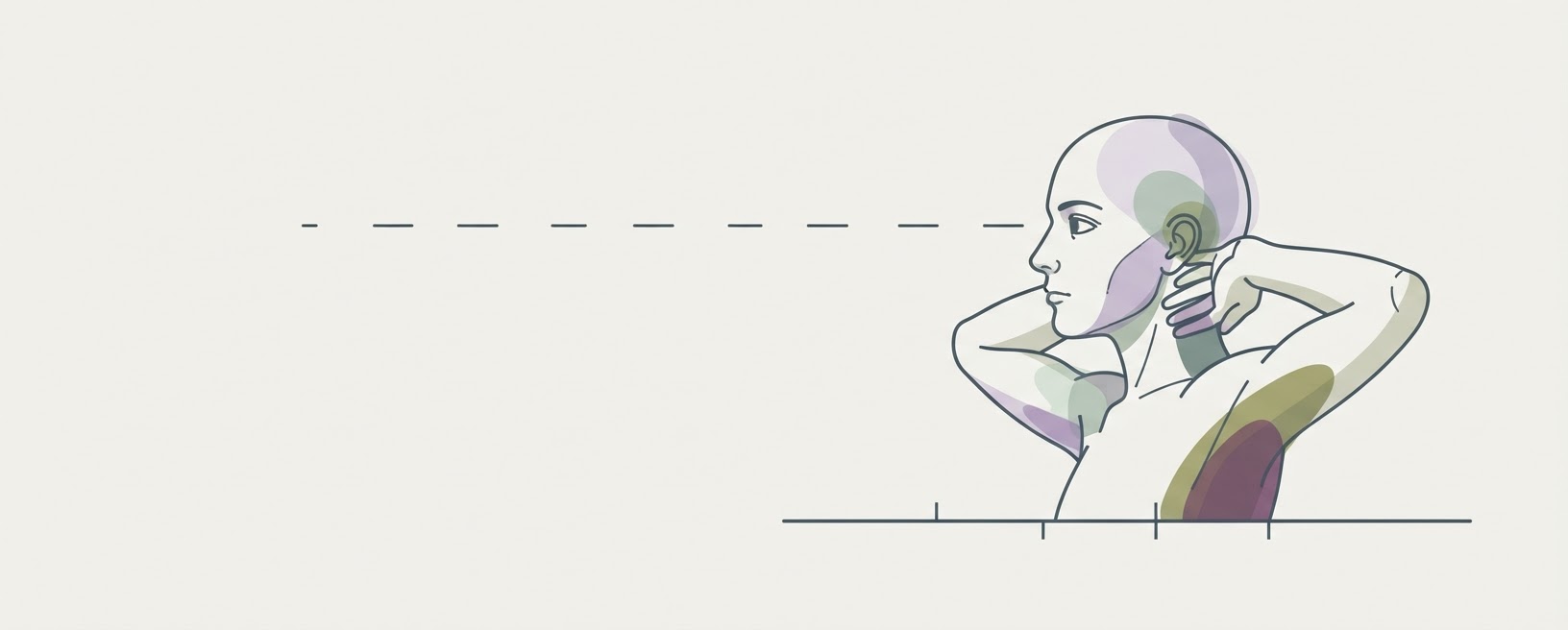
Suboccipital eye clearing — Interlace your fingers behind the back of your head while seated. Keep your face pointed straight ahead and shift only your eyes as far right as comfortable for thirty seconds, waiting for a swallow, sigh, or yawn. Repeat looking left.
Rhythmic heel drops — Stand tall, soften both knees, and gently bounce into your heels at roughly two beats per second. Let your wrists, shoulders, and lower jaw hang loose while exhaling through fluttered lips.
Hum After Effort, Calm Your Capacity — Sit upright and practice Hum After Effort, Calm Your Capacity for two minutes. Inhale through your nose, then hum a continuous low note on your exhale, feeling the buzzing in your nasal bones and chest.
Panoramic horizon resting — Sit quietly with both feet grounded and look across the room at the furthest possible point. Broaden your visual field so you register the peripheral edges of the room without turning your head.