Daily routine
Restore Sensory Capacity After Screen Exposure
This sequence downregulates the nervous system after prolonged screen time, mitigating overstimulation.
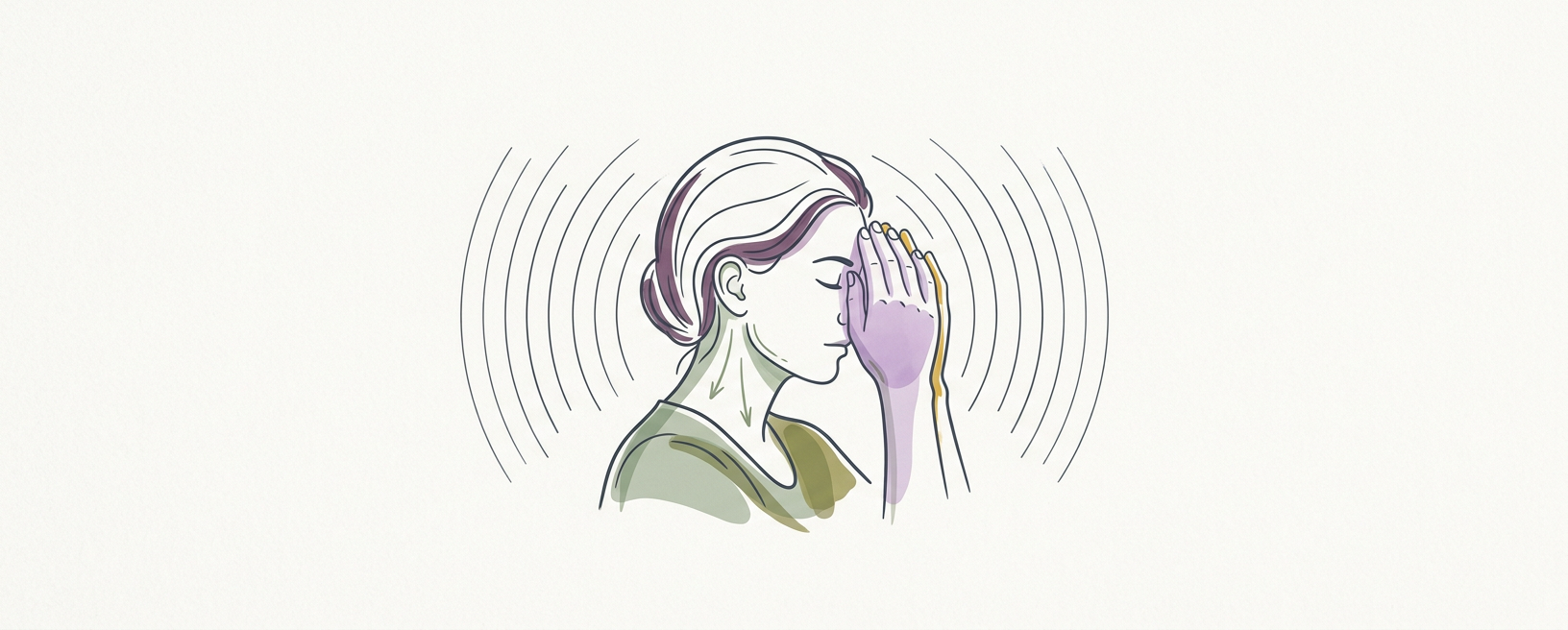
This sequence downregulates the nervous system after prolonged screen time, mitigating overstimulation.
post-screen-binge overstim · after extended screen use · 15 minutes
Why it works
Excessive screen exposure can overload the visual cortex and auditory processing centers, maintaining the nervous system in a state of heightened alert. This routine systematically introduces novel, low-intensity sensory input while reducing existing excitatory input. By engaging the somatosensory system through targeted release and movement, it helps shift attentional resources away from external stimuli towards internal bodily signals, thereby quieting the orienting reflex and reducing sympathetic tone. Gentle movements and specific breath patterns further support parasympathetic activation and baseline regulation.
Hydrate and Mineralize — Slowly drink 8-10 oz of still water with a pinch of sea salt. Notice the cool sensation in your mouth and throat.
Release Jaw and Eye Tension — Gently massage your masseter muscles in slow circles for 60 seconds per side. Then, place your palms over your closed eyes, applying light pressure, and hold for 2 minutes, noticing the warmth and darkness.
Elevate Arms for Somatic Feedback — Refer to today's daily practice: Elevate Arms for Somatic Feedback. Allow the subtle shifts in perception to guide your attention.
Grounding Foot Roll — Sitting, place one foot on a tennis ball or lacrosse ball. Slowly roll the ball from heel to toes, across the arch, applying moderate pressure for 90 seconds per foot. Switch sides.
Supine Rest with Belly Breath — Lie on your back with knees bent, feet flat on the floor, or legs up a wall. Place one hand on your lower belly. Inhale slowly through your nose, feeling your belly rise. Exhale slowly through pursed lips, feeling it fall. Continue for 3 minutes.