Daily movement
Single Leg Balance with Dynamic Reach
This practice improves stability and proprioception through controlled movement.
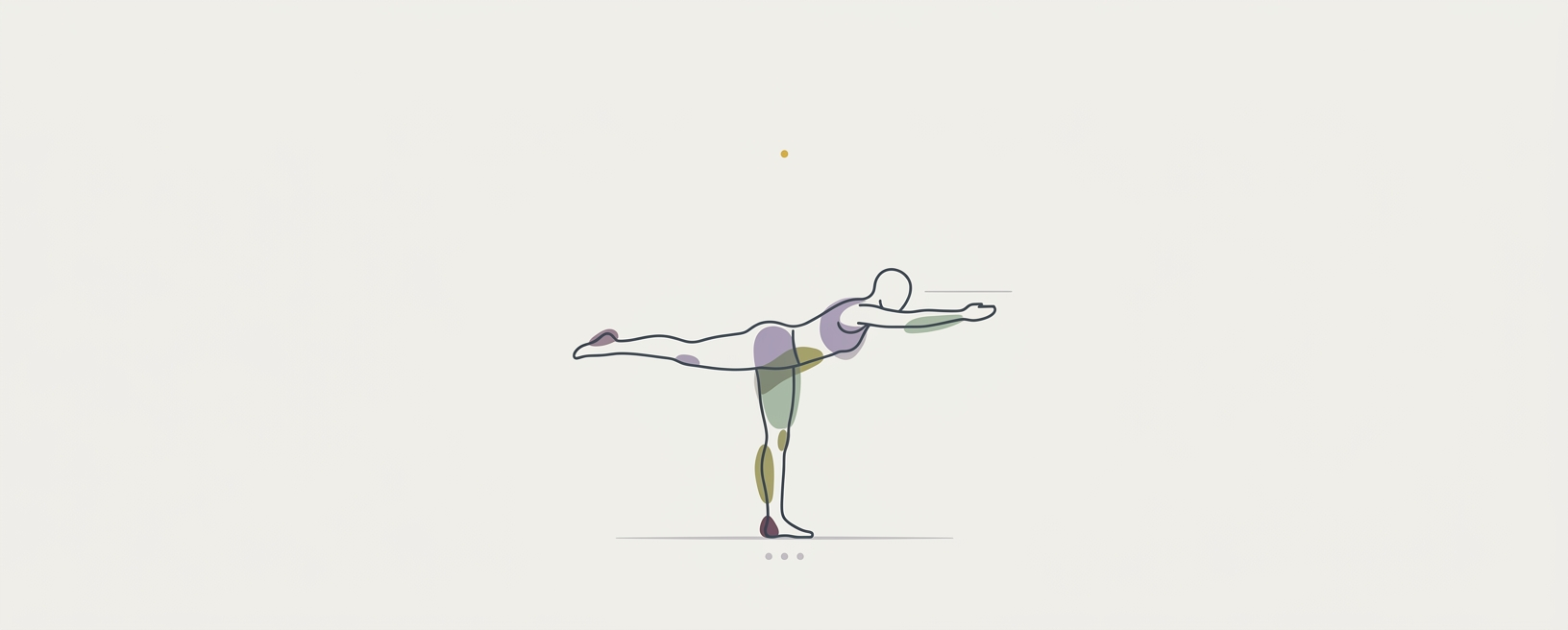
This practice improves stability and proprioception through controlled movement.
balance / proprioception · Functional Movement Systems (Gray Cook) · This meets the felt state of general instability or disengagement, enhancing the body's capacity for nuanced balance reactions. · 3–5 reaches per side, 1 breath hold each.
Why it works
The Single Leg Balance with Dynamic Reach challenges the central nervous system by forcing it to recruit a wider range of muscles to maintain equilibrium. This enhances proprioceptive input—the body's awareness of its position in space—by increasing demand on joint mechanoreceptors, particularly in the ankle and hip. The dynamic reach component destabilizes the center of gravity, requiring rapid, coordinated responses from the ankle and hip strategies to prevent a fall. It develops the "ankle strategy" for small perturbations and the "hip strategy" for larger ones, integrating sensory information from the feet, eyes, and inner ear. This practice refines anticipatory postural adjustments and reactive balance, reducing the likelihood of trips and falls.
How to practice
Sometimes I'll find myself rushing through tasks, feeling a little fragmented. This helps recenter.
- Start Tall: Stand barefoot, feet hip-width apart. Shift your weight to your right leg, lifting your left foot just off the floor. Fix your gaze on a point about 10 feet in front of you. Maintain a soft bend in the standing knee, not locked.
- Find Your Baseline: Feel the tripod of your right foot—the ball of the big toe, the ball of the little toe, and the heel. Allow small, continuous adjustments through your ankle to keep steady. Don't stiffen.
- Initiate the Reach: Slowly extend your left leg directly behind you, as if pressing your heel into an imaginary wall. Simultaneously, hinge at your right hip, reaching both arms forward. Maintain a long spine. Your torso and extended leg should form a relatively straight line, parallel to the floor.
- Hold and Breathe: Hold this T-shape position for an inhale and an exhale. Focus on the subtle muscle engagement in your standing leg and glute. I try to breathe in through my nose, slow and even.
- Return to Standing: Gently reverse the movement, bringing your torso upright and your left foot back to its starting position, without letting it touch the floor if possible.
- Switch Sides: Briefly rest, then repeat the sequence on the other side. This isn't about speed; it's about control.
Sometimes I'll find myself rushing through tasks, feeling a little fragmented. This helps recenter.
- Start Tall: Stand barefoot, feet hip-width apart. Shift your weight to your right leg, lifting your left foot just off the floor. Fix your gaze on a point about 10 feet in front of you. Maintain a soft bend in the standing knee, not locked.
- Find Your Baseline: Feel the tripod of your right foot—the ball of the big toe, the ball of the little toe, and the heel. Allow small, continuous adjustments through your ankle to keep steady. Don't stiffen.
- Initiate the Reach: Slowly extend your left leg directly behind you, as if pressing your heel into an imaginary wall. Simultaneously, hinge at your right hip, reaching both arms forward. Maintain a long spine. Your torso and extended leg should form a relatively straight line, parallel to the floor.
- Hold and Breathe: Hold this T-shape position for an inhale and an exhale. Focus on the subtle muscle engagement in your standing leg and glute. I try to breathe in through my nose, slow and even.
- Return to Standing: Gently reverse the movement, bringing your torso upright and your left foot back to its starting position, without letting it touch the floor if possible.
- Switch Sides: Briefly rest, then repeat the sequence on the other side. This isn't about speed; it's about control.