All movements
Loading…
Previous movements
Previous movements open for members. Today's movement is always free.
Daily movement
Dissolve sympathetic overdrive through rhythmic cross-body rotation and deliberate weight-shifting.
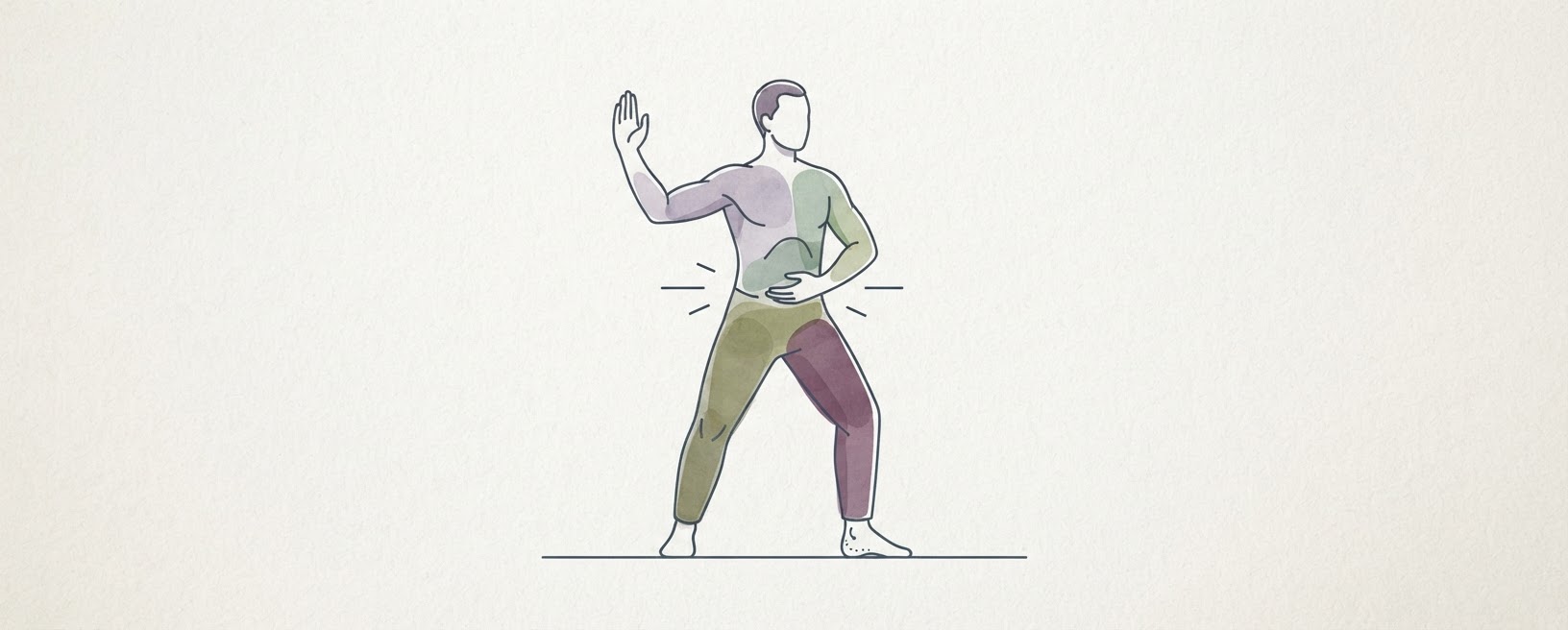
Dissolve sympathetic overdrive through rhythmic cross-body rotation and deliberate weight-shifting.
tai chi · Traditional Yang family tai chi (Yang Chengfu lineage) · Agitated nervous system and tired but wired post-effort static seeking a downshifted baseline. · 4 minutes continuous weight shift, alternating sides
I used to dismiss tai chi as decorative pacing until I measured my own heart rate variability after four minutes of Cloud Hands. Moving slowly between the left and right foot demands continuous, graded mechanoreceptor signaling through the plantar fascia and ankle joint capsules. This sensory input anchors spatial orientation without triggering protective bracing. The slow transverse rotation of the spine gently shears the thoracolumbar fascia and mobilizes the visceral glide planes around the lower abdomen. Pairing this pelvic rotation with an elongated, unhurried exhalation stimulates the vagal brake via the baroreflex, dropping systemic sympathetic tone and softening defensive tension across the chest.
Stand with feet parallel, slightly wider than shoulder width. Let your knees soften so the pelvis rests directly over your heels, arms hanging loosely at your sides.
Inhale through your nose for 4 seconds as you float both forearms up to chest height, elbows relaxed downward so your wrists sit lower than your shoulders.
Exhale for 6 seconds while turning your torso from the navel toward your right side, shifting 70% of your body weight through the tripod of your right foot. As you turn, raise your right palm to eye level facing inward, while your left palm sweeps down toward your navel, palm facing the floor.
Begin an unhurried 4-second inhalation as your torso rotates smoothly through center toward the left, carrying the arms across your chest without reaching with your shoulders. Let your eyes ride along with the movement rather than darting ahead.
When your weight pours into your left leg, exhale for 6 seconds and change the guard. Turn your left palm toward your face at cheek level and drop the right hand down to waist level, turning your torso another 10 degrees to the left.
Inhale for 4 seconds as you turn back toward the right, sweeping the left hand across eye level and the right hand across lower abdomen height. Repeat this continuous side-to-side rotation for 4 minutes at a calm, conversational tempo.