Daily movement
Wim Hof Style 30-Breath Cycle
A facilitated hyperventilation followed by a breath retention, designed to induce altered physiological states.
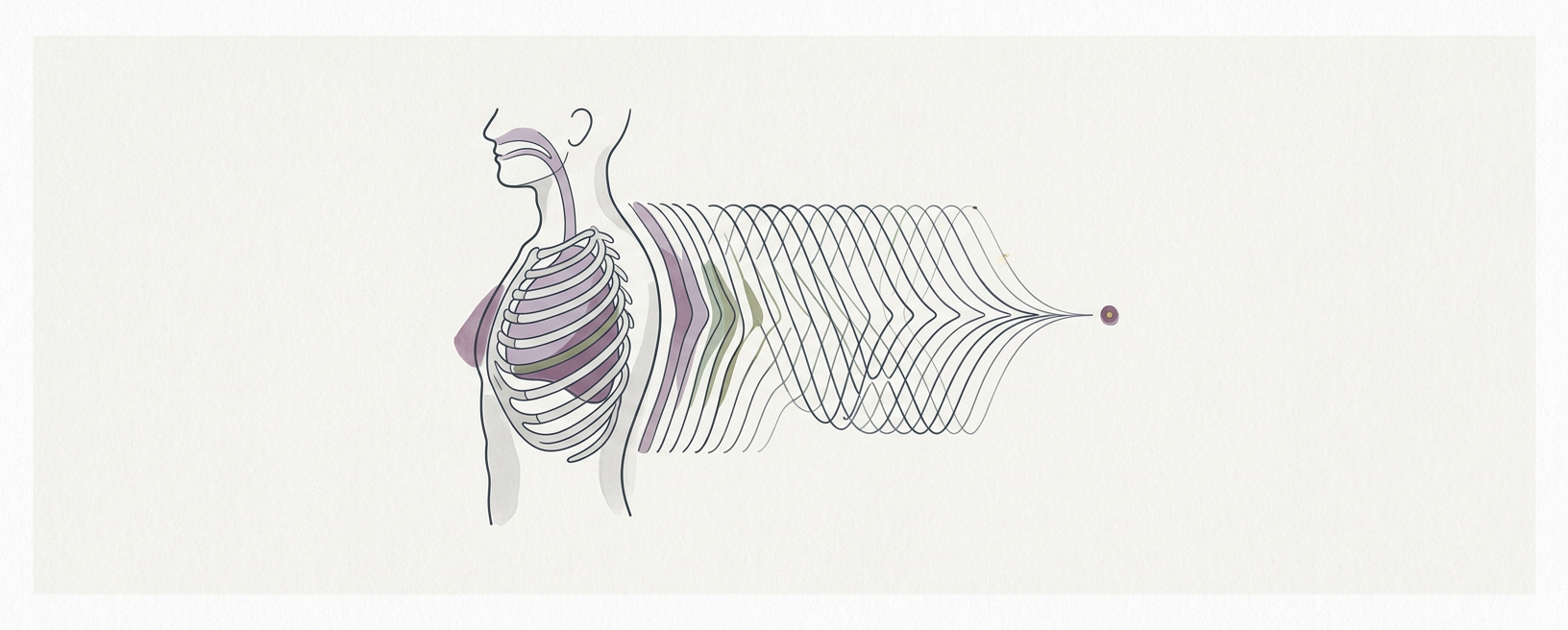
A facilitated hyperventilation followed by a breath retention, designed to induce altered physiological states.
Wim Hof Method · Developed by Wim Hof, a Dutch extreme athlete and wellness entrepreneur. · To rapidly shift physiological state, manage perceived stress, and explore enhanced respiratory control. · One round consists of 30-40 breaths followed by a retention and a recovery breath. For initial practice, one to three rounds are recommended. More experienced practitioners may engage in multiple rounds.
Why it works
The rapid, deep breathing (hyperventilation) decreases carbon dioxide levels in the blood, leading to an increase in pH (respiratory alkalosis). This temporarily reduces blood flow to the brain and can increase oxygen release from hemoglobin to tissues, a phenomenon known as the Bohr effect. The subsequent breath retention in this alkaline state aims to extend these physiological changes. These shifts are hypothesized to influence the autonomic nervous system and immune response, though specific mechanisms are subjects of ongoing research.
How to practice
Find a comfortable position, ideally lying on your back or sitting upright, ensuring you will not hit your head or fall if you become lightheaded.
Take 30-40 deep breaths: each breath is a powerful inhalation through the nose or mouth, followed by a relaxed, non-forced exhalation through the mouth. The exhalation is passive; let the air go.
After the last exhalation, completely exhale the air from your lungs and hold your breath for as long as comfortable, without straining.
When you feel the urge to breathe, take one deep, full inhalation and hold it for approximately 15 seconds. This is the "recovery breath."
Exhale and begin the next round if desired.
Find a comfortable position, ideally lying on your back or sitting upright, ensuring you will not hit your head or fall if you become lightheaded.
Take 30-40 deep breaths: each breath is a powerful inhalation through the nose or mouth, followed by a relaxed, non-forced exhalation through the mouth. The exhalation is passive; let the air go.
After the last exhalation, completely exhale the air from your lungs and hold your breath for as long as comfortable, without straining.
When you feel the urge to breathe, take one deep, full inhalation and hold it for approximately 15 seconds. This is the "recovery breath."
Exhale and begin the next round if desired.