Daily movement
Wave Hands Like Clouds for Dynamic Grounding
This movement cultivates dynamic grounding and reduces nervous system agitation through rhythmic weight shifts.
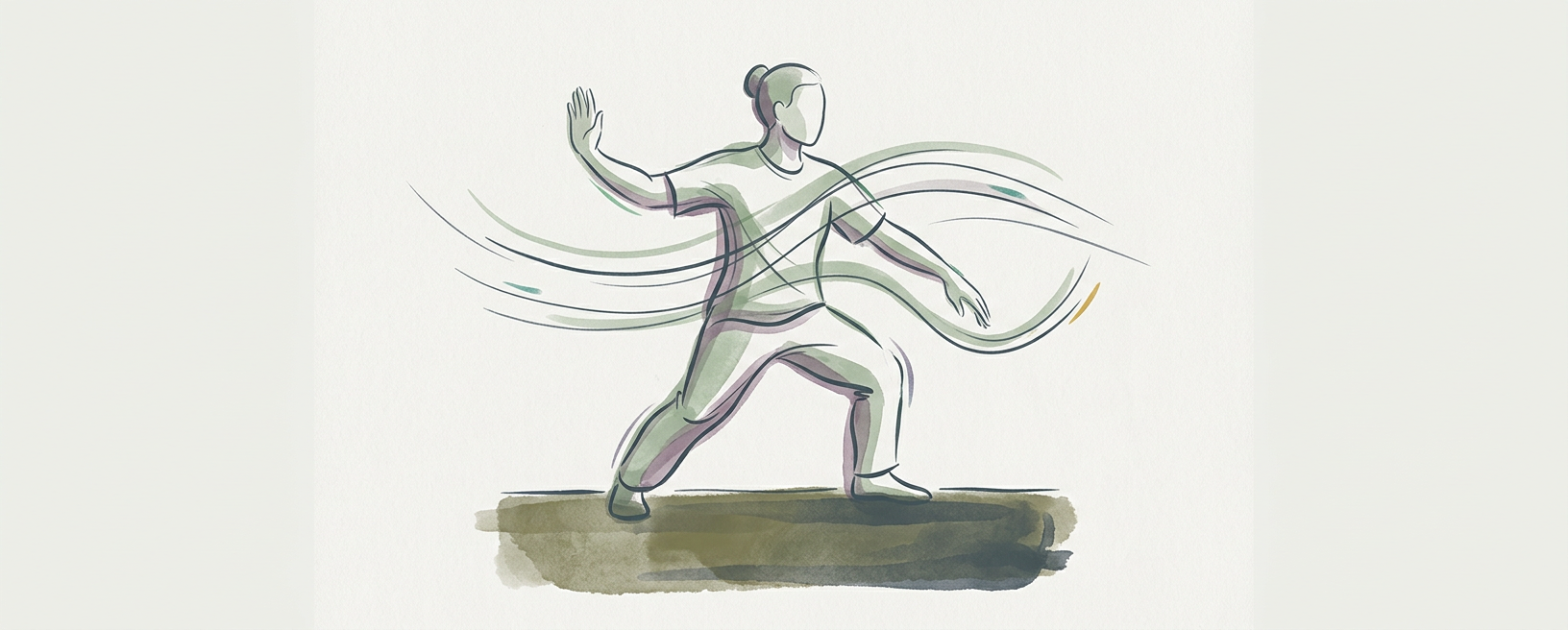
This movement cultivates dynamic grounding and reduces nervous system agitation through rhythmic weight shifts.
tai chi · Yang-style Tai Chi (Yang Chengfu) · When you feel scattered, unmoored, or a persistent low hum of anxiety in your system. · 5 minutes per side, continuous, focusing on breath and weight transfer.
Why it works
The rhythmic, slow-motion weight transfers in Wave Hands Like Clouds engage the vestibular system, sending predictable, stabilizing input to the brain. This calms the amygdala, reducing threat responses and fostering a sense of safety. Simultaneously, the continuous, fluid motion through the hips and ankles lubricates fascial lines, particularly the superficial back line and spiral lines. This improves interoception, or the sense of the body's internal state, by increasing proprioceptive awareness and promoting fluid movement of the extracellular matrix. The result is a more integrated body map and a reduced perception of threat, leading to a down-regulation of the sympathetic nervous system and an upregulation of the parasympathetic state.
How to practice
Stand with feet shoulder-width apart, knees softly bent. Arms hang naturally at your sides. Gaze is soft, slightly downward, about six feet in front of you.
Shift your weight entirely to your right leg. As you do, lift your left heel slightly. The right hip crease flexes. The left arm begins to rise, palm facing your body, as if gently scooping water.
Transfer weight slowly to your left leg. As weight shifts, the left arm continues to rise to shoulder height, while the right arm begins its upward arc. Your torso turns slightly to the left. The gaze follows the leading hand.
Rotate your torso to the right. The left hand turns palm down and begins to descend, while the right hand continues its upward arc. Think of describing an invisible "cloud" with each hand, one rising as the other falls.
Continue this fluid, circular motion. Your weight shifts from side to side, never holding still in the center. The hips initiate the movement; the arms follow, like seaweed in a gentle current.
Coordinate breathing: Inhale as hands rise, exhale as hands fall. Make the breath as smooth and continuous as the movement.
Stand with feet shoulder-width apart, knees softly bent. Arms hang naturally at your sides. Gaze is soft, slightly downward, about six feet in front of you.
Shift your weight entirely to your right leg. As you do, lift your left heel slightly. The right hip crease flexes. The left arm begins to rise, palm facing your body, as if gently scooping water.
Transfer weight slowly to your left leg. As weight shifts, the left arm continues to rise to shoulder height, while the right arm begins its upward arc. Your torso turns slightly to the left. The gaze follows the leading hand.
Rotate your torso to the right. The left hand turns palm down and begins to descend, while the right hand continues its upward arc. Think of describing an invisible "cloud" with each hand, one rising as the other falls.
Continue this fluid, circular motion. Your weight shifts from side to side, never holding still in the center. The hips initiate the movement; the arms follow, like seaweed in a gentle current.
Coordinate breathing: Inhale as hands rise, exhale as hands fall. Make the breath as smooth and continuous as the movement.