Daily movement
The Lateral Traveling Ape
A foundational Animal Flow movement enhancing full-body coordination, mobility, and stability through lateral locomotion.
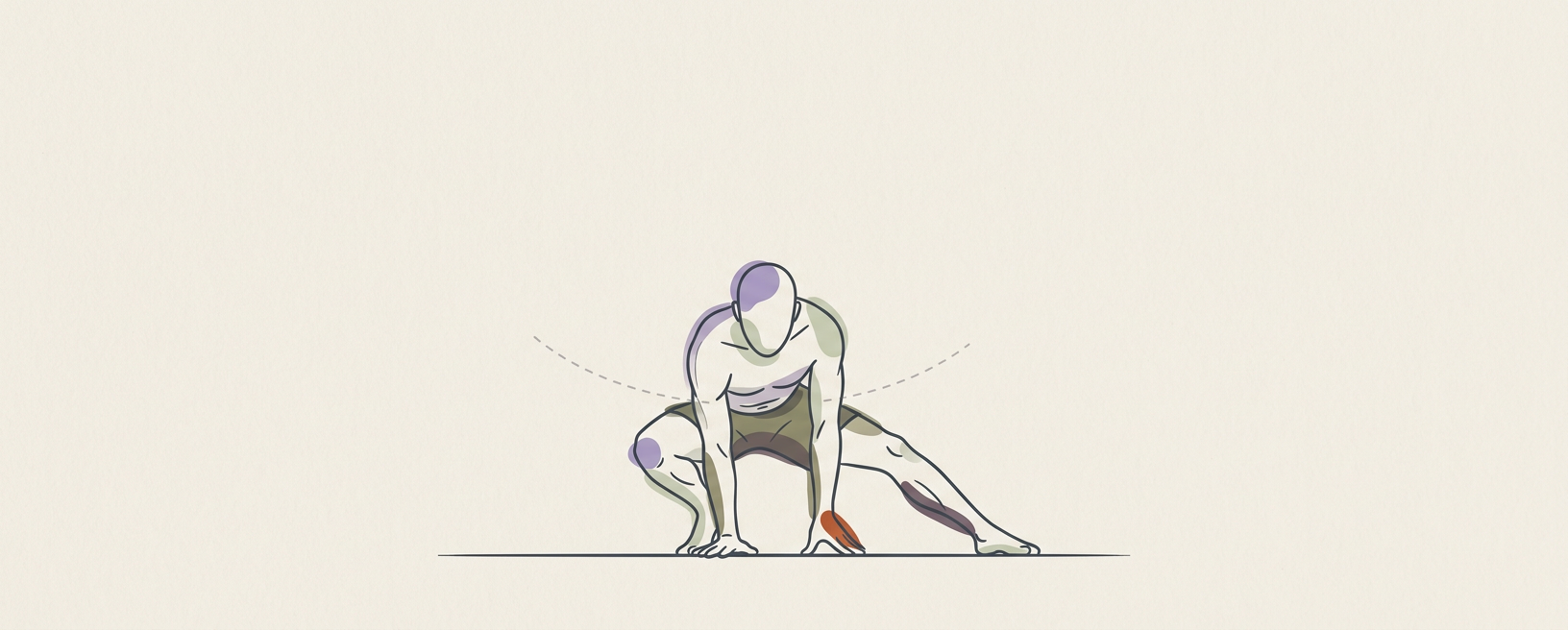
A foundational Animal Flow movement enhancing full-body coordination, mobility, and stability through lateral locomotion.
Animal Flow · Developed by Mike Fitch within the Animal Flow system. · Feeling uncoordinated, stiff, or seeking a novel method to integrate strength and mobility in a dynamic, ground-based context. · Perform 3-5 sets of 2-4 "steps" (moving your entire body width to one side and back counts as one step) in each direction. Focus on smooth, controlled transitions rather than speed. Rest 60-90 seconds between sets.
Why it works
The Lateral Traveling Ape engages multiple kinetic chains simultaneously. It integrates shoulder and hip mobility with core stability and proprioception. The alternating contralateral movement patterns challenge the nervous system to coordinate limb movements while maintaining trunk integrity. This dynamic engagement helps to desensitize the vagus nerve and downregulate sympathetic nervous system activity by focusing attention on precise body placement and movement sequencing, promoting a state of calm focus rather than high arousal.
How to practice
Starting Position: Begin in an Ape position: feet slightly wider than shoulder-width, knees bent, hips low, hands on the ground between your feet, fingers pointing forward or slightly outward. Your weight should be distributed evenly between hands and feet.
Initiate Movement: To move to your right, shift your weight slightly onto your left hand and left foot. Simultaneously lift your right hand and right foot from the ground.
Lateral Step (Right): Place your right hand down approximately 12-18 inches to the right of your left hand. Immediately follow by planting your right foot 12-18 inches to the right of your left foot, aiming to place it outside your right hand.
Reposition (Left Side): As your right hand and foot land, lift your left hand and left foot. Bring your left hand to the right, placing it near your right hand. Follow with your left foot, placing it near your right foot, returning to the original Ape posture, but now shifted to the right.
Maintain Form: Throughout the movement, strive to keep your hips low and your gaze directed towards the ground slightly ahead of your hands. Avoid letting your hips rise excessively or allowing your spine to round.
Alternating Directions: Once you have taken a predetermined number of steps to one side, reverse the process to move in the opposite direction, initiating the movement with the opposite hand and foot.
Starting Position: Begin in an Ape position: feet slightly wider than shoulder-width, knees bent, hips low, hands on the ground between your feet, fingers pointing forward or slightly outward. Your weight should be distributed evenly between hands and feet.
Initiate Movement: To move to your right, shift your weight slightly onto your left hand and left foot. Simultaneously lift your right hand and right foot from the ground.
Lateral Step (Right): Place your right hand down approximately 12-18 inches to the right of your left hand. Immediately follow by planting your right foot 12-18 inches to the right of your left foot, aiming to place it outside your right hand.
Reposition (Left Side): As your right hand and foot land, lift your left hand and left foot. Bring your left hand to the right, placing it near your right hand. Follow with your left foot, placing it near your right foot, returning to the original Ape posture, but now shifted to the right.
Maintain Form: Throughout the movement, strive to keep your hips low and your gaze directed towards the ground slightly ahead of your hands. Avoid letting your hips rise excessively or allowing your spine to round.
Alternating Directions: Once you have taken a predetermined number of steps to one side, reverse the process to move in the opposite direction, initiating the movement with the opposite hand and foot.