Daily movement
The Hardstyle Kettlebell Swing
A foundational hinge movement for posterior chain power and resilience.
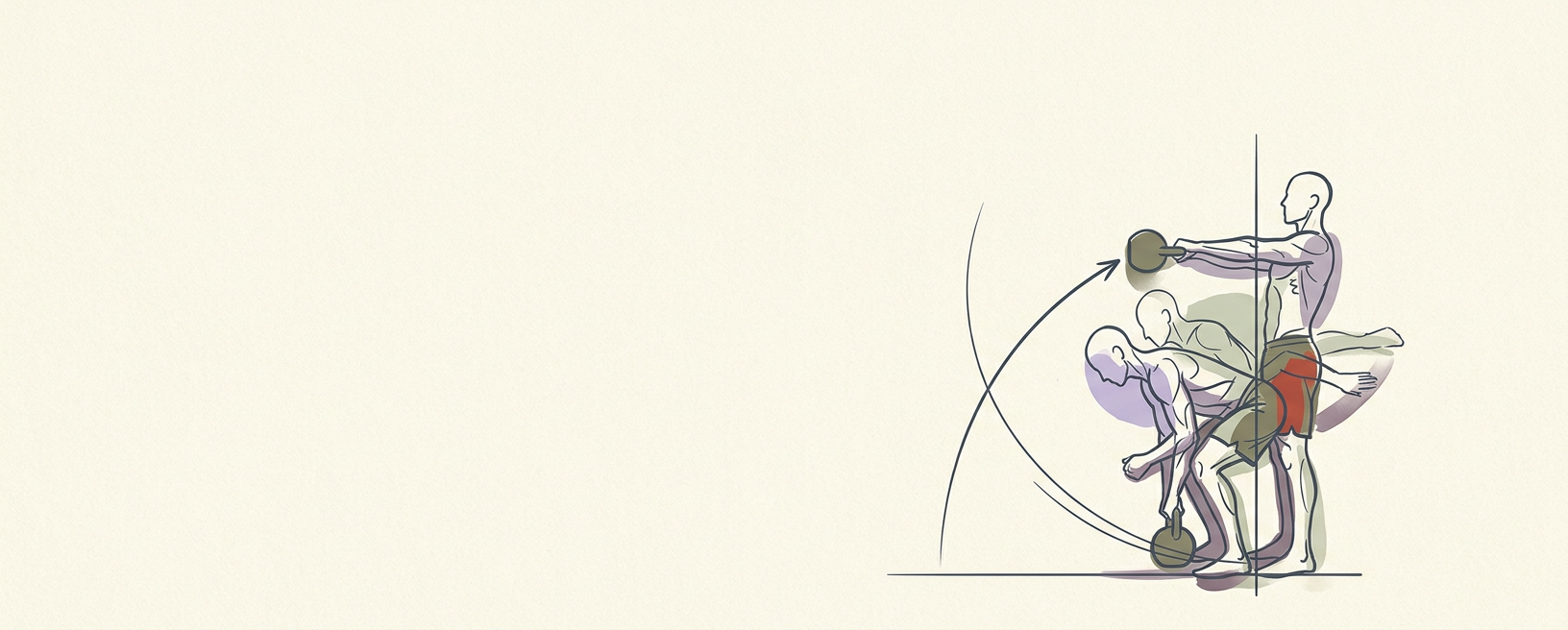
A foundational hinge movement for posterior chain power and resilience.
Hardstyle Kettlebell Training · Originating from Russian kettlebell training, popularized in the West by Pavel Tsatsouline and StrongFirst. · To develop explosive hip power, strengthen the posterior chain (glutes, hamstrings, back), and improve cardiorespiratory fitness. Useful for counteracting sedentary postures and building functional strength applicable to sports and daily life. · Begin with 3-5 sets of 10-15 repetitions. Rest 60-90 seconds between sets. Gradually increase volume or load as proficiency improves. For strength development, focus on fewer, high-quality reps; for conditioning, higher reps with shorter rest.
Why it works
The Hardstyle Kettlebell Swing is a ballistic hip hinge. It rapidly loads and unloads the posterior chain, promoting a powerful stretch-shortening cycle. The eccentric loading strengthens hamstrings and glutes, while the explosive concentric contraction builds power. The rapid, cyclical nature of the movement, combined with bracing, also enhances core stability and cardiorespiratory conditioning. It trains the nervous system to generate force quickly and efficiently. The focus on a hard style (maximal tension, brief rest) cultivates strength and resilience, rather than endurance.
How to practice
Setup:
- Stand with feet slightly wider than shoulder-width, toes pointed slightly out.
- Place a kettlebell about a foot in front of you.
- Hinge at your hips, pushing them back, keeping your spine neutral. Reach down and grasp the kettlebell handle with both hands, thumbs wrapped, palms facing you. Your shoulders should be packed, lats engaged.
- "Hike" the kettlebell back aggressively between your legs, allowing your hips to move further back. Your forearms should make contact with your inner thighs/groin.
The Upward Swing:
- Explosively snap your hips forward, driving through your heels. Imagine pushing the ground away from you. This is a hip drive, not a squat.
- Let the kettlebell float to chest height. Your arms are merely hooks; the power comes from your hips.
- At the top of the swing, brace your abs hard, squeeze your glutes, and stand tall. Your body should form a straight line (plank position).
The Downward Return:
- As the kettlebell begins to fall, allow it to pull your hips back naturally.
- Control the descent, guiding the kettlebell back between your legs into the "hike" position, ready for the next rep.
Setup:
- Stand with feet slightly wider than shoulder-width, toes pointed slightly out.
- Place a kettlebell about a foot in front of you.
- Hinge at your hips, pushing them back, keeping your spine neutral. Reach down and grasp the kettlebell handle with both hands, thumbs wrapped, palms facing you. Your shoulders should be packed, lats engaged.
- "Hike" the kettlebell back aggressively between your legs, allowing your hips to move further back. Your forearms should make contact with your inner thighs/groin.
The Upward Swing:
- Explosively snap your hips forward, driving through your heels. Imagine pushing the ground away from you. This is a hip drive, not a squat.
- Let the kettlebell float to chest height. Your arms are merely hooks; the power comes from your hips.
- At the top of the swing, brace your abs hard, squeeze your glutes, and stand tall. Your body should form a straight line (plank position).
The Downward Return:
- As the kettlebell begins to fall, allow it to pull your hips back naturally.
- Control the descent, guiding the kettlebell back between your legs into the "hike" position, ready for the next rep.