Daily movement
The Hard Reset
A precise sequence of diaphragmatic contractions and controlled exhalations to rapidly downregulate the nervous system and promote parasympathetic tone.
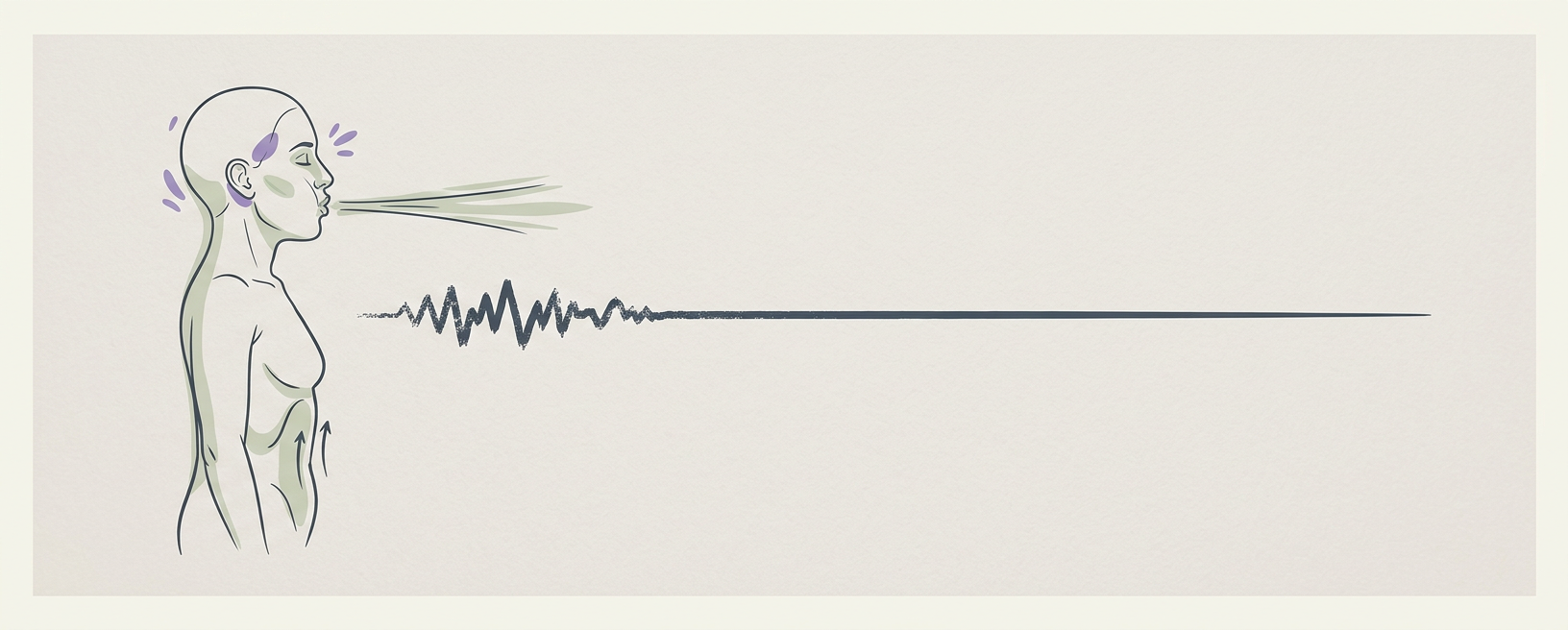
A precise sequence of diaphragmatic contractions and controlled exhalations to rapidly downregulate the nervous system and promote parasympathetic tone.
Modern stress physiology, informed by Dr. Stephen Porges' Polyvagal Theory and Dr. Peter Levine's Somatic Experiencing. · Derived from physiological principles of respiratory mechanics; popularized by clinical applications in stress regulation research. · Acute stress, anxiety, or hyperarousal; difficulty transitioning to a calm state. · Repeat 3-5 cycles as needed to achieve a calm state. Can be performed multiple times throughout the day.
Why it works
This sequence leverages the vagal nerve's influence on heart rate and respiratory rhythm. The deep diaphragmatic contractions stimulate vagal afferents, signaling safety to the brainstem. The prolonged, resisted exhalation increases intrathoracic pressure, which can also activate vagal efferents, promoting a rapid reduction in sympathetic nervous system activity and an increase in parasympathetic tone. This alters the afferent feedback loop from the body to the brain, shifting the internal state from threat to safety and facilitating emotional regulation.
How to practice
Initial Position: Sit or lie comfortably. Ensure the torso is upright but relaxed, allowing for full diaphragmatic movement.
Deep Inhale: Take a slow, deep inhale through the nose, focusing on expanding the abdomen. Allow the diaphragm to descend fully. Imagine filling the belly with air, then the chest.
Hold ( briefly ): At the peak of the inhale, pause for 1-2 seconds. This brief retention allows for mechanoreceptor engagement.
Resisted Exhale ( "Pursed Lips" ): Slowly exhale through pursed lips, as if blowing through a straw. Create a gentle, consistent resistance. Extend the exhale for as long as comfortably possible, aiming for a duration at least twice that of the inhale. Focus on a complete emptying of the lungs, gently contracting the abdominal muscles at the end.
Relaxation: Allow a natural, passive inhale to occur after the full exhale. Do not force the next breath.
Initial Position: Sit or lie comfortably. Ensure the torso is upright but relaxed, allowing for full diaphragmatic movement.
Deep Inhale: Take a slow, deep inhale through the nose, focusing on expanding the abdomen. Allow the diaphragm to descend fully. Imagine filling the belly with air, then the chest.
Hold ( briefly ): At the peak of the inhale, pause for 1-2 seconds. This brief retention allows for mechanoreceptor engagement.
Resisted Exhale ( "Pursed Lips" ): Slowly exhale through pursed lips, as if blowing through a straw. Create a gentle, consistent resistance. Extend the exhale for as long as comfortably possible, aiming for a duration at least twice that of the inhale. Focus on a complete emptying of the lungs, gently contracting the abdominal muscles at the end.
Relaxation: Allow a natural, passive inhale to occur after the full exhale. Do not force the next breath.