Daily movement
Temporal Fascia Release for Cranial Softness
This movement calms the nervous system by releasing tension in the temporal fascia, leading to a softer cranial state.
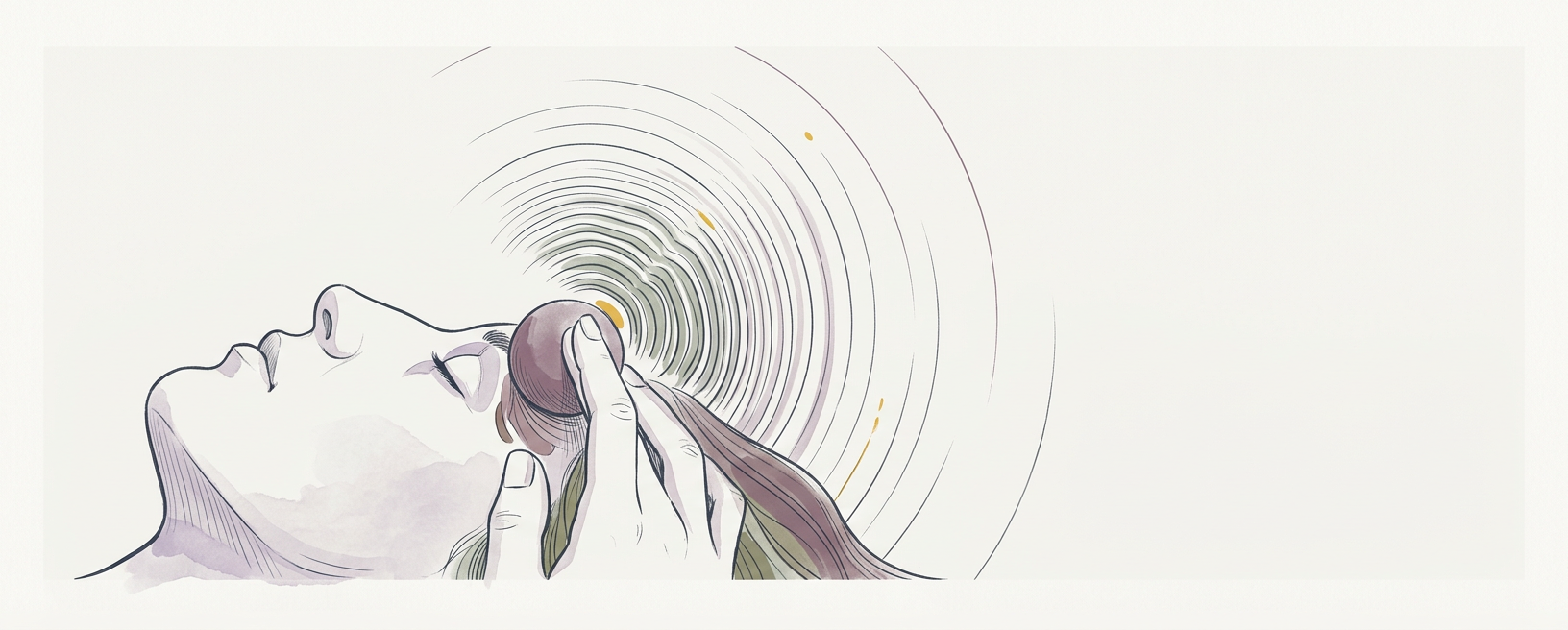
This movement calms the nervous system by releasing tension in the temporal fascia, leading to a softer cranial state.
facial release · Yamuna Body Rolling (Yamuna Zake) · This meets the dysregulation pattern of persistent mental overload, often felt as a tight, "buzzing" sensation in the head, leading to jaw clenching and shallow breathing. · 1–2 minutes per side
Why it works
The temporal fascia is deeply interconnected with the masseter and pterygoid muscles, key players in mastication and jaw tension. Chronic stress often manifests as clenching or grinding, tightening these muscles and, in turn, the surrounding fascial layers. Releasing the temporal fascia directly influences the trigeminal nerve pathway, which can become overactive in states of chronic stress. Mechanically, slow, sustained pressure and gentle stretching here encourage a viscoelastic change in the connective tissue, improving local circulation and reducing tissue rigidity. Neurologically, this direct input to cranial nerves, especially the trigeminal, helps downregulate sympathetic tone, promoting a parasympathetic response. It signals safety to the brain, which then relaxes the deep craniofacial musculature, reducing a common baseline of 'tired but wired' tension.
How to practice
My jaw's been clenching in my sleep. I wake up with that familiar dull ache behind my temples sometimes, so this is what I do.
- Preparation: Sit comfortably in a chair with a backrest, or lie down. You'll need a small, soft ball—a tennis ball or a specialized facial release ball works well. Close your eyes and take a few breaths, noticing any tension around your temples or jaw.
- Position the Ball: Place the ball directly onto your temple, just above your cheekbone and slightly in front of your ear. You want it on the fleshy part of your temporalis muscle, not directly on the bone.
- Apply Gentle Pressure: Rest your hand on the ball, applying just enough pressure to feel a gentle, sustained compression without pain. Let your head soften into the ball. Breathe in gently.
- Slow, Subtle Movement: As you exhale slowly, perform tiny, almost imperceptible circular motions with the ball, tracing the contour of your temple. Imagine you're coaxing the tissue to soften, not grinding into it. Keep the pressure light. You might notice a subtle release in your jaw.
- Expand the Area: After 30 seconds to a minute in one spot, gently roll the ball upwards towards your hairline or slightly back towards your ear, exploring other tender spots in the temporal region. Repeat the gentle circles with your breath.
- Switch Sides: After 1–2 minutes on one side, remove the ball and pause. Notice the difference in sensation between the two sides of your head. Then, repeat the process on the other temple.
- Post-Release: Gently open and close your mouth a few times, noticing the freedom of movement in your jaw. Take a slow, deep breath, letting your shoulders drop.
My jaw's been clenching in my sleep. I wake up with that familiar dull ache behind my temples sometimes, so this is what I do.
- Preparation: Sit comfortably in a chair with a backrest, or lie down. You'll need a small, soft ball—a tennis ball or a specialized facial release ball works well. Close your eyes and take a few breaths, noticing any tension around your temples or jaw.
- Position the Ball: Place the ball directly onto your temple, just above your cheekbone and slightly in front of your ear. You want it on the fleshy part of your temporalis muscle, not directly on the bone.
- Apply Gentle Pressure: Rest your hand on the ball, applying just enough pressure to feel a gentle, sustained compression without pain. Let your head soften into the ball. Breathe in gently.
- Slow, Subtle Movement: As you exhale slowly, perform tiny, almost imperceptible circular motions with the ball, tracing the contour of your temple. Imagine you're coaxing the tissue to soften, not grinding into it. Keep the pressure light. You might notice a subtle release in your jaw.
- Expand the Area: After 30 seconds to a minute in one spot, gently roll the ball upwards towards your hairline or slightly back towards your ear, exploring other tender spots in the temporal region. Repeat the gentle circles with your breath.
- Switch Sides: After 1–2 minutes on one side, remove the ball and pause. Notice the difference in sensation between the two sides of your head. Then, repeat the process on the other temple.
- Post-Release: Gently open and close your mouth a few times, noticing the freedom of movement in your jaw. Take a slow, deep breath, letting your shoulders drop.