Daily movement
Supported Bridge Pose (Setu Bandhasana) with Pranayama
A supported, mild inversion that reduces sympathetic nervous system activation and promotes vagal tone.
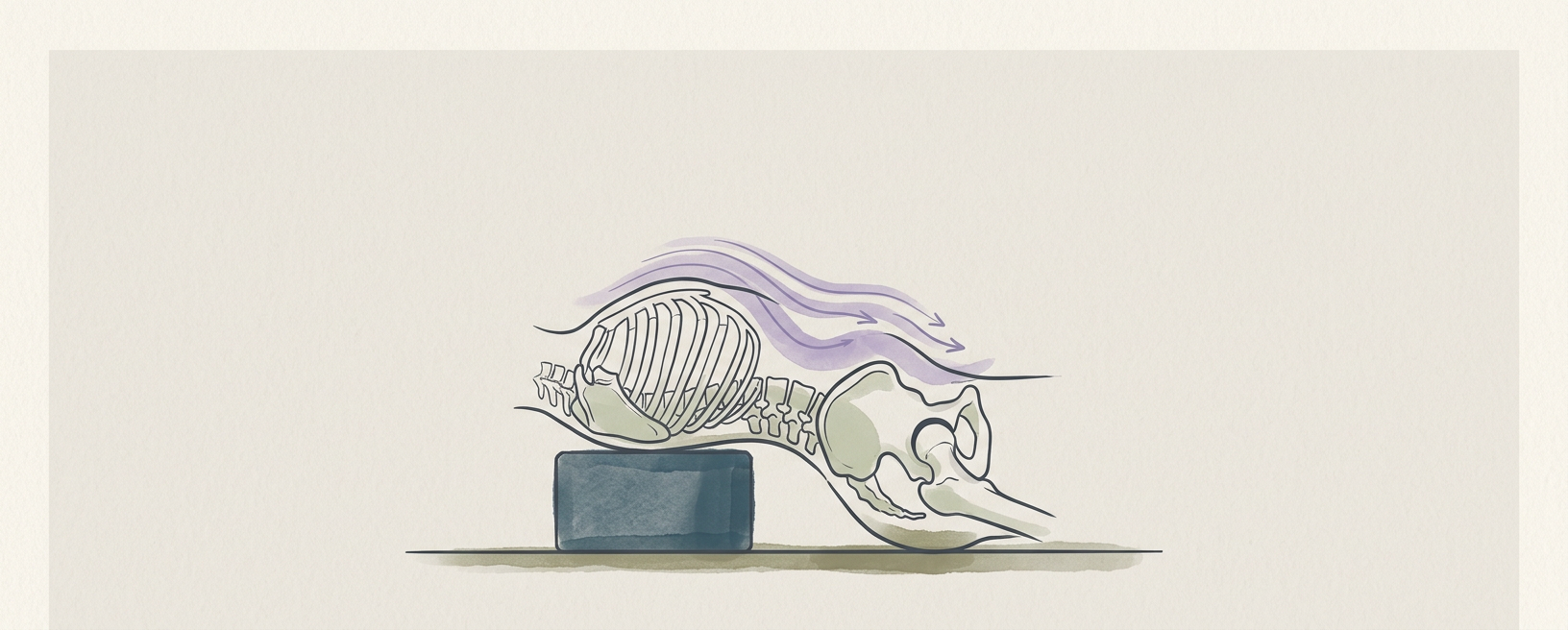
A supported, mild inversion that reduces sympathetic nervous system activation and promotes vagal tone.
Yoga · Hatha Yoga; popularized by B.K.S. Iyengar for therapeutic applications. · Hyper-vigilance, anxiety, sympathetic nervous system dominance, fatigue. · Hold for 3-10 minutes. Can be practiced daily or as needed to downregulate the nervous system.
Why it works
Supported Bridge Pose gently inverts the torso, repositioning the abdominal contents and subtly stimulating baroreceptors in the neck, which can signal the brain to reduce heart rate and blood pressure. The support under the pelvis reduces muscular effort, promoting relaxation. When combined with slow, deliberate breathing, it enhances vagal nerve activity, shifting the nervous system towards a parasympathetic (rest and digest) state. This reduces the physiological markers of stress, such as elevated cortisol and adrenaline, promoting a sense of calm and re-regulation.
How to practice
Preparation: Lie on your back with knees bent, feet flat on the floor, hip-width apart, and heels relatively close to your glutes. Ensure your low back feels neutral, not overly arched or flattened.
Lift and Support: Press into your feet to lift your hips off the floor. Slide a firm, rectangular yoga block (or a stack of folded blankets) horizontally under your sacrum, the flat bone at the base of your spine. Adjust the height of the prop so it feels supportive and comfortable – the lowest setting is generally sufficient for mild inversion. Your weight should be resting securely on the prop, not on your lumbar spine.
Position: Allow your arms to rest alongside your body, palms facing up, or extend them out to the sides for increased thoracic opening if comfortable. Your neck should be long, and the back of your head resting on the floor.
Breath Integration: Once stable, begin to extend your inhales and exhales. Focus on a smooth, even breath. You may practice a 1:2 ratio (e.g., inhale for 4 counts, exhale for 8 counts) or simply a slow, deep breath, always prioritizing comfort over strict adherence to counts.
Dwell: Remain in the pose, allowing the support to hold you and focusing on the sensation of your breath and the subtle release in your body. Notice the softening in your abdominal region and the gentle expansion of your rib cage with each inhale.
Preparation: Lie on your back with knees bent, feet flat on the floor, hip-width apart, and heels relatively close to your glutes. Ensure your low back feels neutral, not overly arched or flattened.
Lift and Support: Press into your feet to lift your hips off the floor. Slide a firm, rectangular yoga block (or a stack of folded blankets) horizontally under your sacrum, the flat bone at the base of your spine. Adjust the height of the prop so it feels supportive and comfortable – the lowest setting is generally sufficient for mild inversion. Your weight should be resting securely on the prop, not on your lumbar spine.
Position: Allow your arms to rest alongside your body, palms facing up, or extend them out to the sides for increased thoracic opening if comfortable. Your neck should be long, and the back of your head resting on the floor.
Breath Integration: Once stable, begin to extend your inhales and exhales. Focus on a smooth, even breath. You may practice a 1:2 ratio (e.g., inhale for 4 counts, exhale for 8 counts) or simply a slow, deep breath, always prioritizing comfort over strict adherence to counts.
Dwell: Remain in the pose, allowing the support to hold you and focusing on the sensation of your breath and the subtle release in your body. Notice the softening in your abdominal region and the gentle expansion of your rib cage with each inhale.