Daily movement
Supine Pelvic Curl for Core Stabilization and Breath Integration
This movement integrates breath with precise spinal articulation to stabilize the core and lengthen the spine.
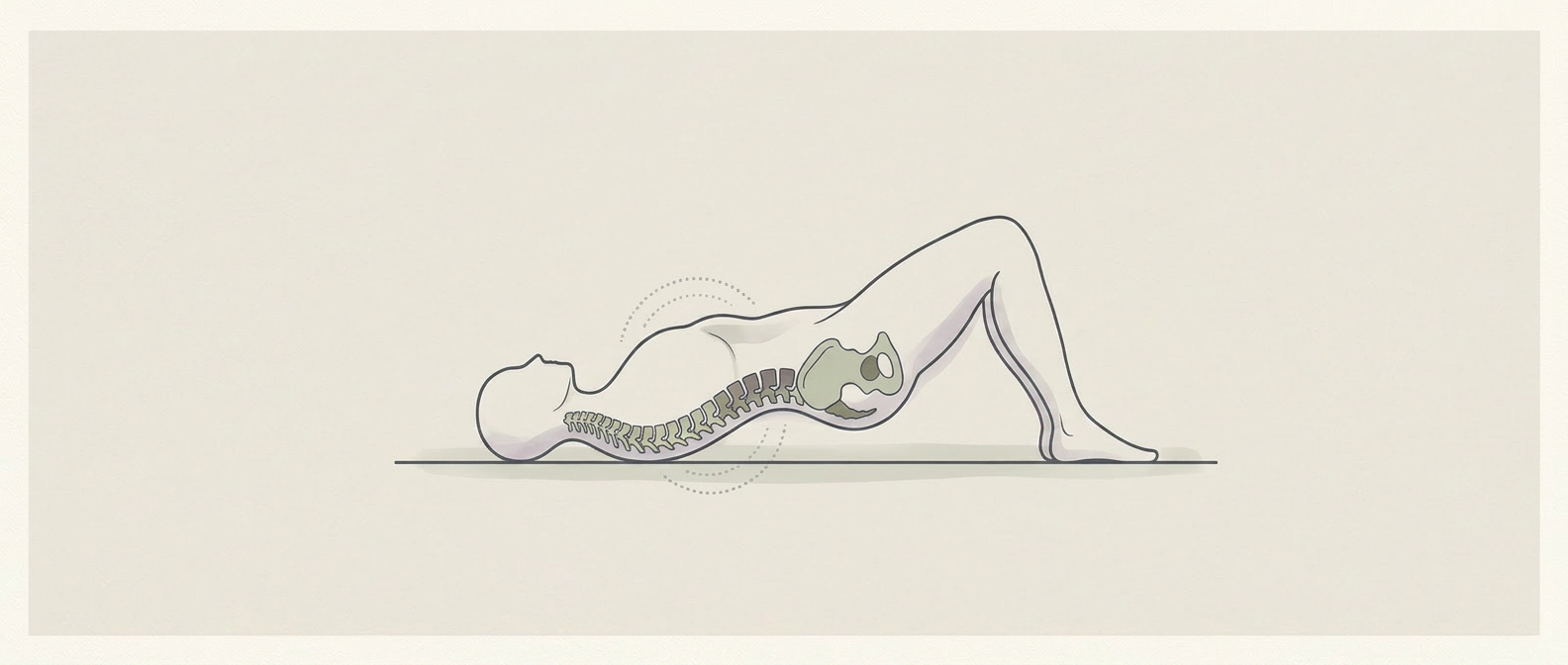
This movement integrates breath with precise spinal articulation to stabilize the core and lengthen the spine.
healing pilates · Classical Pilates (Joseph Pilates) · This meets a state of dis Hociated core and breath, often presenting as shallow breathing, lower back tension, or a lack of abdominal support. · 6–8 repetitions, 2–3 sets
Why it works
The Supine Pelvic Curl engages the deep abdominal muscles and multifidi, which are key stabilizers of the lumbar spine and pelvis. By articulating the spine segment by segment, it educates proprioception and motor control, fostering a more efficient movement pattern. The integration of breath (exhaling as the pelvis rolls up, inhaling as it rolls down) optimizes intra-abdominal pressure, which supports spinal stability and facilitates the release of the diaphragm, promoting deeper and more complete respiration. This coordinated effort improves muscle synergy, reducing compensatory patterns and alleviating tension in the superficial muscles.
How to practice
Lie supine on your back with knees bent, feet flat on the floor, hip-width apart, and heels slightly away from your glutes.
Place your hands alongside your body, palms down. Ensure your spine maintains its natural curves; do not flatten your lower back to the mat yet.
Inhale gently to prepare, allowing the breath to expand laterally into the lower ribs.
Exhale slowly, initiating the movement by gently tilting your pelvis towards your ribs. Feel your pubic bone lift towards the ceiling as your lower back gradually presses into the mat, then one vertebra at a time, peel your spine off the mat until you rest on your shoulder blades.
At the top, inhale softly, maintaining the lifted position, feeling the length from your knees to your shoulders.
Exhale with control, articulating your spine back down to the mat one vertebra at a time, melting through the upper back, then mid-back, then lower back, until your pelvis returns to its neutral position.
Repeat this fluid, segmental movement, coordinating with your breath.
Lie supine on your back with knees bent, feet flat on the floor, hip-width apart, and heels slightly away from your glutes.
Place your hands alongside your body, palms down. Ensure your spine maintains its natural curves; do not flatten your lower back to the mat yet.
Inhale gently to prepare, allowing the breath to expand laterally into the lower ribs.
Exhale slowly, initiating the movement by gently tilting your pelvis towards your ribs. Feel your pubic bone lift towards the ceiling as your lower back gradually presses into the mat, then one vertebra at a time, peel your spine off the mat until you rest on your shoulder blades.
At the top, inhale softly, maintaining the lifted position, feeling the length from your knees to your shoulders.
Exhale with control, articulating your spine back down to the mat one vertebra at a time, melting through the upper back, then mid-back, then lower back, until your pelvis returns to its neutral position.
Repeat this fluid, segmental movement, coordinating with your breath.