Daily movement
Spinal Cord Breathing
A gentle, rhythmic movement to mobilize the spine and calm the nervous system.
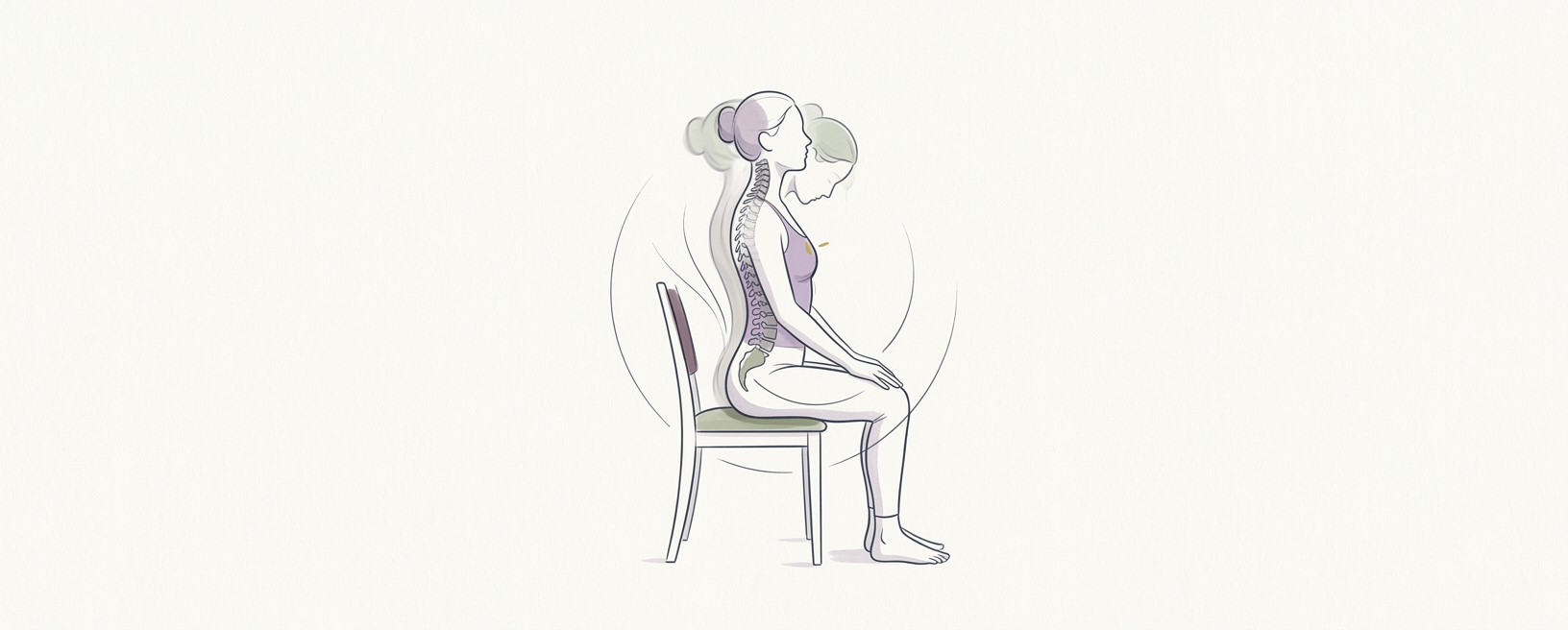
A gentle, rhythmic movement to mobilize the spine and calm the nervous system.
Qigong · Taoist Yoga, popularized by Mantak Chia · Stress, anxiety, nervous system dysregulation, spinal stiffness. · Perform for 3-5 minutes, 1-3 times daily, or as needed for stress regulation.
Why it works
This movement mobilizes the cerebrospinal fluid and stimulates the parasympathetic nervous system through rhythmic, undulating spinal flexion and extension. The gentle compression and decompression of the spinal discs, combined with diaphragmatic breathing, facilitates improved fluid exchange and nutrient delivery to the spinal cord and surrounding tissues. This can reduce muscular tension, alleviate nerve impingement, and promote a sense of calm by down-regulating sympathetic activation.
How to practice
Starting Position: Sit comfortably on the edge of a chair with your feet flat on the floor, hip-width apart. Ensure your spine is naturally aligned, not rigidly straight. Your hands can rest gently on your knees.
Inhale - Arch: As you inhale slowly and deeply through your nose, gently arch your lower back, bringing your chest forward and upward. Allow your shoulders to relax down and back, and your head to lift slightly. Imagine a gentle opening across the front of your body.
Exhale - Round: As you exhale slowly and completely through your mouth (or nose), gently round your lower back, tucking your pelvis slightly under. Allow your chin to drop towards your chest, and your shoulders to round forward. Imagine a gentle release across the back of your body.
Flow: Continue to undulate your spine with your breath, allowing the movement to be fluid and continuous. Focus on the gentle expansion and contraction of your torso, letting the movement originate from your pelvis and ripple up through your spine. Avoid forcing the movement; it should be subtle and feel pleasant.
Starting Position: Sit comfortably on the edge of a chair with your feet flat on the floor, hip-width apart. Ensure your spine is naturally aligned, not rigidly straight. Your hands can rest gently on your knees.
Inhale - Arch: As you inhale slowly and deeply through your nose, gently arch your lower back, bringing your chest forward and upward. Allow your shoulders to relax down and back, and your head to lift slightly. Imagine a gentle opening across the front of your body.
Exhale - Round: As you exhale slowly and completely through your mouth (or nose), gently round your lower back, tucking your pelvis slightly under. Allow your chin to drop towards your chest, and your shoulders to round forward. Imagine a gentle release across the back of your body.
Flow: Continue to undulate your spine with your breath, allowing the movement to be fluid and continuous. Focus on the gentle expansion and contraction of your torso, letting the movement originate from your pelvis and ripple up through your spine. Avoid forcing the movement; it should be subtle and feel pleasant.