Daily movement
Spinal Cord Breathing (Inner Smile variant)
A foundational Qi Gong practice to mobilize the spine, calm the nervous system, and cultivate internal awareness.
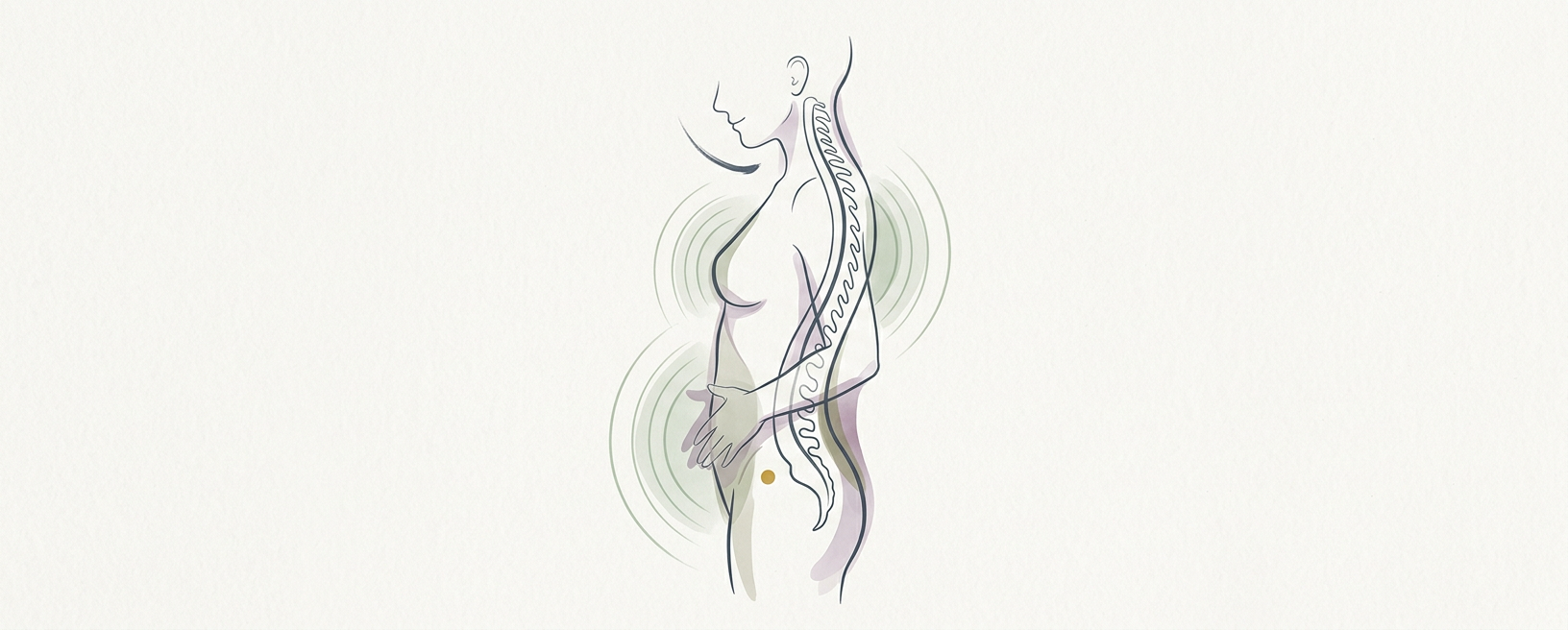
A foundational Qi Gong practice to mobilize the spine, calm the nervous system, and cultivate internal awareness.
Qi Gong (Daoist Microcosmic Orbit / Universal Healing Tao System) · Daoist internal alchemical practices, widely taught by Mantak Chia as part of the Microcosmic Orbit and Inner Smile sequences. · Stress, anxiety, mental fatigue, emotional stagnation, physical stiffness in the back and neck, overstimulation. · Begin with 5-10 minutes daily, increasing gradually to 20-30 minutes as comfort and integration allow. Can be practiced multiple times a day as needed for state regulation.
Why it works
Spinal Cord Breathing gently undulates the vertebral column, stimulating cerebrospinal fluid circulation and nerve roots. The deliberate, synchronized breath patterns activate the parasympathetic nervous system, promoting relaxation and reducing sympathetic dominance. Focused internal attention, as encouraged by the "Inner Smile" aspect, further downregulates stress responses by engaging interoceptive pathways and shifting awareness from external stressors to internal sensations. This internal massage of the spine and brain stem helps to release fascial tension and improve proprioception, contributing to a more regulated physiological state.
How to practice
Starting Position:
- Stand or sit comfortably with an upright but relaxed spine. Feet hip-width apart if standing, or rooted on the floor if seated.
- Gently close your eyes or soften your gaze downwards.
- Place your hands gently on your lower abdomen, just below the navel.
Movement Sequence (Per Cycle):
- Inhale: Begin a slow, deep inhalation. As you inhale, gently arch your lower back (anterior pelvic tilt), allowing the abdomen to expand. Simultaneously, lift your sternum slightly and gently draw your shoulder blades closer together, opening the chest. Imagine energy gathering at your lower dantian (just below the navel).
- Exhale: As you exhale slowly and completely, reverse the movement. Gently tuck your tailbone (posterior pelvic tilt), allowing your lower back to round slightly. Release your sternum, and gently round your upper back, bringing your chin slightly towards your chest. Imagine the energy spreading throughout your spine and flowing down into the earth through your feet.
Key Refinements:
- Breath and Movement Synchronization: The movement should be fluid and continuous, mirroring the length of your inhale and exhale. Avoid abrupt or forceful movements.
- Gentle Undulation: Focus on a gentle, wave-like motion through the entire spine, rather than isolated flexion/extension of specific segments.
- Inner Smile: Throughout the practice, cultivate a subtle inner smile, directing gentle, loving awareness to your spine, internal organs, and nervous system.
Starting Position:
- Stand or sit comfortably with an upright but relaxed spine. Feet hip-width apart if standing, or rooted on the floor if seated.
- Gently close your eyes or soften your gaze downwards.
- Place your hands gently on your lower abdomen, just below the navel.
Movement Sequence (Per Cycle):
- Inhale: Begin a slow, deep inhalation. As you inhale, gently arch your lower back (anterior pelvic tilt), allowing the abdomen to expand. Simultaneously, lift your sternum slightly and gently draw your shoulder blades closer together, opening the chest. Imagine energy gathering at your lower dantian (just below the navel).
- Exhale: As you exhale slowly and completely, reverse the movement. Gently tuck your tailbone (posterior pelvic tilt), allowing your lower back to round slightly. Release your sternum, and gently round your upper back, bringing your chin slightly towards your chest. Imagine the energy spreading throughout your spine and flowing down into the earth through your feet.
Key Refinements:
- Breath and Movement Synchronization: The movement should be fluid and continuous, mirroring the length of your inhale and exhale. Avoid abrupt or forceful movements.
- Gentle Undulation: Focus on a gentle, wave-like motion through the entire spine, rather than isolated flexion/extension of specific segments.
- Inner Smile: Throughout the practice, cultivate a subtle inner smile, directing gentle, loving awareness to your spine, internal organs, and nervous system.