Daily movement
Spinal Cord Breathing (Dragon's Breath)
A dynamic spinal articulation designed to mitigate physiological stress responses and enhance core neuromuscular integration.
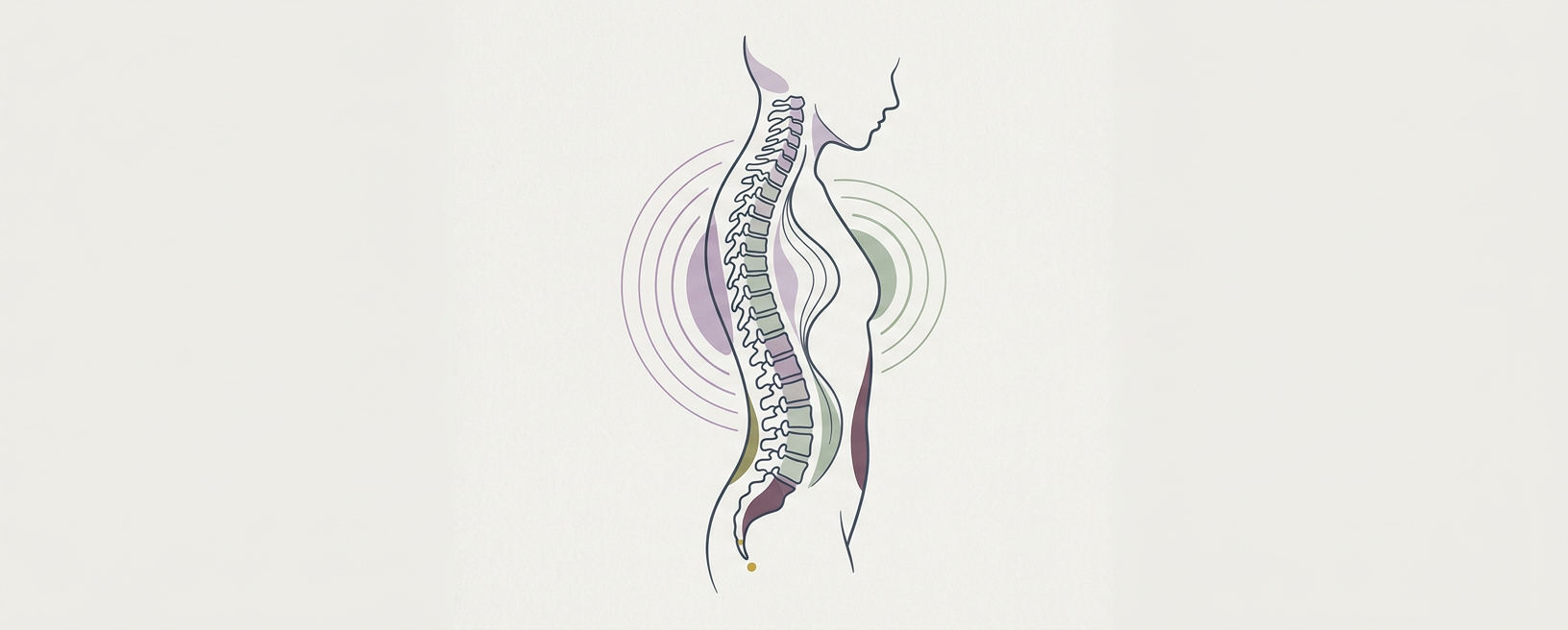
A dynamic spinal articulation designed to mitigate physiological stress responses and enhance core neuromuscular integration.
Mantak Chia's Universal Healing Tao · Taoist Internal Arts · Diffuse physiological tension, sympathetic nervous system dominance, restricted spinal mobility. · Perform 3-5 minutes, 1-3 times daily, or as needed to alleviate tension. Focus on smooth, continuous cycles.
Why it works
This movement systematically mobilizes the entire spinal column, from the sacrum to the atlas. The rhythmic flexion and extension, synchronized with diaphragmatic breathing, stimulates cerebrospinal fluid circulation, directly impacting the central nervous system. The undulatory action promotes parasympathetic nervous system engagement by de-armoring myofascial restrictions around the spine, particularly along the posterior chain and deep core. This tissue manipulation enhances proprioceptive feedback and reduces efferent sympathetic outflow, leading to a state of regulated calmness and improved structural integrity.
How to practice
Starting Position
- Stand with feet shoulder-width apart, knees slightly bent, and spine elongated. Pelvis is neutral.
- Arms hang naturally by your sides, palms facing the body.
- Gaze is soft, slightly downward.
The Movement
- Inhale (Spinal Flexion): Initiate a gentle tuck of the tailbone, allowing the pelvis to tilt posteriorly. Simultaneously, begin to round the lower back, then the mid-back, and finally the upper back and neck. Imagine each vertebra articulating sequentially. The chin gently tucks towards the chest. Arms remain relaxed, following the natural sway of the torso. Breathe deeply into the back body, expanding the rib cage posteriorly.
- Exhale (Spinal Extension): From the flexed position, begin to reverse the movement. Initiate with a gentle anterior pelvic tilt, allowing the sacrum to lead. Gradually extend the lower back, then the mid-back, and finally the upper back and neck. The chest gently lifts, and the gaze moves slightly forward. Avoid hyperextending the neck. Imagine elongating the spine with each exhale, creating space between the vertebrae. Breathe out completely, drawing the navel gently towards the spine.
- Rhythm: Maintain a fluid, wave-like motion, ensuring no jerky movements. The breath dictates the pace of the movement. Focus on a continuous flow rather than distinct segmented actions.
Key Cues
- Initiate from the pelvis: The pelvic tilt drives the spinal wave.
- Segmental articulation: Feel each vertebra move independently.
- Breath-led movement: Let the inhale open and the exhale lengthen.
- Relaxed extremities: Allow arms and head to follow the natural momentum.
Starting Position
- Stand with feet shoulder-width apart, knees slightly bent, and spine elongated. Pelvis is neutral.
- Arms hang naturally by your sides, palms facing the body.
- Gaze is soft, slightly downward.
The Movement
- Inhale (Spinal Flexion): Initiate a gentle tuck of the tailbone, allowing the pelvis to tilt posteriorly. Simultaneously, begin to round the lower back, then the mid-back, and finally the upper back and neck. Imagine each vertebra articulating sequentially. The chin gently tucks towards the chest. Arms remain relaxed, following the natural sway of the torso. Breathe deeply into the back body, expanding the rib cage posteriorly.
- Exhale (Spinal Extension): From the flexed position, begin to reverse the movement. Initiate with a gentle anterior pelvic tilt, allowing the sacrum to lead. Gradually extend the lower back, then the mid-back, and finally the upper back and neck. The chest gently lifts, and the gaze moves slightly forward. Avoid hyperextending the neck. Imagine elongating the spine with each exhale, creating space between the vertebrae. Breathe out completely, drawing the navel gently towards the spine.
- Rhythm: Maintain a fluid, wave-like motion, ensuring no jerky movements. The breath dictates the pace of the movement. Focus on a continuous flow rather than distinct segmented actions.
Key Cues
- Initiate from the pelvis: The pelvic tilt drives the spinal wave.
- Segmental articulation: Feel each vertebra move independently.
- Breath-led movement: Let the inhale open and the exhale lengthen.
- Relaxed extremities: Allow arms and head to follow the natural momentum.