Daily movement
Single Leg Stance with Contralateral Limb Extension
A foundational balance drill that challenges proprioception and hip stability by extending the non-standing leg into various positions.
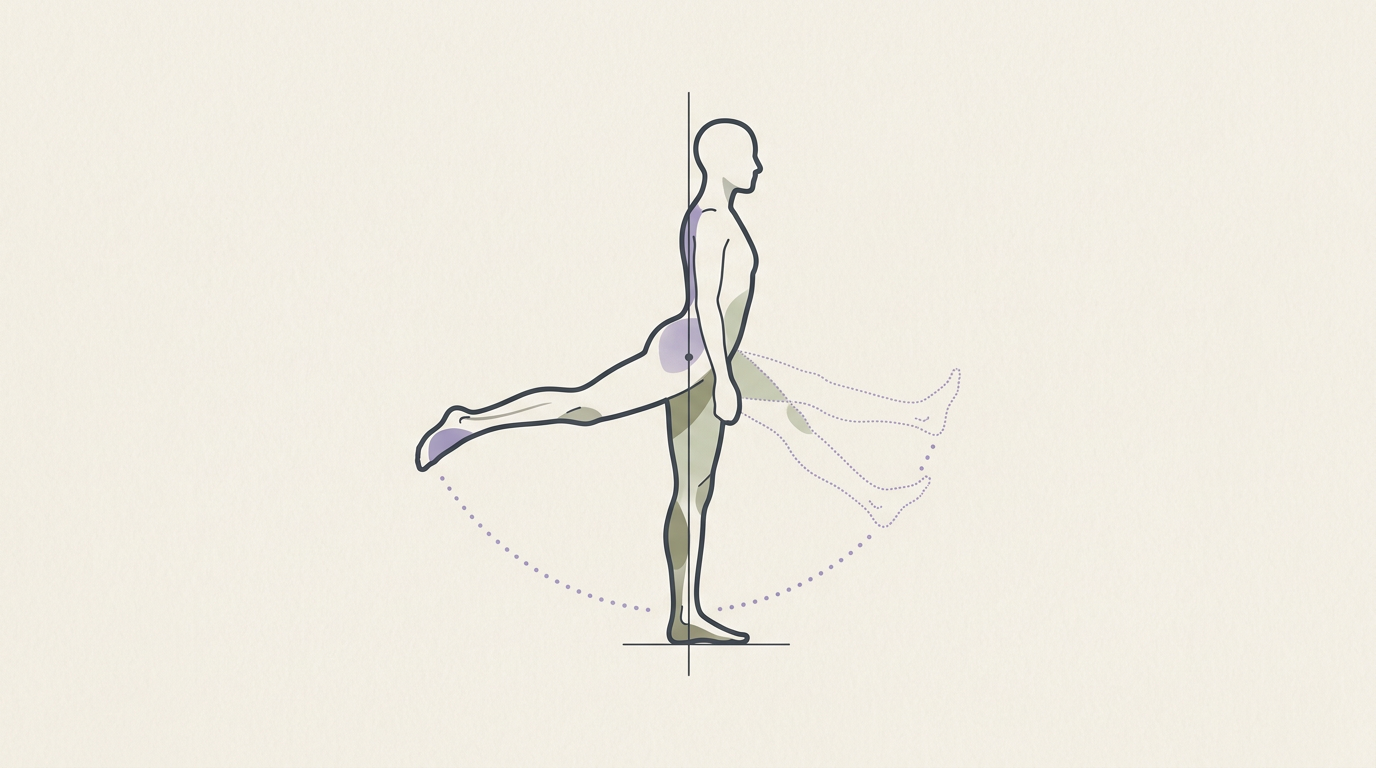
A foundational balance drill that challenges proprioception and hip stability by extending the non-standing leg into various positions.
Physical Therapy / Athletic Conditioning · Developed within physical therapy and athletic conditioning for improving functional balance and injury prevention. · To improve dynamic balance, enhance proprioceptive awareness, and strengthen hip stabilizing musculature, particularly beneficial for gait, running, and activities requiring single-leg support. · Perform 3-5 repetitions per side, holding each extension for 10-20 seconds. Complete 2-3 sets. Progress by increasing hold time, introducing external perturbations (e.g., light taps from a partner), or moving the extended limb through a larger range of motion.
Why it works
This movement engages multiple proprioceptors in the ankle, knee, and hip of the standing leg, sending critical feedback to the central nervous system for balance control. The contralateral limb extension shifts the center of gravity, requiring active engagement of the gluteal muscles and core to maintain stability. This neurological challenge refines motor control pathways, while the muscular activation builds endurance in key postural stabilizers. The controlled, slow movement pattern prevents sudden shifts that could trigger sympathetic responses, instead promoting a parasympathetic state through focused attention and breath.
How to practice
Starting Position: Stand tall with feet hip-width apart, gaze fixed on a non-moving point in front of you. Ensure equal weight distribution.
Lift Off: Gently shift your weight onto one foot. On an exhale, slowly lift the opposite foot a few inches off the floor, maintaining a slight bend in the standing knee.
Contralateral Extension: On an inhale, slowly extend the lifted leg either directly behind you (hip extension), out to the side (hip abduction), or forward (hip flexion). The movement should be controlled and deliberate, without compensatory tilting of the torso.
Hold: Hold the extended position for the prescribed duration, focusing on maintaining stability through the standing leg and core. Keep a neutral spine.
Return: On an exhale, slowly bring the extended leg back to the starting lifted position, then gently lower it to the floor.
Switch Sides: Rest briefly if needed, then repeat on the other side.
Starting Position: Stand tall with feet hip-width apart, gaze fixed on a non-moving point in front of you. Ensure equal weight distribution.
Lift Off: Gently shift your weight onto one foot. On an exhale, slowly lift the opposite foot a few inches off the floor, maintaining a slight bend in the standing knee.
Contralateral Extension: On an inhale, slowly extend the lifted leg either directly behind you (hip extension), out to the side (hip abduction), or forward (hip flexion). The movement should be controlled and deliberate, without compensatory tilting of the torso.
Hold: Hold the extended position for the prescribed duration, focusing on maintaining stability through the standing leg and core. Keep a neutral spine.
Return: On an exhale, slowly bring the extended leg back to the starting lifted position, then gently lower it to the floor.
Switch Sides: Rest briefly if needed, then repeat on the other side.