Daily movement
Single Leg Stance on Unstable Surface
A dynamic balance challenge to enhance proprioception and neuromuscular control.
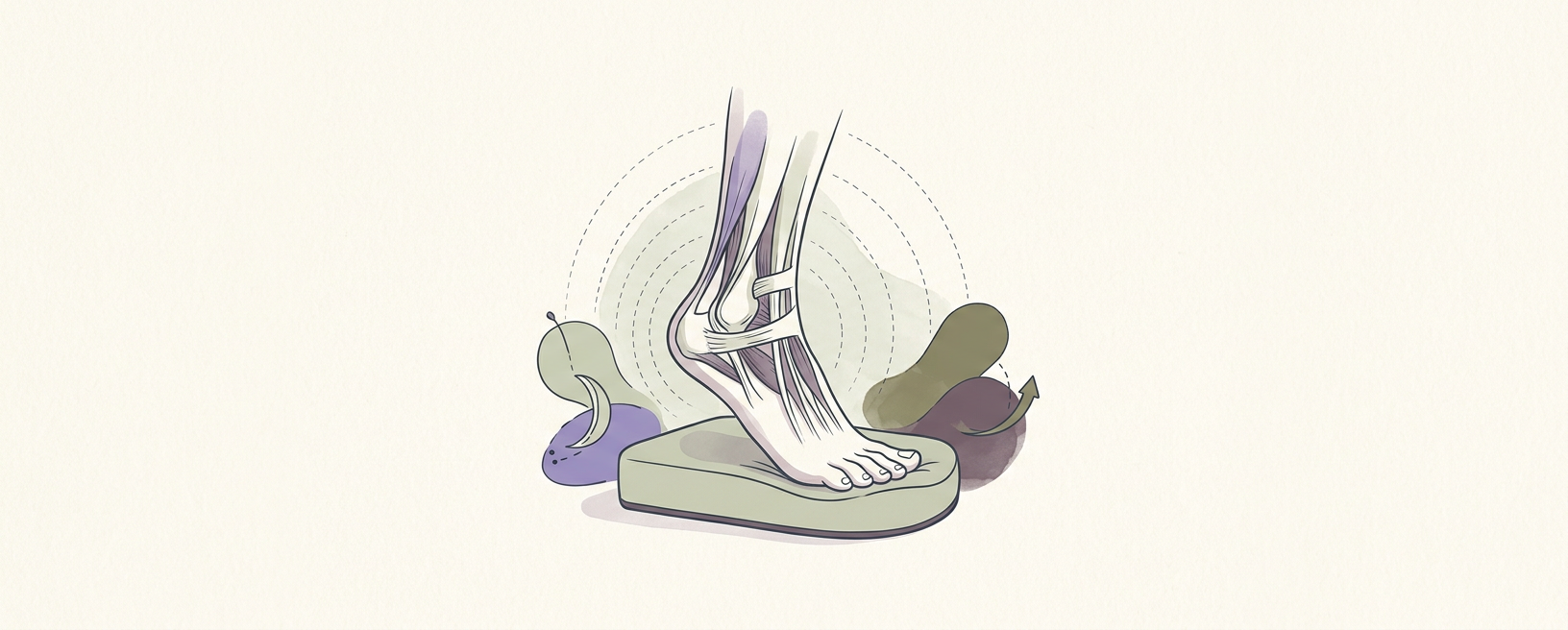
A dynamic balance challenge to enhance proprioception and neuromuscular control.
Physical Therapy / Neurological Rehabilitation · This movement concept is foundational in physical therapy and neurological rehabilitation, often attributed to pioneers such as Vladimir Janda, who emphasized the importance of proprioceptive training in restoring motor control. Its application on unstable surfaces is a direct progression from static balance exercises. · To improve balance, reduce fall risk, and enhance proprioceptive awareness, particularly after injury or for aging populations. It addresses a perceived instability or lack of confidence in dynamic movements. · Perform 3-5 sets of 30-60 seconds on each leg. Prioritize controlled stability over duration. If initial attempts are highly unstable, reduce the duration and gradually increase as control improves. Execute 2-3 times per week, allowing for recovery between sessions.
Why it works
The unstable surface introduces a continuous perturbation, forcing the central nervous system to rapidly process proprioceptive and vestibular input and generate immediate motor responses to maintain equilibrium. This constant reflexive engagement strengthens the intricate neural pathways responsible for balance, leading to improved joint stability and more efficient muscular co-contraction around the ankle, knee, and hip. The increased afferent feedback from mechanoreceptors in the foot and ankle, stimulated by the uneven surface, enhances somatosensory processing.
How to practice
Preparation: Stand near a stable support (e.g., a wall or sturdy chair) that you can lightly touch for assistance if needed. Place an unstable surface, such as a balance pad, foam cushion, or wobble board, in front of you.
Initiation: Gently step onto the unstable surface with one foot, ensuring your weight is distributed evenly across the foot. The other foot remains off the surface.
Find Center: Allow for subtle micro-movements as your body seeks to stabilize. Engage your core musculature by gently drawing your navel towards your spine. Keep your gaze steady on a fixed point in front of you.
Hold: Maintain this single-leg stance for the prescribed duration. Focus on controlling any swaying or wobbling by making small, precise adjustments through your ankle, knee, and hip.
Descent: Carefully step off the unstable surface.
Switch Sides: Repeat the process with the other leg.
Preparation: Stand near a stable support (e.g., a wall or sturdy chair) that you can lightly touch for assistance if needed. Place an unstable surface, such as a balance pad, foam cushion, or wobble board, in front of you.
Initiation: Gently step onto the unstable surface with one foot, ensuring your weight is distributed evenly across the foot. The other foot remains off the surface.
Find Center: Allow for subtle micro-movements as your body seeks to stabilize. Engage your core musculature by gently drawing your navel towards your spine. Keep your gaze steady on a fixed point in front of you.
Hold: Maintain this single-leg stance for the prescribed duration. Focus on controlling any swaying or wobbling by making small, precise adjustments through your ankle, knee, and hip.
Descent: Carefully step off the unstable surface.
Switch Sides: Repeat the process with the other leg.