Daily movement
Self-myofascial Release for the Suboccipital Muscles
This release addresses tension in the suboccipital muscles, promoting cranial decompression and nervous system regulation.
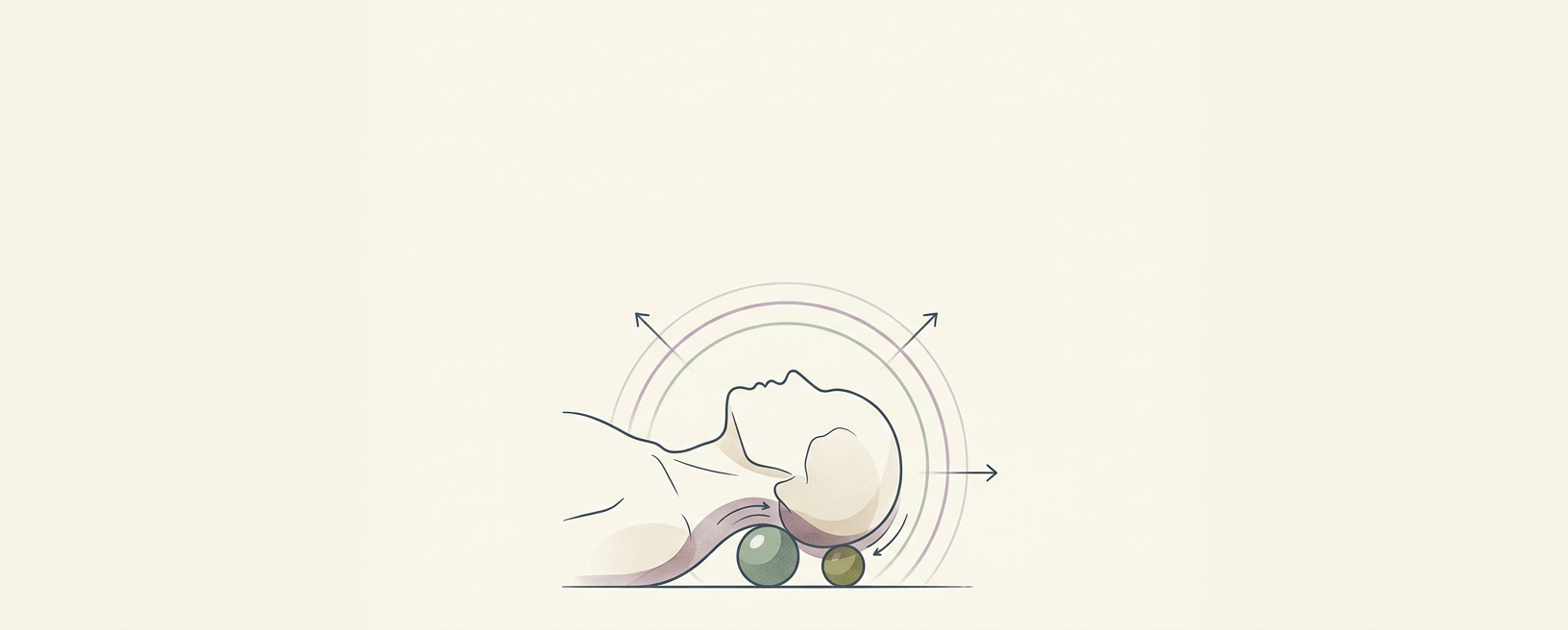
This release addresses tension in the suboccipital muscles, promoting cranial decompression and nervous system regulation.
fascia / myofascial release · Anatomy Trains (Tom Myers) · This meets a need state of headache, neck stiffness, jaw tension, or general stress due to chronic tension in the suboccipital region. · 60-90 seconds per side, or until a release is felt
Why it works
The suboccipital muscles, a group of four small muscles located at the base of the skull, are often implicated in tension headaches and neck pain due to their high density of proprioceptors and their role in head movement and posture. Releasing these muscles sends afferent signals to the brainstem, specifically the nucleus tractus solitarii, which has connections to the vagus nerve. This can downregulate sympathetic nervous system activity and promote a parasympathetic response. Mechanically, releasing these muscles can decompress the atlanto-occipital joint, reduce dural tension, and improve cerebrospinal fluid flow, thereby optimizing tissue health and reducing nociceptive input.
How to practice
Lie on your back on a firm surface with your knees bent and feet flat on the floor.
Place two tennis balls or specialized myofascial release balls under your head, precisely at the ridge where your skull meets your neck (the superior nuchal line). The balls should be about 1-2 inches apart, one on each side of your spine.
Allow the weight of your head to gently settle onto the balls. You may feel a sensation ranging from mild discomfort to a deep release.
Take slow, deliberate breaths. As you exhale, imagine the skull softening and releasing onto the balls.
To deepen the release, you can gently nod your head yes a few times, then gently turn your head side to side a few times, always within a pain-free range of motion. Keep the movements small and controlled.
Maintain a soft gaze towards the ceiling or gently close your eyes.
Remain in this position for the prescribed duration, focusing on relaxation and breath.
Lie on your back on a firm surface with your knees bent and feet flat on the floor.
Place two tennis balls or specialized myofascial release balls under your head, precisely at the ridge where your skull meets your neck (the superior nuchal line). The balls should be about 1-2 inches apart, one on each side of your spine.
Allow the weight of your head to gently settle onto the balls. You may feel a sensation ranging from mild discomfort to a deep release.
Take slow, deliberate breaths. As you exhale, imagine the skull softening and releasing onto the balls.
To deepen the release, you can gently nod your head yes a few times, then gently turn your head side to side a few times, always within a pain-free range of motion. Keep the movements small and controlled.
Maintain a soft gaze towards the ceiling or gently close your eyes.
Remain in this position for the prescribed duration, focusing on relaxation and breath.