Daily movement
Seated Arch and Curl for Spinal Undulation
This movement helps to restore spinal fluidity and mitigate the effects of prolonged static postures.
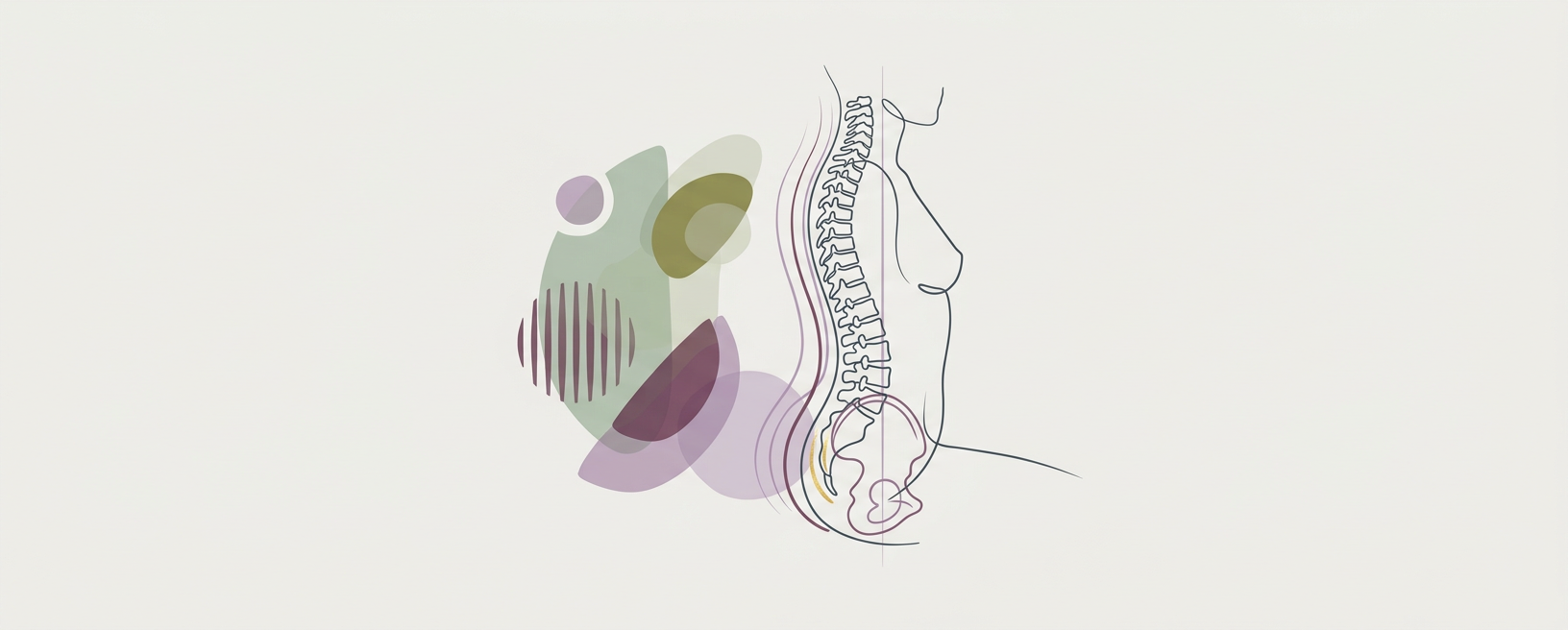
This movement helps to restore spinal fluidity and mitigate the effects of prolonged static postures.
GYROTONIC / GYROKINESIS · GYROKINESIS (Juliu Horvath) · This meets the need state of spinal stiffness and inhibited movement, often experienced after sustained sitting or travel. · 5-8 rounds, coordinated with breath
Why it works
The undulating arch and curl of the spine mobilizes vertebrae in all planes of motion, specifically targeting the intervertebral discs and the deep intrinsic spinal muscles. Neurologically, this rhythmic movement stimulates mechanoreceptors along the spine, which sends proprioceptive feedback to the central nervous system. This input can down-regulate sympathetic nervous system activity and promote a parasympathetic state. The repetitive movement also encourages fascial hydration and elasticity within the thoracolumbar fascia and the spinal ligaments, improving compliance and reducing stiffness. The coordinated breath patterns further enhance cerebrospinal fluid circulation and organ mobility, contributing to an overall sense of internal spaciousness and ease.
How to practice
Sit tall. Sit on a stool or chair with your feet flat on the floor, hip-width apart. Your spine is long, eyes gaze forward.
Exhale, curl. As you exhale, initiate a curling motion from your tailbone, drawing your belly button towards your spine. Allow your pelvis to tuck under, and your spine to round forward, releasing your head. Imagine you are creating a "C" shape with your torso, without collapsing.
Inhale, arch. As you inhale, reverse the movement. Begin to arch your spine from your tailbone, tilting your pelvis forward. Lift your chest, and gently extend your head and neck, allowing your collarbones to broaden. Avoid compressing your lower back. Your spine now forms an "S" curve.
Flow gracefully. Continue to move fluidly between the arch and curl, coordinating each movement with your breath. Let the movement be continuous and smooth, without pauses. Focus on articulating each segment of your spine.
Maintain grounding. Keep your sitting bones rooted to the chair throughout the movement, allowing them to gently rock forward and backward with the pelvic tilt.
Progress gradually. Start with smaller movements and gradually increase the range of motion as your spine becomes more supple. Avoid forcing the movement.
Sit tall. Sit on a stool or chair with your feet flat on the floor, hip-width apart. Your spine is long, eyes gaze forward.
Exhale, curl. As you exhale, initiate a curling motion from your tailbone, drawing your belly button towards your spine. Allow your pelvis to tuck under, and your spine to round forward, releasing your head. Imagine you are creating a "C" shape with your torso, without collapsing.
Inhale, arch. As you inhale, reverse the movement. Begin to arch your spine from your tailbone, tilting your pelvis forward. Lift your chest, and gently extend your head and neck, allowing your collarbones to broaden. Avoid compressing your lower back. Your spine now forms an "S" curve.
Flow gracefully. Continue to move fluidly between the arch and curl, coordinating each movement with your breath. Let the movement be continuous and smooth, without pauses. Focus on articulating each segment of your spine.
Maintain grounding. Keep your sitting bones rooted to the chair throughout the movement, allowing them to gently rock forward and backward with the pelvic tilt.
Progress gradually. Start with smaller movements and gradually increase the range of motion as your spine becomes more supple. Avoid forcing the movement.