Daily movement
Savasana (Corpose Pose) with Prop Support
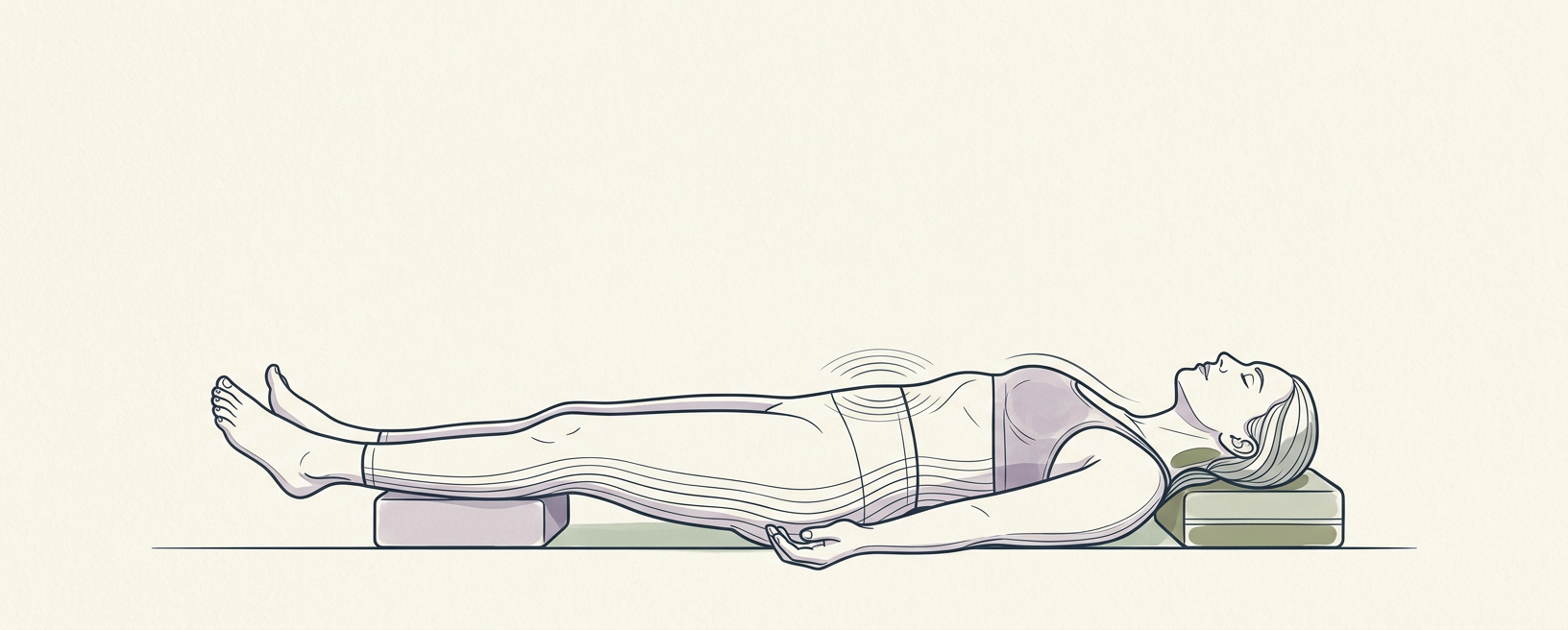
Savasana, when properly supported, facilitates profound physiological rest and nervous system down-regulation, moving the body from a state of alert to repair. This practice aims to reduce muscular tension and quiet mental activity.
Savasana, when properly supported, facilitates profound physiological rest and nervous system down-regulation, moving the body from a state of alert to repair. This practice aims to reduce muscular tension and quiet mental activity.
Yoga (specifically, as taught by B.K.S. Iyengar, emphasizing prop use for therapeutic benefit) · Hatha Yoga · Stress, overwhelm, difficulty unwinding, fatigue · 10-20 minutes daily, or whenever a profound sense of rest is required. Consistency enhances efficacy.
Why it works
Supported Savasana uses props to remove the effort of holding your body against gravity, allowing muscles to fully release. This reduces proprioceptive input, signaling safety to the brain. The supine position coupled with stillness and minimal sensory input promotes parasympathetic nervous system dominance, lowering heart rate, blood pressure, and cortisol levels. The diaphragm can move freely, deepening the breath naturally without conscious effort, further supporting vagal tone.
How to practice
Preparation
Gather your props: a firm blanket or bolster for under your knees, a folded blanket for under your head, and an eye pillow or small cloth.
Execution
- Lowering Down: Sit on your mat with knees bent and feet flat. Place the bolster or rolled blanket under where your knees will be. Gently lie back, ensuring your head is supported by the folded blanket to keep the neck long and the chin slightly tucked. Your head should be level with or slightly elevated above your chest.
- Arm Position: Allow your arms to rest alongside your body, palms facing up, slightly away from your torso. This external rotation of the shoulders helps broaden the collarbones and release tension in the upper chest.
- Leg Position: Extend your legs, allowing your feet to fall open naturally. Ensure the bolster is positioned so that there is a gentle curve in the knees, providing support to the lumbar spine and preventing hyperextension.
- Eye Cover: Place the eye pillow over your eyes to block out light, further reducing sensory input.
- Stillness: Once in position, make any final micro-adjustments to ensure absolute comfort. Commit to stillness for the duration of the practice. Avoid fidgeting or adjusting.
Breath Cues
Focus on the natural rhythm of your breath. Allow the inhale to be soft and spacious, and the exhale to be long and complete, as if releasing any remaining effort. Do not force or manipulate the breath; simply observe its gentle flow.
Preparation
Gather your props: a firm blanket or bolster for under your knees, a folded blanket for under your head, and an eye pillow or small cloth.
Execution
- Lowering Down: Sit on your mat with knees bent and feet flat. Place the bolster or rolled blanket under where your knees will be. Gently lie back, ensuring your head is supported by the folded blanket to keep the neck long and the chin slightly tucked. Your head should be level with or slightly elevated above your chest.
- Arm Position: Allow your arms to rest alongside your body, palms facing up, slightly away from your torso. This external rotation of the shoulders helps broaden the collarbones and release tension in the upper chest.
- Leg Position: Extend your legs, allowing your feet to fall open naturally. Ensure the bolster is positioned so that there is a gentle curve in the knees, providing support to the lumbar spine and preventing hyperextension.
- Eye Cover: Place the eye pillow over your eyes to block out light, further reducing sensory input.
- Stillness: Once in position, make any final micro-adjustments to ensure absolute comfort. Commit to stillness for the duration of the practice. Avoid fidgeting or adjusting.
Breath Cues
Focus on the natural rhythm of your breath. Allow the inhale to be soft and spacious, and the exhale to be long and complete, as if releasing any remaining effort. Do not force or manipulate the breath; simply observe its gentle flow.