Daily movement
Resistance Band Face Pull for Scapular Stability
This movement strengthens the upper back and shoulders, promoting better posture and reducing neck tension.
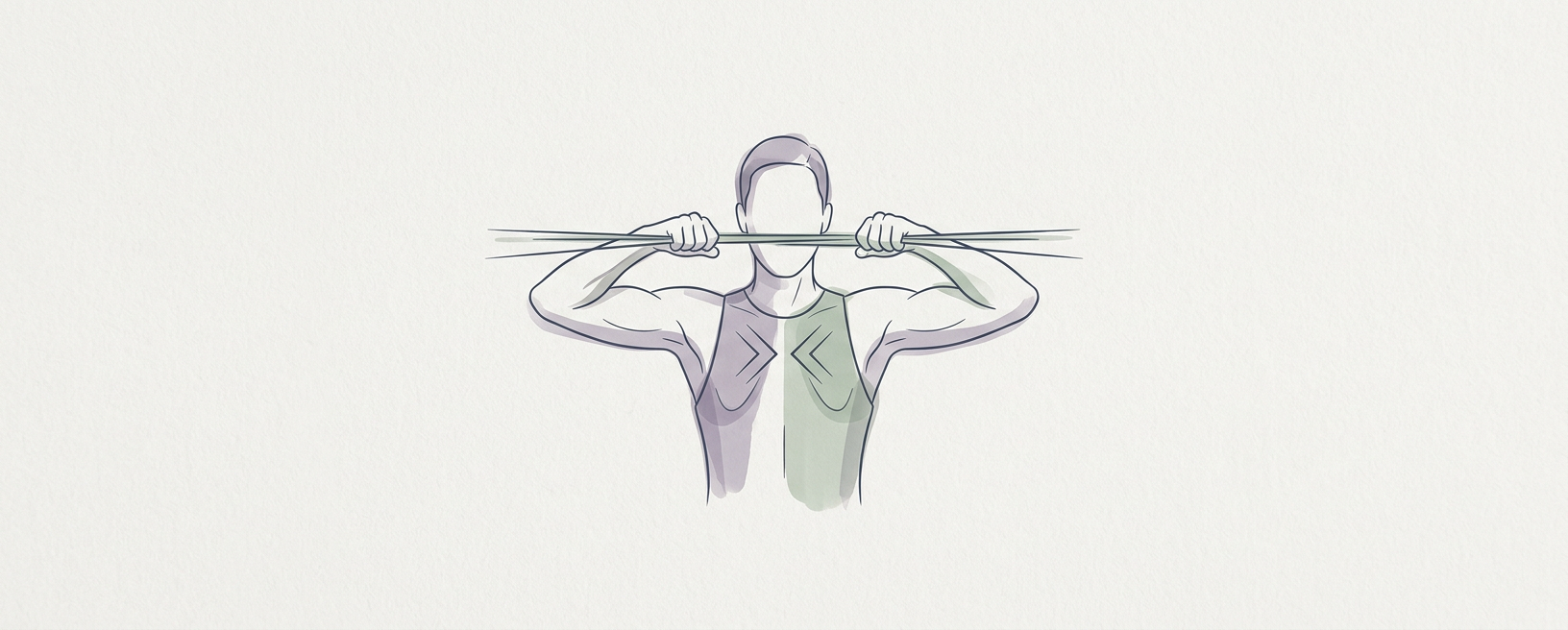
This movement strengthens the upper back and shoulders, promoting better posture and reducing neck tension.
resistance band · Physical therapy and strength training (Kelly Starrett) · It addresses the pattern of protracted shoulders and forward head posture, common with desk work, and the associated static load on the neck and upper back. · 3 sets of 10–12 repetitions, controlled tempo
Why it works
The resistance band face pull directly engages the posterior deltoids, rhomboids, and mid-trapezius muscles. This strengthens the scapular retractors and external rotators, counteracting the dominant internal rotation and protraction often seen in daily life. From a nervous system perspective, controlled, resisted movements like this provide afferent input that helps reprogram motor patterns. The rhythmic engagement and release, combined with diaphragmatic breathing, can modulate sympathetic tone, promoting a more regulated state. Tensegrity is restored by balancing tension across the shoulder girdle, preventing fascial shortening in the anterior chest and lengthening tissues in the upper back.
How to practice
Anchor the band. Find a sturdy anchor point, chest height or slightly higher. Loop a resistance band around it, ensuring both ends are free.
Grip the band. Stand facing the anchor point, holding one end of the band in each hand with an overhand grip. Your palms should face each other. Step back until there's light tension in the band with your arms extended forward.
Initiate the pull. Keep your elbows high, aligning them with your shoulders. As you exhale, pull the band towards your face, leading with your elbows. Focus on squeezing your shoulder blades together. Your hands should end up on either side of your head, near your ears.
Hold and return. Pause briefly at the peak contraction, feeling the engagement in your upper back. Inhale as you slowly and with control return your arms to the starting position, resisting the band's pull. Avoid letting the band snap your arms forward.
Maintain posture. Keep your core engaged and avoid arching your lower back throughout the movement. Your feet should be shoulder-width apart, knees softly bent.
Gaze straight. Maintain a neutral head position, looking straight ahead, avoiding any neck strain.
Anchor the band. Find a sturdy anchor point, chest height or slightly higher. Loop a resistance band around it, ensuring both ends are free.
Grip the band. Stand facing the anchor point, holding one end of the band in each hand with an overhand grip. Your palms should face each other. Step back until there's light tension in the band with your arms extended forward.
Initiate the pull. Keep your elbows high, aligning them with your shoulders. As you exhale, pull the band towards your face, leading with your elbows. Focus on squeezing your shoulder blades together. Your hands should end up on either side of your head, near your ears.
Hold and return. Pause briefly at the peak contraction, feeling the engagement in your upper back. Inhale as you slowly and with control return your arms to the starting position, resisting the band's pull. Avoid letting the band snap your arms forward.
Maintain posture. Keep your core engaged and avoid arching your lower back throughout the movement. Your feet should be shoulder-width apart, knees softly bent.
Gaze straight. Maintain a neutral head position, looking straight ahead, avoiding any neck strain.