Daily movement
Rebounding Lymphatic Flow and Vestibular Grounding
This rebounding sequence promotes lymphatic drainage and stabilizes the vestibular system for improved balance and spatial orientation.
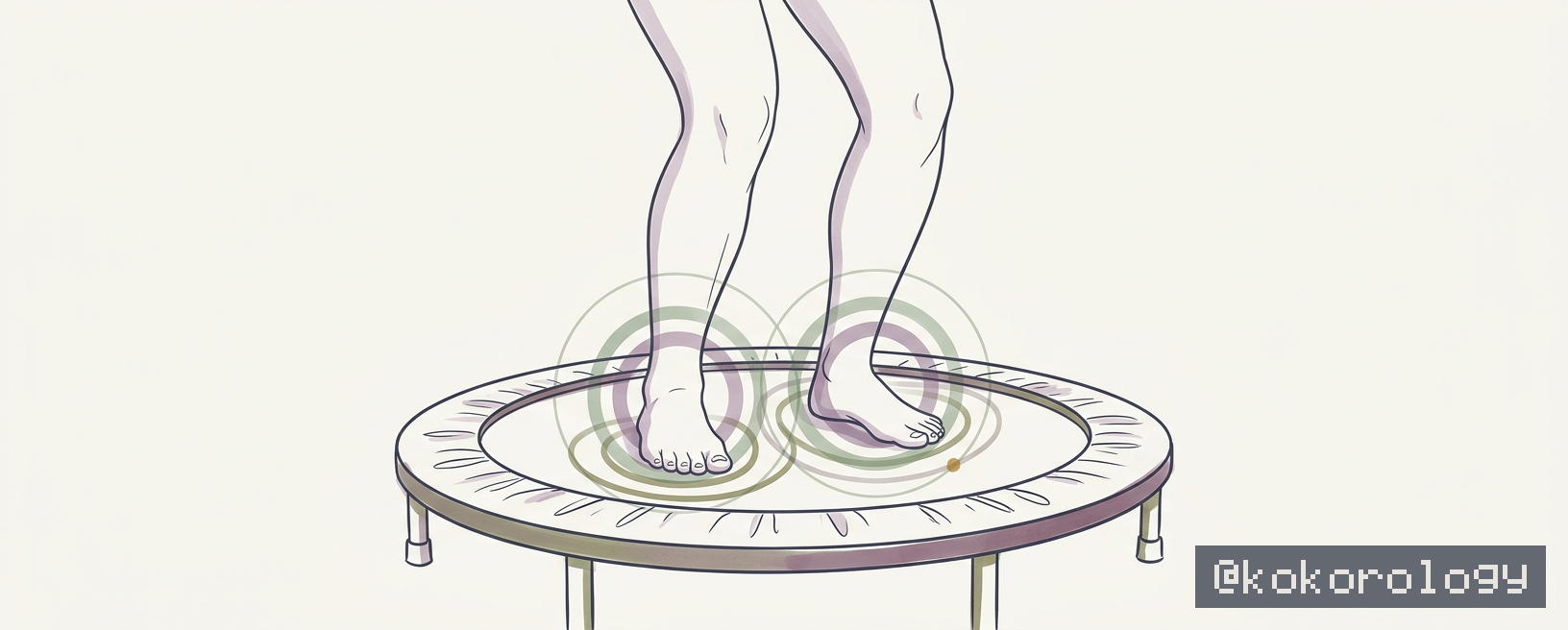
This rebounding sequence promotes lymphatic drainage and stabilizes the vestibular system for improved balance and spatial orientation.
rebounding · Bellicon Rebounding (Bellicon) · This meets states of sluggishness, brain fog, or feelings of ungroundedness, addressing both fluid stagnation and vestibular dysregulation. · 1 round, 3 minutes total
Why it works
The rhythmic up-and-down motion on a mini-trampoline creates gentle G-force changes that stimulate lymphatic flow. The lymphatic system, lacking a central pump, relies on muscle contraction and gravity to circulate lymph, which carries waste products and immune cells. Rebounding provides this pumping action, facilitating detoxification and immune support. Simultaneously, the unpredictable yet contained movement challenges the vestibular system, located in the inner ear. This system is responsible for sensing head position and movement, contributing to balance and spatial awareness. The varied impact vectors during rebounding refine vestibular input processing, improving postural stability and reducing feelings of dizziness or disorientation. This dual action addresses both fluid dynamics and neurological integration.
How to practice
Begin by standing on a mini-trampoline with feet hip-width apart, knees soft, and a neutral spine. Maintain a gentle gaze forward.
Health Bounce: Start with a soft, rhythmic bounce, keeping your feet in contact with the mat. The goal is a light up-and-down motion, allowing your body to oscillate gently. Breathe deeply and consistently, inhaling through the nose and exhaling through the mouth. Continue for 60 seconds.
Gentle Jog: Transition into a light jog, lifting alternate knees slightly off the mat. Maintain soft knees and land lightly on your midfoot, allowing the trampoline to absorb impact. Keep your core gently engaged for stability. Synchronize your breath with your movement, perhaps inhaling for two steps and exhaling for two steps. Continue for 60 seconds.
Modified Jumping Jack: Perform a controlled jumping jack, moving your feet out to the sides and back in. Keep the arm movement minimal or just focus on the lower body. Emphasize a soft landing and absorb the rebound with bent knees. Breathe freely. Continue for 30 seconds.
Cool Down Bounce: Return to the gentle health bounce, gradually decreasing the intensity until your feet are still on the mat. Take several deep, calming breaths.
Begin by standing on a mini-trampoline with feet hip-width apart, knees soft, and a neutral spine. Maintain a gentle gaze forward.
Health Bounce: Start with a soft, rhythmic bounce, keeping your feet in contact with the mat. The goal is a light up-and-down motion, allowing your body to oscillate gently. Breathe deeply and consistently, inhaling through the nose and exhaling through the mouth. Continue for 60 seconds.
Gentle Jog: Transition into a light jog, lifting alternate knees slightly off the mat. Maintain soft knees and land lightly on your midfoot, allowing the trampoline to absorb impact. Keep your core gently engaged for stability. Synchronize your breath with your movement, perhaps inhaling for two steps and exhaling for two steps. Continue for 60 seconds.
Modified Jumping Jack: Perform a controlled jumping jack, moving your feet out to the sides and back in. Keep the arm movement minimal or just focus on the lower body. Emphasize a soft landing and absorb the rebound with bent knees. Breathe freely. Continue for 30 seconds.
Cool Down Bounce: Return to the gentle health bounce, gradually decreasing the intensity until your feet are still on the mat. Take several deep, calming breaths.