Daily movement
Rebound Jack
A low-impact cardiovascular movement on a rebounder, engaging multiple muscle groups and promoting lymphatic flow without significant joint stress.
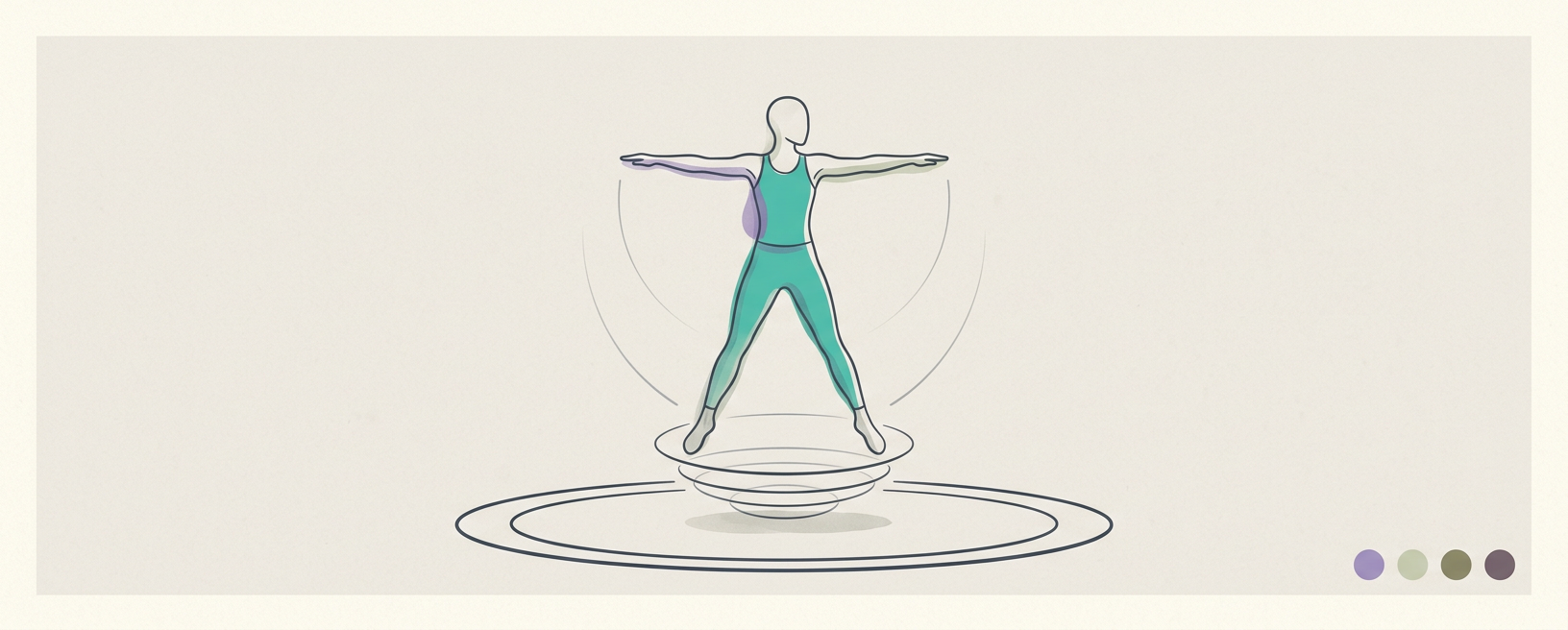
A low-impact cardiovascular movement on a rebounder, engaging multiple muscle groups and promoting lymphatic flow without significant joint stress.
Rebounding Fitness; Lymphatic Health Practices · Rebounding has roots in early astronaut training for G-force tolerance and later evolved into fitness routines, with specific rebounder exercises like the "Rebound Jack" developing within general fitness and lymphatic health communities. · Fatigue, sluggishness, lymphatic congestion, need for low-impact cardiovascular activity. · Perform for 2-5 minutes as a warm-up, cool-down, or active recovery. For lymphatic health, perform 10-15 minutes, 3-5 times per week, ensuring hydration.
Why it works
The Rebound Jack utilizes the unique biomechanics of rebounding to offer a reduced-impact cardiovascular stimulus. The upward and downward motion against gravity gently compresses and decompresses cells, facilitating lymphatic drainage, which lacks a central pump. The constant micro-adjustments required to maintain balance on the rebounder engage core musculature and proprioceptors, enhancing stability and body awareness. The rhythmic, repetitive motion can also have a regulatory effect on the nervous system, akin to other rhythmic activities, potentially downregulating sympathetic tone.
How to practice
Starting Position: Stand centered on the rebounder with feet together, knees softly bent, and arms at your sides.
Initiate Movement: From the balls of your feet, gently push down into the rebounder, allowing your body to rise slightly.
Widen Stance: As you rise, gently open your legs to a comfortable width, approximately shoulder to hip-width apart. Simultaneously, raise your arms out to the sides, no higher than shoulder height, maintaining a slight bend in your elbows.
Return to Center: As you descend, bring your legs back together and lower your arms to your sides, returning to the starting position.
Maintain Softness: Throughout the movement, keep your knees softly bent to absorb impact and engage leg musculature effectively. Contact the rebounder mat with the mid-foot, allowing for a spring-like action rather than a hard landing.
Starting Position: Stand centered on the rebounder with feet together, knees softly bent, and arms at your sides.
Initiate Movement: From the balls of your feet, gently push down into the rebounder, allowing your body to rise slightly.
Widen Stance: As you rise, gently open your legs to a comfortable width, approximately shoulder to hip-width apart. Simultaneously, raise your arms out to the sides, no higher than shoulder height, maintaining a slight bend in your elbows.
Return to Center: As you descend, bring your legs back together and lower your arms to your sides, returning to the starting position.
Maintain Softness: Throughout the movement, keep your knees softly bent to absorb impact and engage leg musculature effectively. Contact the rebounder mat with the mid-foot, allowing for a spring-like action rather than a hard landing.