Daily movement
Quadriceps Release for Knee and Hip Mobility
This myofascial release technique targets the quadriceps, addressing tightness that can restrict knee extension and hip flexion, and contributing to low back discomfort.
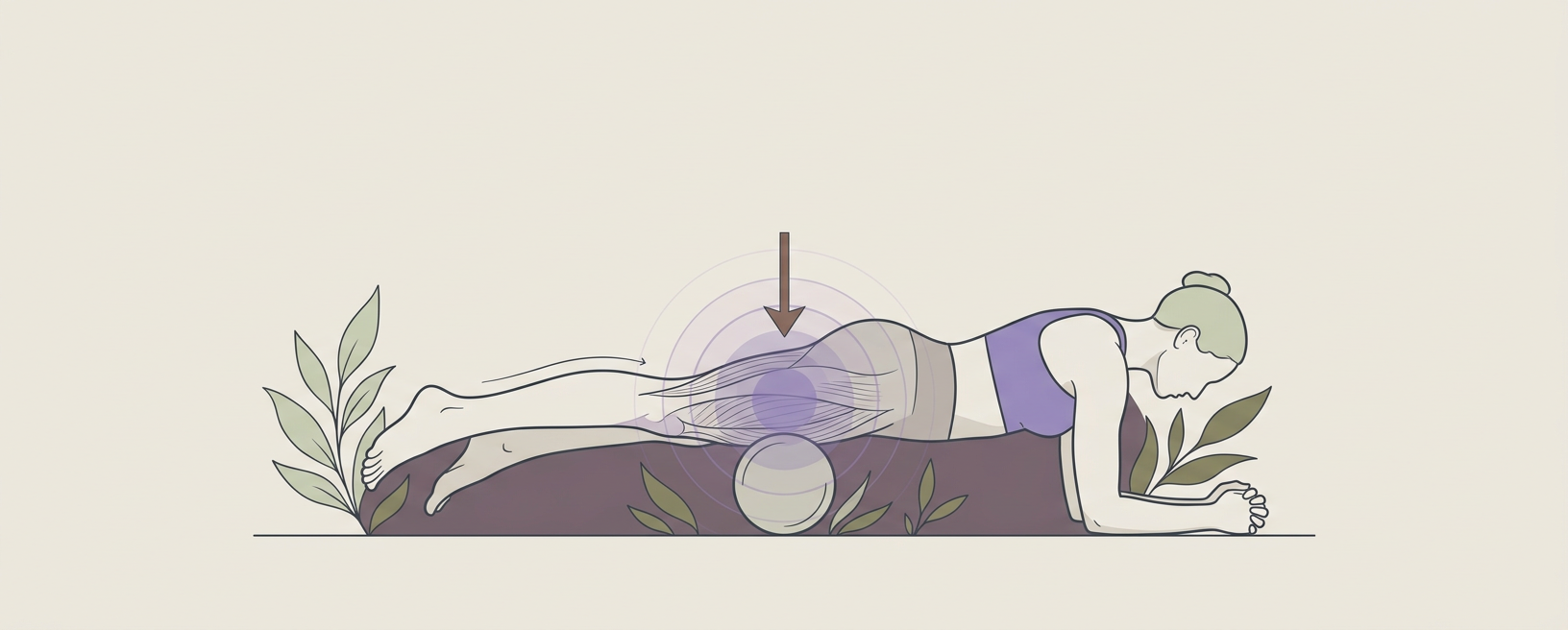
This myofascial release technique targets the quadriceps, addressing tightness that can restrict knee extension and hip flexion, and contributing to low back discomfort.
Myofascial Release / Structural Integration · Derived from principles of myofascial release widely practised, aligning with research by Robert Schleip and practical applications as taught by structural integrators influenced by Tom Myers. · Perceived tightness in the anterior thigh, restricted knee bending or straightening, limited hip flexion, or compensatory low back strain during movement. · Apply sustained pressure to each tender point for 30-90 seconds, or until a notable reduction in sensitivity occurs. Perform 1-3 passes over the entire quadriceps muscle group per session, 3-5 times per week, or as needed.
Why it works
The quadriceps femoris muscle group, comprising four heads, can develop adhesions and hypertonicity. Direct, sustained pressure on these tissues, particularly with tools like a foam roller, elicits a neurophysiological response. This sustained pressure stimulates mechanoreceptors, which signal the nervous system to decrease sympathetic drive to the target muscle. This reduction in neurological tension can lead to a decrease in muscle spindle activity and an increase in tissue compliance, evidenced by changes in viscoelasticity. In fascia, sustained pressure can encourage hydration and re-alignment of collagen fibers, improving slide and glide between tissue layers. This process effectively reduces tissue density and improves overall range of motion at the knee and hip joints.
How to practice
Steps:
- Positioning: Lie prone (face down) on the floor. Place a foam roller horizontally under one thigh, just above the knee.
- Initial Contact: Rest your body weight onto the roller. The opposite leg can be bent at the knee and placed on the floor to assist with support and adjustment of pressure.
- Search for Tender Points: Slowly roll forward and backward, using your forearms and the supporting leg to control the movement, covering the length of your quadriceps from just above the knee to just below the hip flexors. Identify areas of heightened sensitivity or "hot spots."
- Sustained Pressure: Once a tender point is located, cease rolling. Apply sustained pressure to this point by holding your body still over the roller. Maintain this pressure.
- Adding Movement (Optional): While maintaining pressure on a tender point, you may gently bend and straighten the knee of the leg on the roller for 5-10 repetitions. This can further engage the tissue and promote release.
- Reposition and Repeat: After the sensation of intensity at the tender point has diminished (typically 30-90 seconds), slightly shift the roller to an adjacent area of the quadriceps and repeat the process.
- Switch Sides: Once one thigh has been addressed, repeat the entire sequence on the other side.
Steps:
- Positioning: Lie prone (face down) on the floor. Place a foam roller horizontally under one thigh, just above the knee.
- Initial Contact: Rest your body weight onto the roller. The opposite leg can be bent at the knee and placed on the floor to assist with support and adjustment of pressure.
- Search for Tender Points: Slowly roll forward and backward, using your forearms and the supporting leg to control the movement, covering the length of your quadriceps from just above the knee to just below the hip flexors. Identify areas of heightened sensitivity or "hot spots."
- Sustained Pressure: Once a tender point is located, cease rolling. Apply sustained pressure to this point by holding your body still over the roller. Maintain this pressure.
- Adding Movement (Optional): While maintaining pressure on a tender point, you may gently bend and straighten the knee of the leg on the roller for 5-10 repetitions. This can further engage the tissue and promote release.
- Reposition and Repeat: After the sensation of intensity at the tender point has diminished (typically 30-90 seconds), slightly shift the roller to an adjacent area of the quadriceps and repeat the process.
- Switch Sides: Once one thigh has been addressed, repeat the entire sequence on the other side.