All movements
Loading…
Previous movements
Previous movements open for members. Today's movement is always free.
Daily movement
Restores parasympathetic baseline and eases back-body tension through grounded forehead pressure and posterior rib expansion.
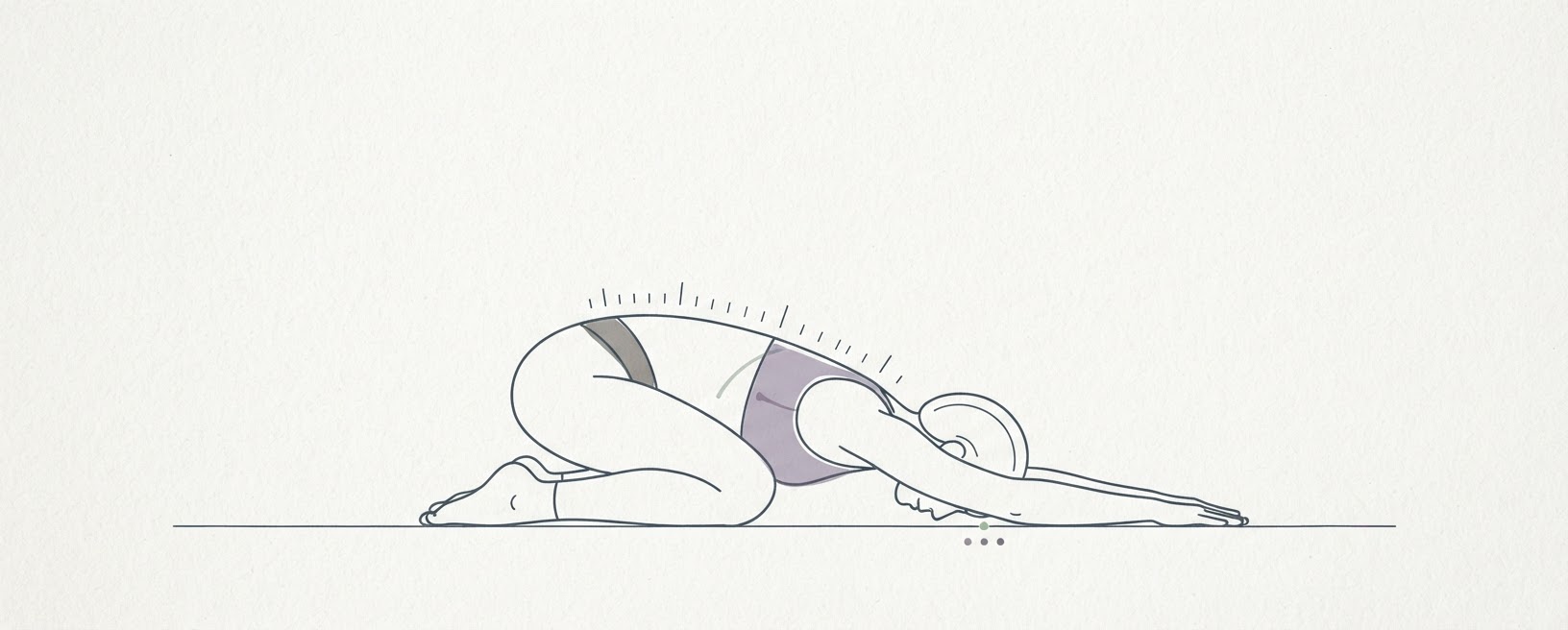
Restores parasympathetic baseline and eases back-body tension through grounded forehead pressure and posterior rib expansion.
yoga · Hatha Yoga via Donna Farhi (The Breathing Book) · Post-effort autonomic crash, adrenaline surge, or elevated nervous system baseline needing immediate grounding. · 5 to 8 slow breath cycles, 3 to 5 minutes total
I spent years trying to calm a post-race adrenaline spike by stretching harder, which only kept my heart rate elevated. Donna Farhi pointed out decades ago that true physiological settling requires back-body breath volume and direct afferent sensory down-regulation.
When your forehead rests firmly against the floor, pressure on the frontal bone stimulates trigeminal nerve receptors that signal safety, reducing sympathetic motor drive. Biomechanically, folding over your thighs puts gentle abdominal compression in place, directing incoming air away from the chest and into the posterior lower lobes of your lungs. This mechanical constraint pushes the diaphragm down and back, mobilizing the thoracolumbar fascia and stretching tight paraspinal muscles along your spine. The prolonged exhale engages the vagal brake, bringing your heart rate back down to baseline and allowing tight back tissue to release without aggressive active stretching.
Kneel on a flat mat with your big toes touching and separate your knees about rib-width apart to leave space for your torso.
Fold forward from your hip crease, walking your palms out in front of you until your forehead makes solid contact with the floor or a firm cushion.
Turn your gaze down, close your eyes, and allow the weight of your skull to drop completely into the floor.
Inhale through your nose for a count of 4, deliberately feeling the breath widen the tissue across your lower back and posterior ribs.
Exhale softly through your nose for a count of 6 or 7, letting your sitting bones sink closer to your heels and softening your jaw.
Stay here for 10 quiet breath rounds, letting the spine hang long between your pelvis and skull without forcing any reach through the fingers.
To exit, slide your hands back under your shoulders and press the floor away slowly, keeping your chin tucked until your torso is vertical.