Daily movement
Plyometric: Single-Leg Pogo Hop
A controlled, low-amplitude hop on one leg to enhance ankle stiffness and contribute to overall power development and robust landing mechanics.
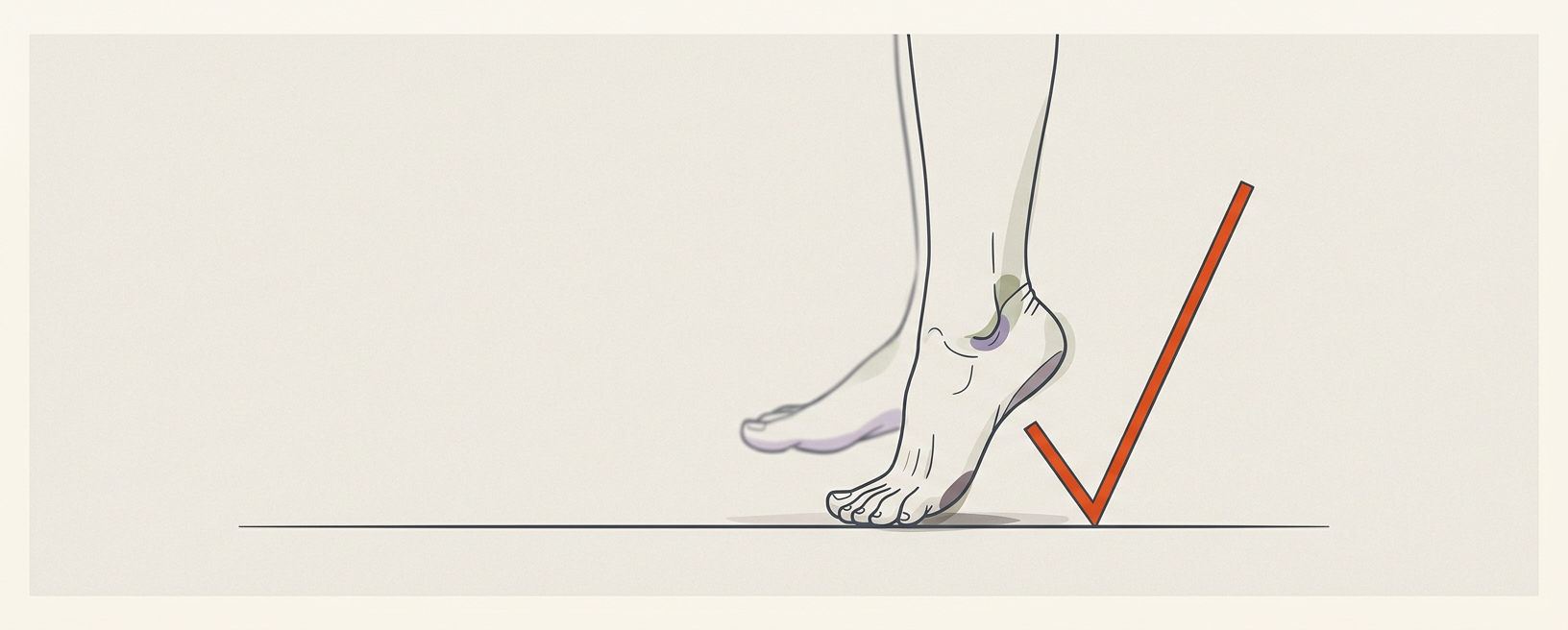
A controlled, low-amplitude hop on one leg to enhance ankle stiffness and contribute to overall power development and robust landing mechanics.
Plyometrics (specifically, foundational single-leg hopping) · The Pogo Hop, including its single-leg variations, is a fundamental plyometric exercise. It is widely utilized in athletic conditioning and rehabilitation protocols, rooted in principles outlined by strength and conditioning coaches such as Charles Poliquin and Verkhoshansky, emphasizing rapid force production and elastic energy utilization. · To improve ankle stiffness, lower limb power, and refine landing mechanics, particularly after initial strength baselines have been established. · Begin with 3 sets of 5-8 repetitions per leg. Progress by increasing repetitions, then sets, and finally the reactive speed of the hops. Rest 60-90 seconds between sets.
Why it works
This movement targets the Achilles tendon and calf complex, emphasizing the stretch-shortening cycle. The rapid plantarflexion and dorsiflexion, under control, trains the elastic components of the lower leg to absorb and re-emit force efficiently. This improves tendon stiffness, which is crucial for dynamic movements and robust injury prevention by reducing overall ground contact time and increasing power output. The unilateral demand also enhances proprioception and stability.
How to practice
Starting Position: Stand tall on one leg, with a slight bend in the knee and ankle. The non-hopping leg is slightly bent with the foot off the ground behind you.
Initiate the Hop: From this position, push off the ground primarily through the ball of your foot, with minimal knee bend. The goal is a quick, small hop, not a high jump.
Absorb the Landing: Land softly on the ball of the same foot, allowing a slight, controlled bend in the ankle and knee to absorb the impact. Immediately rebound into the next hop.
Arm Action: Maintain a natural, reciprocal arm swing congruent with your hopping leg for balance.
Focus: Keep the hops quick and reactive, minimizing ground contact time. Imagine your foot is a spring.
Maintain Posture: Keep your torso upright and core engaged throughout the movement.
Starting Position: Stand tall on one leg, with a slight bend in the knee and ankle. The non-hopping leg is slightly bent with the foot off the ground behind you.
Initiate the Hop: From this position, push off the ground primarily through the ball of your foot, with minimal knee bend. The goal is a quick, small hop, not a high jump.
Absorb the Landing: Land softly on the ball of the same foot, allowing a slight, controlled bend in the ankle and knee to absorb the impact. Immediately rebound into the next hop.
Arm Action: Maintain a natural, reciprocal arm swing congruent with your hopping leg for balance.
Focus: Keep the hops quick and reactive, minimizing ground contact time. Imagine your foot is a spring.
Maintain Posture: Keep your torso upright and core engaged throughout the movement.