All movements
Loading…
Previous movements
Previous movements open for members. Today's movement is always free.
Daily movement
Unloads the plantar fascia with sustained focal pressure to downshift tension up the posterior chain.
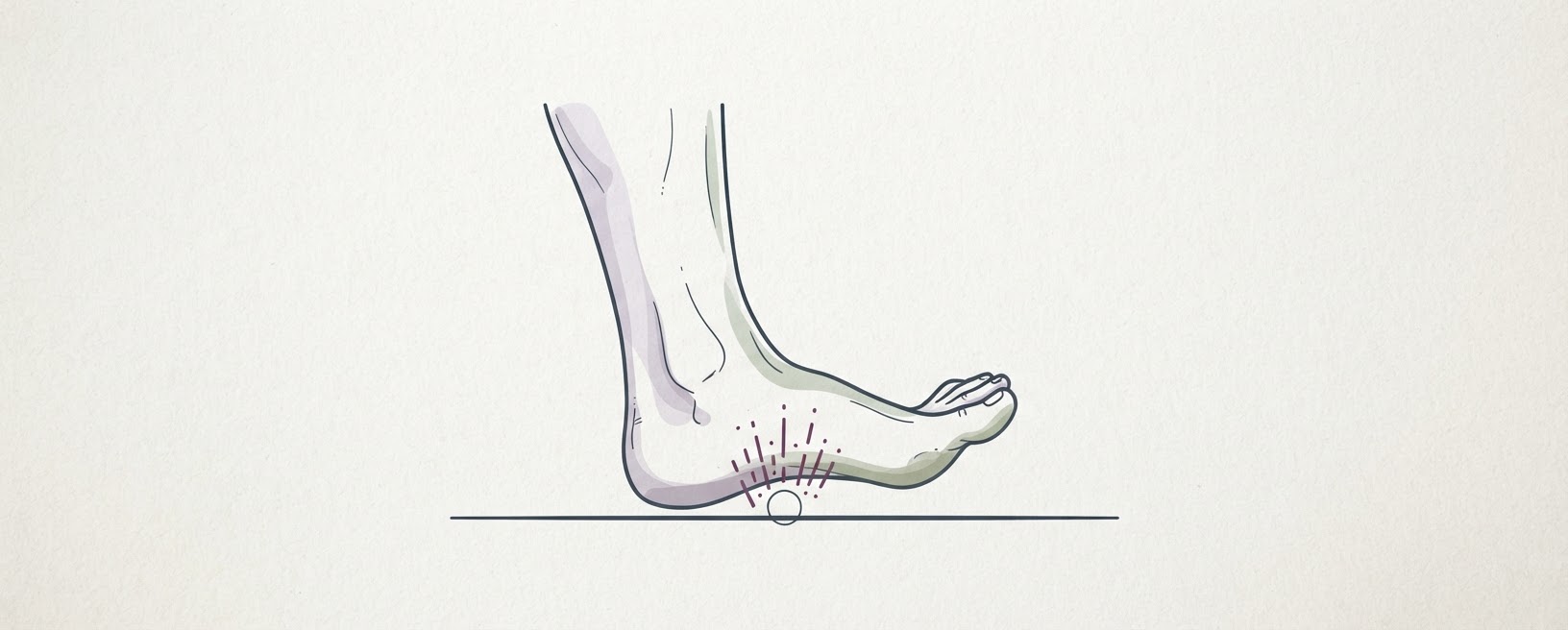
Unloads the plantar fascia with sustained focal pressure to downshift tension up the posterior chain.
fascia / myofascial release · Anatomy Trains superficial back line release (Tom Myers) · Downshifts chronic lower-limb guarding, plantar tension, and reflexive hypervigilance after sitting or hard training. · 90 to 120 seconds per foot, working slowly from heel to metatarsals
I used to mash my arches back and forth as fast as possible, which achieved very little except bruised bones. Tom Myers mapped how the plantar fascia anchors the superficial back line, continuous with your Achilles tendon, hamstrings, and erectors. When you apply slow, sustained shear force into plantar tissue, you stimulate low-threshold mechanoreceptors (Ruffini endings and interstitial receptors). These sensory units signal the central nervous system to decrease global sympathetic motor tone across the whole posterior chain. Fascial tissue behaves like a fluid-filled sponge; rapid friction simply increases reflexive contraction, while static two-minute compression pushes out stagnant bound water. When you step off the ball, fresh hydration refills the ground substance, lowering shear resistance and easing the protective baseline from your heels up to your occiput.
Stand tall near a wall or solid chair for balance. Place a standard lacrosse ball or firm cork massage ball directly under the sole of your right foot.
Rest your right heel on the timber floor and park the ball just forward of the heel pad, at the back of the plantar vault. Shift about a quarter of your body weight downward into that single spot.
Keep your foot relaxed over the curve. Take an unhurried four-second nasal inhale, then empty your lungs out through open lips for six seconds. Let the tissue sink over the ball rather than bracing against it.
Roll the ball forward an inch toward the central arch. Stop immediately on the first dense band of tissue you find. Hold sustained, quiet compression there for three full breath cycles, letting the toes splay naturally.
Slide the ball under the metatarsal heads across the ball of the foot. Pin the ball under the first toe joint, drape your toes over it, take a slow breath, then gently glide the pressure across toward the pinky toe.
Finish by rolling slowly along the long line from heel to ball three times, using steady, low-velocity downward pressure. Step off, stand on both feet on flat ground for five seconds to register the difference, and repeat on your left side.