Daily movement
Pilates Thigh Stretch
A deep stretch for the quadriceps and hip flexors, promoting pelvic stability and an integrated breath.
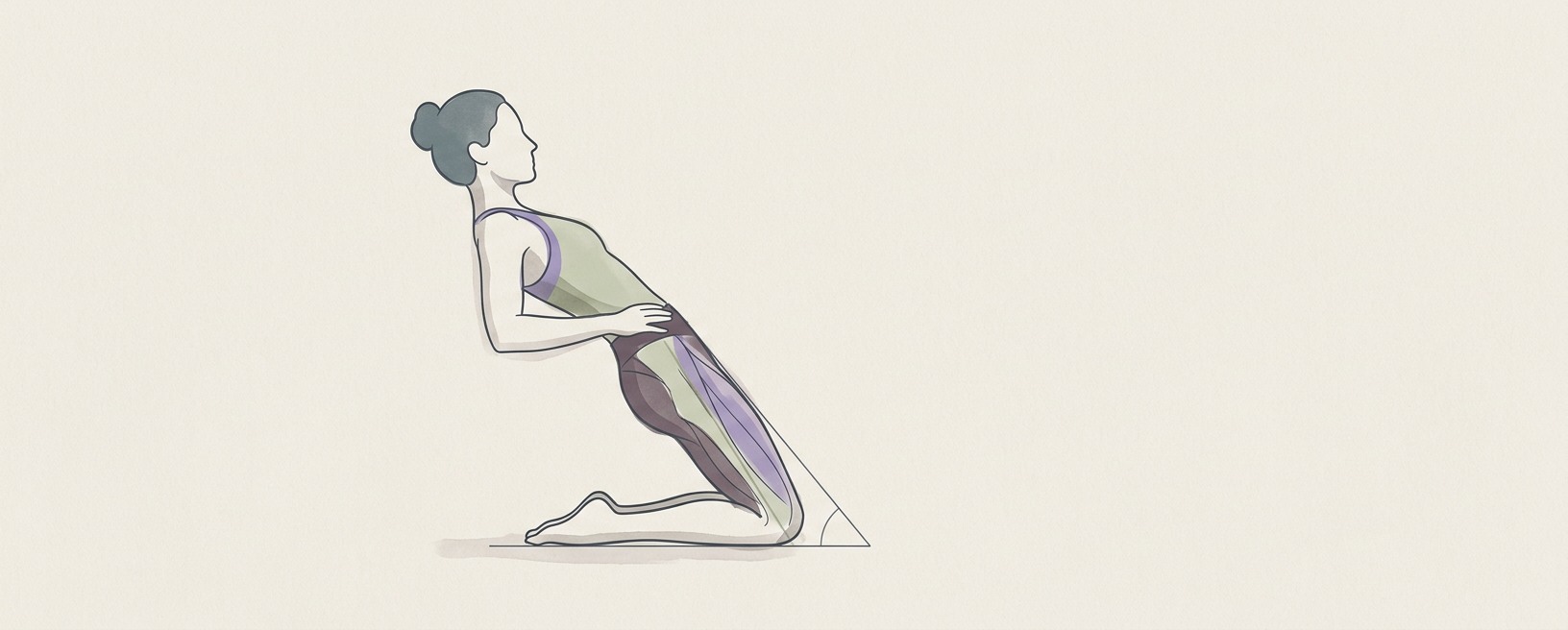
A deep stretch for the quadriceps and hip flexors, promoting pelvic stability and an integrated breath.
Joseph Pilates, Classical Pilates · Developed by Joseph Pilates, this exercise is a classic component of the Pilates Mat sequence. · This movement addresses muscular tension in the anterior thigh and hip, which can contribute to pelvic tilt and inhibit optimal diaphragmatic breathing. It meets the need for improved hip extension, quadriceps flexibility, and accessible pelvic floor engagement. · Perform 3-5 repetitions, holding the stretched position for 20-30 seconds with each repetition. Focus on controlled movement and breath synchronization over depth of stretch.
Why it works
The Thigh Stretch systematically lengthens the rectus femoris and iliopsoas, muscles often tightened by prolonged sitting. By extending the hips and flexing the knees, it creates a stretch that, when coupled with controlled breathing, facilitates a reflexive relaxation in the target musculature. The isometric engagement of the glutes and core to maintain pelvic neutrality during the stretch encourages a co-contraction pattern that supports integrated pelvic floor function and enhances spinal stability. The breath, specifically the exhalation, is used to deepen the stretch, leveraging the parasympathetic nervous system to further reduce muscle guarding.
How to practice
Starting Position: Kneel on a mat with knees hip-width apart and toes pointed, feet flat on the floor behind you. Ensure your spine is neutral, and your pelvis is stacked directly over your knees. Place hands on your hips to monitor pelvic stability.
Initiate Movement: Inhale to prepare. As you exhale, maintaining a neutral spine and stable pelvis, lean your torso backward as one unit, hinging from the knees. The aim is to create a long line from your shoulders to your knees, resisting any arching or rounding of the back.
Engage and Lengthen: Continue to lean back only as far as you can maintain perfect pelvic and spinal alignment. Feel the stretch through the front of your thighs and hips. Your glutes should be gently squeezing to maintain hip extension, and your abdominal muscles lightly engaged to prevent arching. Simultaneously, consider a subtle lift and draw inward of the pelvic floor.
Hold and Breathe: Inhale deeply into your rib cage. As you exhale, gently deepen the stretch, visualizing the lengthening of the quadriceps and hip flexors. Maintain the integrity of your core and pelvic floor connection.
Return to Start: Inhale to prepare. As you exhale, use your core and glutes to slowly and controlledly return to the upright kneeling position, reversing the movement with precision.
Starting Position: Kneel on a mat with knees hip-width apart and toes pointed, feet flat on the floor behind you. Ensure your spine is neutral, and your pelvis is stacked directly over your knees. Place hands on your hips to monitor pelvic stability.
Initiate Movement: Inhale to prepare. As you exhale, maintaining a neutral spine and stable pelvis, lean your torso backward as one unit, hinging from the knees. The aim is to create a long line from your shoulders to your knees, resisting any arching or rounding of the back.
Engage and Lengthen: Continue to lean back only as far as you can maintain perfect pelvic and spinal alignment. Feel the stretch through the front of your thighs and hips. Your glutes should be gently squeezing to maintain hip extension, and your abdominal muscles lightly engaged to prevent arching. Simultaneously, consider a subtle lift and draw inward of the pelvic floor.
Hold and Breathe: Inhale deeply into your rib cage. As you exhale, gently deepen the stretch, visualizing the lengthening of the quadriceps and hip flexors. Maintain the integrity of your core and pelvic floor connection.
Return to Start: Inhale to prepare. As you exhale, use your core and glutes to slowly and controlledly return to the upright kneeling position, reversing the movement with precision.