Daily movement
Pilates Single Leg Stretch (Modified)
Engage the deep core and challenge stability while integrating breath and controlled movement, specifically targeting the lower abdominals and pelvic floor.
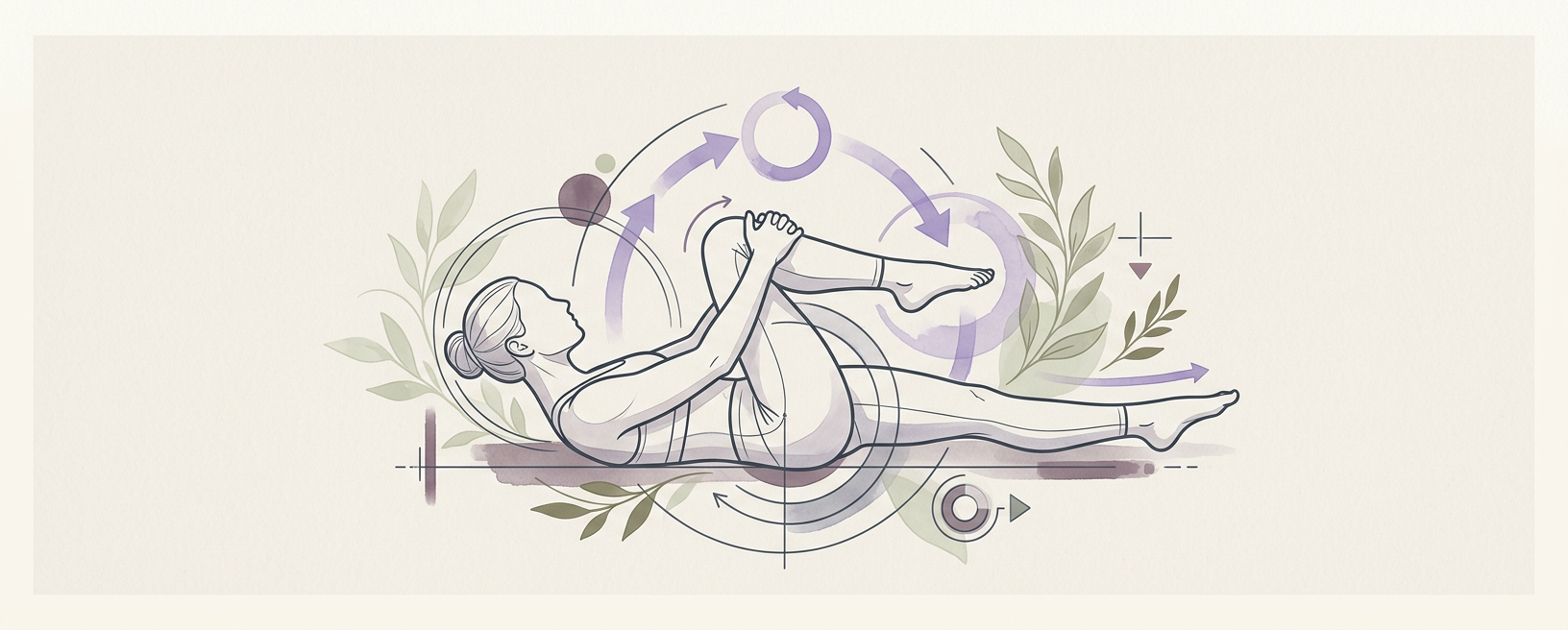
Engage the deep core and challenge stability while integrating breath and controlled movement, specifically targeting the lower abdominals and pelvic floor.
Classical Pilates (Joseph Pilates) · Joseph Pilates originated the fundamental principles of Contrology, the system now known as Pilates. This specific modification emphasizes controlled engagement over rapid repetition. · To improve lumbopelvic stability, cultivate conscious pelvic floor engagement, and integrate breath with dynamic core activation. · Perform 6-10 repetitions per leg, for 1-2 sets. Focus on quality of movement and sustained core engagement rather than quantity.
Why it works
The Single Leg Stretch, when performed with precision and a focus on maintaining a stable pelvis, requires the deep abdominal muscles (transversus abdominis) and pelvic floor musculature to co-contract. This co-contraction provides intrinsic stabilization to the lumbar spine and pelvis. The alternating leg movement introduces a controlled perturbation, prompting the nervous system to refine motor control and recruit these stabilizing muscles more effectively. Synchronizing this movement with controlled exhalation further enhances intra-abdominal pressure regulation and pelvic floor lift, as the diaphragm and pelvic floor work synergistically.
How to practice
Starting Position: Lie supine (on your back) with knees bent, feet flat on the floor, and hips and knees at a 90-degree angle, maintaining a neutral spine. Hands can rest lightly on your lower abdominals or by your sides.
Preparation (Inhale): Inhale to prepare, allowing the diaphragm to descend gently.
Active Exhale & Leg Extension: As you exhale slowly and completely, draw one knee towards your chest and extend the opposite leg forward, hovering a few inches above the mat. The pelvis must remain still and level; avoid any rocking or tipping. Concurrently, gently draw the navel towards the spine and feel a subtle lift in the pelvic floor.
Inhale to Return: Inhale as you slowly return the extended leg to the starting bent-knee position, maintaining core control.
Repeat on Opposite Side: Exhale as you extend the other leg, maintaining pelvic stability and pelvic floor engagement.
Progression (Advanced): To increase challenge, slightly elevate the head and shoulders, maintaining the cervical spine in a neutral position. Ensure this does not compromise pelvic stability or breath control.
Starting Position: Lie supine (on your back) with knees bent, feet flat on the floor, and hips and knees at a 90-degree angle, maintaining a neutral spine. Hands can rest lightly on your lower abdominals or by your sides.
Preparation (Inhale): Inhale to prepare, allowing the diaphragm to descend gently.
Active Exhale & Leg Extension: As you exhale slowly and completely, draw one knee towards your chest and extend the opposite leg forward, hovering a few inches above the mat. The pelvis must remain still and level; avoid any rocking or tipping. Concurrently, gently draw the navel towards the spine and feel a subtle lift in the pelvic floor.
Inhale to Return: Inhale as you slowly return the extended leg to the starting bent-knee position, maintaining core control.
Repeat on Opposite Side: Exhale as you extend the other leg, maintaining pelvic stability and pelvic floor engagement.
Progression (Advanced): To increase challenge, slightly elevate the head and shoulders, maintaining the cervical spine in a neutral position. Ensure this does not compromise pelvic stability or breath control.