Daily movement
Pilates Saw
A seated rotational movement for spinal articulation and oblique engagement, integrating breath with controlled movement.
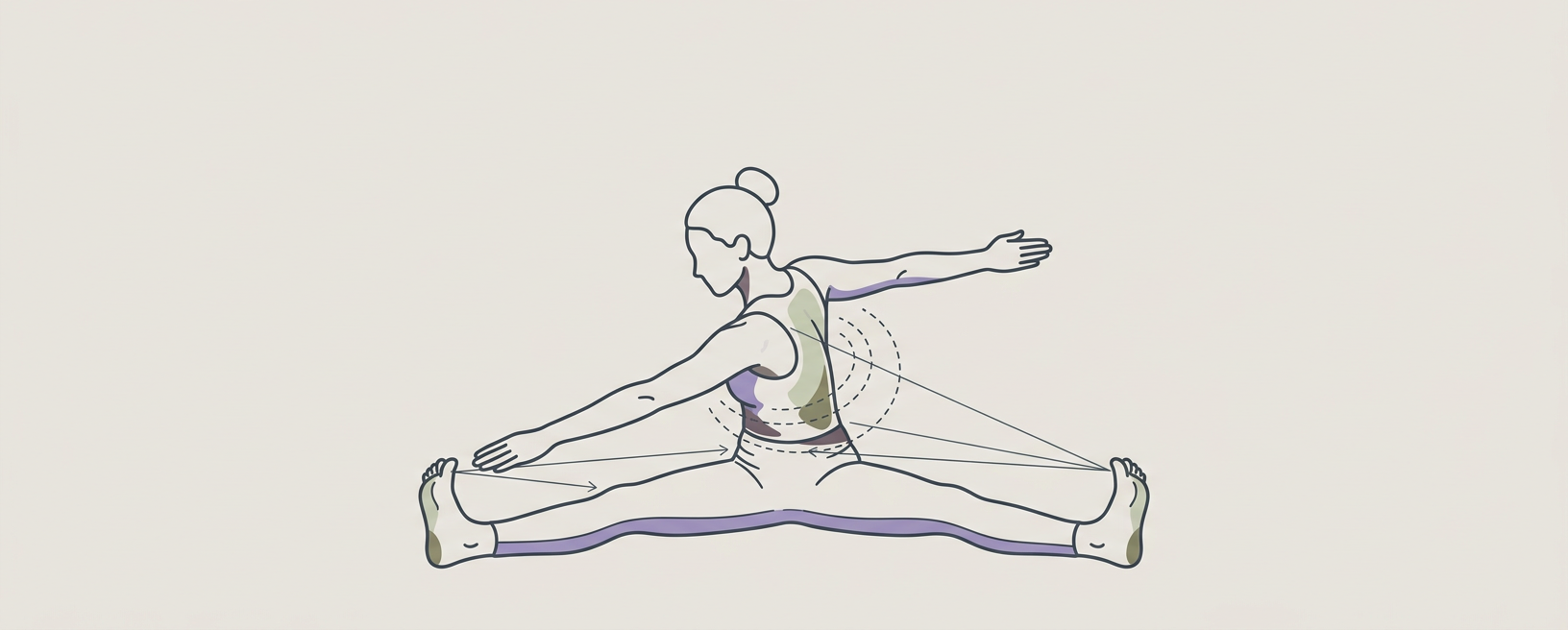
A seated rotational movement for spinal articulation and oblique engagement, integrating breath with controlled movement.
Classical Pilates (Joseph Pilates) · Developed by Joseph Pilates, this exercise is a foundational component of his original mat sequence. · Reduced spinal mobility; desire for oblique strength and internal external oblique activation during trunk rotation. Practice of trunk rotation through the spine rather than through the hips. Improved intercostal and respiratory muscle mobility allowing for fuller inhalation and exhalation. · Perform 3-5 repetitions per side. Integrate into a full mat sequence 2-3 times per week, allowing for rest and recovery.
Why it works
The Pilates Saw facilitates rotational mobility of the vertebral column while engaging the oblique musculature for support and power. The coordinated breath pattern—inhaling to prepare, exhaling during the rotation and forward flexion—optimizes intercostal muscle recruitment and helps to maintain intra-abdominal pressure regulation. This integrated action improves tissue extensibility along the lateral fascial lines and enhances proprioception of the spine in rotation, which is vital for postural control and efficient movement patterns. It also promotes dynamic diaphragmatic excursion.
How to practice
Starting Position: Sit on a mat with legs extended wide, heels pressed down, and feet actively dorsiflexed (toes pointing towards the ceiling). Arms are extended out to the sides at shoulder height, palms facing forward. Maintain a tall spine, visualizing length from the crown of the head through the tailbone. Engage the core to stabilize the pelvis.
Inhale to Prepare: Take a full breath in, further lengthening the spine.
Exhale and Rotate: As you exhale, rotate your torso to one side, leading with the rib cage. Simultaneously, reach the opposite hand towards the outside of the front foot, as if sawing off your pinky toe. Maintain the length in the spine, avoiding rounding. The other arm reaches back and up, maintaining shoulder height.
Inhale to Return: Inhale as you slowly return the torso to the center, re-establishing the tall spinal position and extended arms.
Exhale and Repeat: Exhale and repeat the rotation to the opposite side.
Execution Focus: Keep both sit bones grounded throughout the movement to ensure the rotation occurs primarily in the thoracic spine and obliques, rather than tilting the pelvis.
Starting Position: Sit on a mat with legs extended wide, heels pressed down, and feet actively dorsiflexed (toes pointing towards the ceiling). Arms are extended out to the sides at shoulder height, palms facing forward. Maintain a tall spine, visualizing length from the crown of the head through the tailbone. Engage the core to stabilize the pelvis.
Inhale to Prepare: Take a full breath in, further lengthening the spine.
Exhale and Rotate: As you exhale, rotate your torso to one side, leading with the rib cage. Simultaneously, reach the opposite hand towards the outside of the front foot, as if sawing off your pinky toe. Maintain the length in the spine, avoiding rounding. The other arm reaches back and up, maintaining shoulder height.
Inhale to Return: Inhale as you slowly return the torso to the center, re-establishing the tall spinal position and extended arms.
Exhale and Repeat: Exhale and repeat the rotation to the opposite side.
Execution Focus: Keep both sit bones grounded throughout the movement to ensure the rotation occurs primarily in the thoracic spine and obliques, rather than tilting the pelvis.