Daily movement
Pilates Foot Series: Articulated Footwork on Reformer
A foundational Pilates exercise engaging the foot and ankle musculature, promoting proprioception and connection to the pelvic floor.
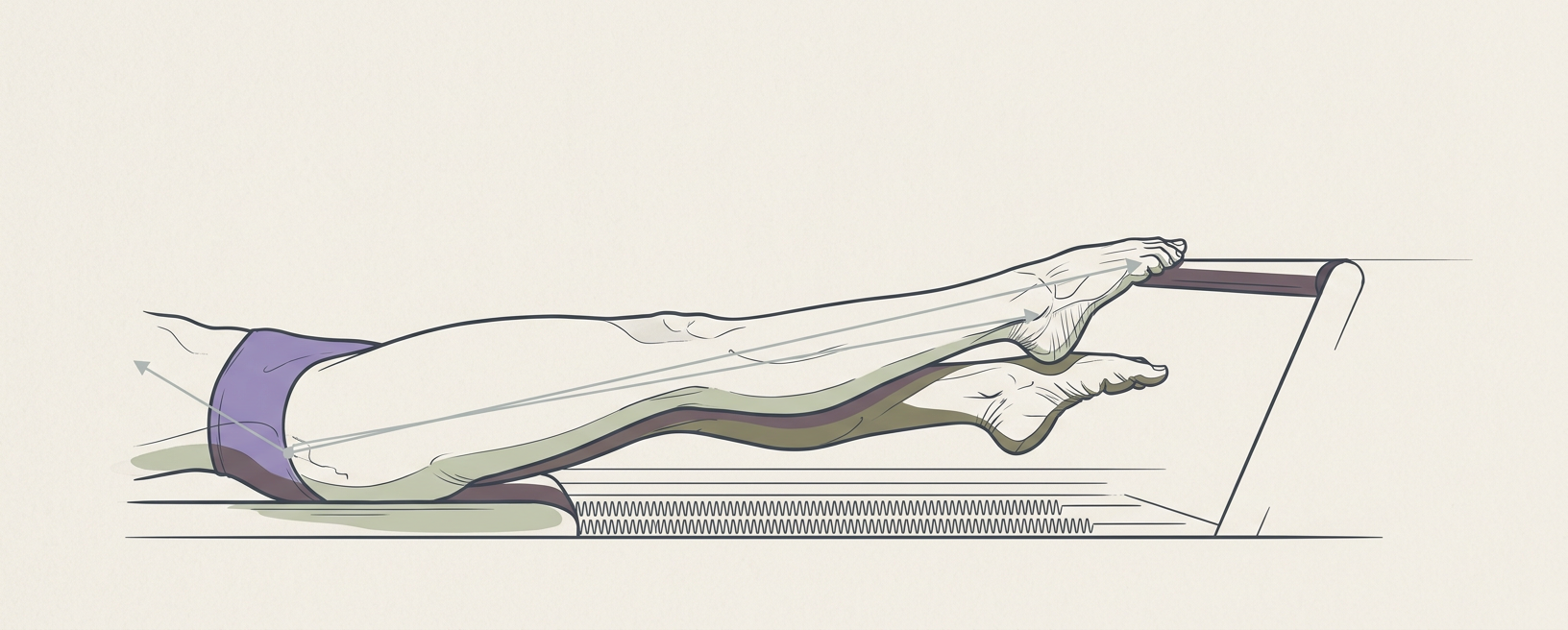
A foundational Pilates exercise engaging the foot and ankle musculature, promoting proprioception and connection to the pelvic floor.
Classical Pilates (Joseph Pilates) · Joseph Pilates, developed the original Foot Corrector apparatus and exercises. · To establish foundational stability and kinetic chain awareness from the ground up, particularly beneficial for individuals with ankle instability, foot pain, or seeking enhanced connection to the pelvic floor. · Perform 2-3 sets of 8-10 repetitions. Focus on controlled, rhythmic movement rather than speed. Integrate into a full-body movement sequence.
Why it works
This movement directly targets the intrinsic and extrinsic muscles of the foot and ankle, improving articulation and strength. The mindful, deliberate pressing and releasing against the footbar, coupled with controlled spring resistance, promotes proprioceptive feedback. This enhanced sensory input contributes to improved neural mapping of the lower extremity, extending to greater awareness and activation of the deep core and pelvic floor. It encourages a bottom-up integration of stability, where a stable and articulate foot provides a reliable base for pelvic and spinal support. The rhythmic, controlled breath facilitates vagal nerve engagement, fostering a calm nervous system while building muscular endurance. This specific exercise, when performed with precision, also helps to release tension in the Achilles tendon and calf muscles, which can otherwise contribute to pelvic floor dysfunction.
How to practice
Setup: Lie supine on the Pilates reformer, headrest up or down as comfortable. Ensure your hips are level and centered. Place the balls of your feet on the footbar, heels lifted, approximately hip-width apart. Maintain a neutral spine and pelvis.
Springs: Start with 2-3 springs, adjusting as needed to feel resistance without strain.
Position: Heels are lifted high. Knees are bent.
Inhale: Prepare, sensing the connection of your sacrum to the carriage.
Exhale: Press the carriage out, straightening your legs fully without locking the knees. Maintain height in your heels. Feel the engagement through the entire posterior chain of the legs and a subtle lift in the pelvic floor.
Inhale: Bend the knees, controlling the inward movement of the carriage, returning to the starting position. Keep the heels high and steady.
Repetitions: Perform 8-10 repetitions focusing on smooth, controlled movement and foot articulation.
Progression: After completing the
Setup: Lie supine on the Pilates reformer, headrest up or down as comfortable. Ensure your hips are level and centered. Place the balls of your feet on the footbar, heels lifted, approximately hip-width apart. Maintain a neutral spine and pelvis.
Springs: Start with 2-3 springs, adjusting as needed to feel resistance without strain.
Position: Heels are lifted high. Knees are bent.
Inhale: Prepare, sensing the connection of your sacrum to the carriage.
Exhale: Press the carriage out, straightening your legs fully without locking the knees. Maintain height in your heels. Feel the engagement through the entire posterior chain of the legs and a subtle lift in the pelvic floor.
Inhale: Bend the knees, controlling the inward movement of the carriage, returning to the starting position. Keep the heels high and steady.
Repetitions: Perform 8-10 repetitions focusing on smooth, controlled movement and foot articulation.
Progression: After completing the