Daily movement
Pilates Chest Lift with Pelvic Floor Engagement
A foundational Pilates exercise that integrates core strength, breath, and pelvic floor awareness to stabilize the trunk and prepare the body for more complex movements.
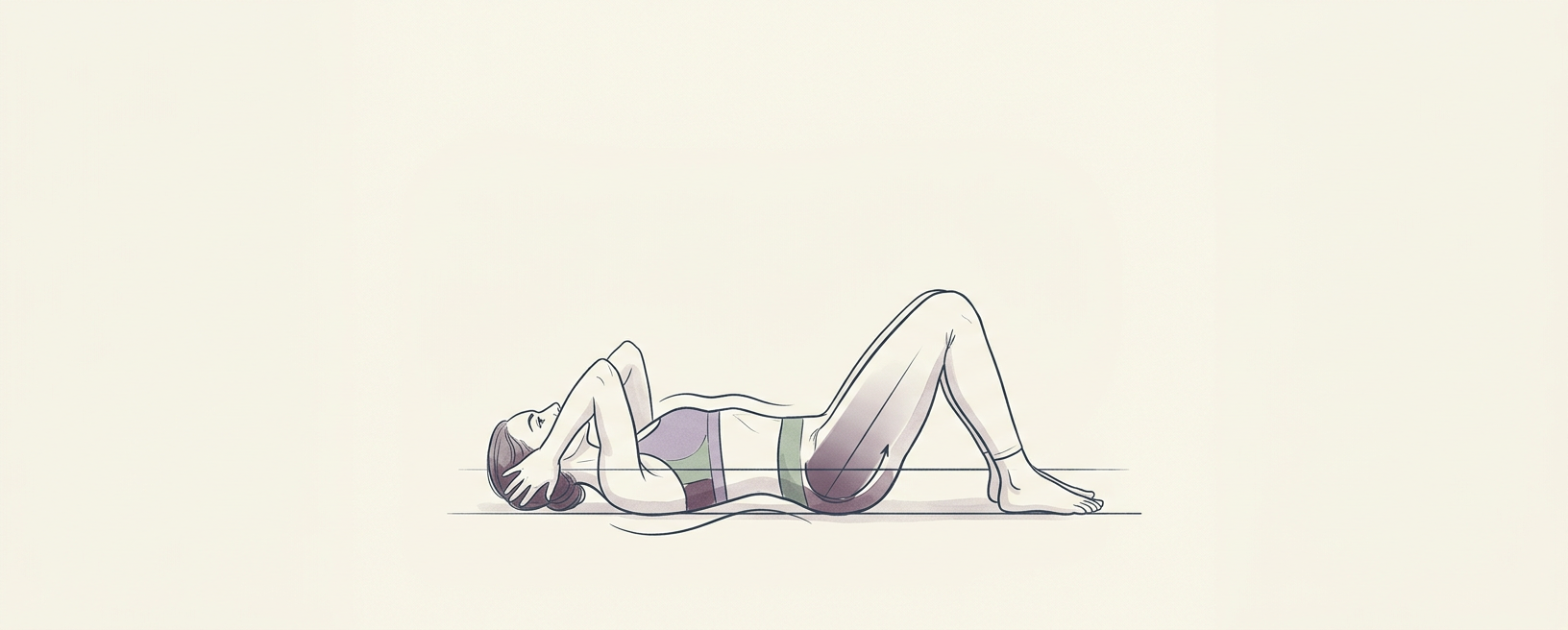
A foundational Pilates exercise that integrates core strength, breath, and pelvic floor awareness to stabilize the trunk and prepare the body for more complex movements.
Classical Pilates · Joseph Pilates · To develop fundamental core strength, connect with the pelvic floor, and integrate breath with movement. · 6-10 repetitions, performed slowly and with meticulous control. Focus on the coordinated engagement of breath, pelvic floor, and abdominals.
Why it works
The controlled spinal flexion in the chest lift strengthens the rectus abdominis and obliques. Engaging the pelvic floor concurrently with the exhale increases intra-abdominal pressure, providing stability to the lumbar spine and pelvis. This co-activation pattern enhances neuromuscular control of the deep core unit, improving overall trunk stability and coordination. The breath work calms the nervous system through vagal nerve stimulation.
How to practice
Starting Position: Lie supine (on your back) with knees bent, feet flat on the mat hip-width apart. Ensure your spine maintains its natural curves. Place hands gently behind your head, elbows wide.
Inhale: Prepare by inhaling to expand the rib cage laterally.
Exhale & Lift: As you slowly exhale, gently draw the navel towards the spine, engaging the pelvic floor (imagine gently lifting a marble with your pelvic floor muscles). Simultaneously, nod your chin slightly and lift your head, neck, and upper thoracic spine off the mat. Maintain a stable pelvis and an elongated neck. Your gaze should be towards your thighs.
Inhale & Hold: Inhale at the top of the lift, maintaining core and pelvic floor engagement.
Exhale & Lower: As you exhale, slowly lower your upper body back to the starting position, maintaining control and releasing the pelvic floor engagement as you fully return to rest.
Repeat: Continue for the prescribed repetitions.
Starting Position: Lie supine (on your back) with knees bent, feet flat on the mat hip-width apart. Ensure your spine maintains its natural curves. Place hands gently behind your head, elbows wide.
Inhale: Prepare by inhaling to expand the rib cage laterally.
Exhale & Lift: As you slowly exhale, gently draw the navel towards the spine, engaging the pelvic floor (imagine gently lifting a marble with your pelvic floor muscles). Simultaneously, nod your chin slightly and lift your head, neck, and upper thoracic spine off the mat. Maintain a stable pelvis and an elongated neck. Your gaze should be towards your thighs.
Inhale & Hold: Inhale at the top of the lift, maintaining core and pelvic floor engagement.
Exhale & Lower: As you exhale, slowly lower your upper body back to the starting position, maintaining control and releasing the pelvic floor engagement as you fully return to rest.
Repeat: Continue for the prescribed repetitions.