Daily movement
Pilates Chest Lift with Pelvic Floor Engagement
Integrate breath and targeted effort to cultivate foundational core strength and pelvic floor awareness.
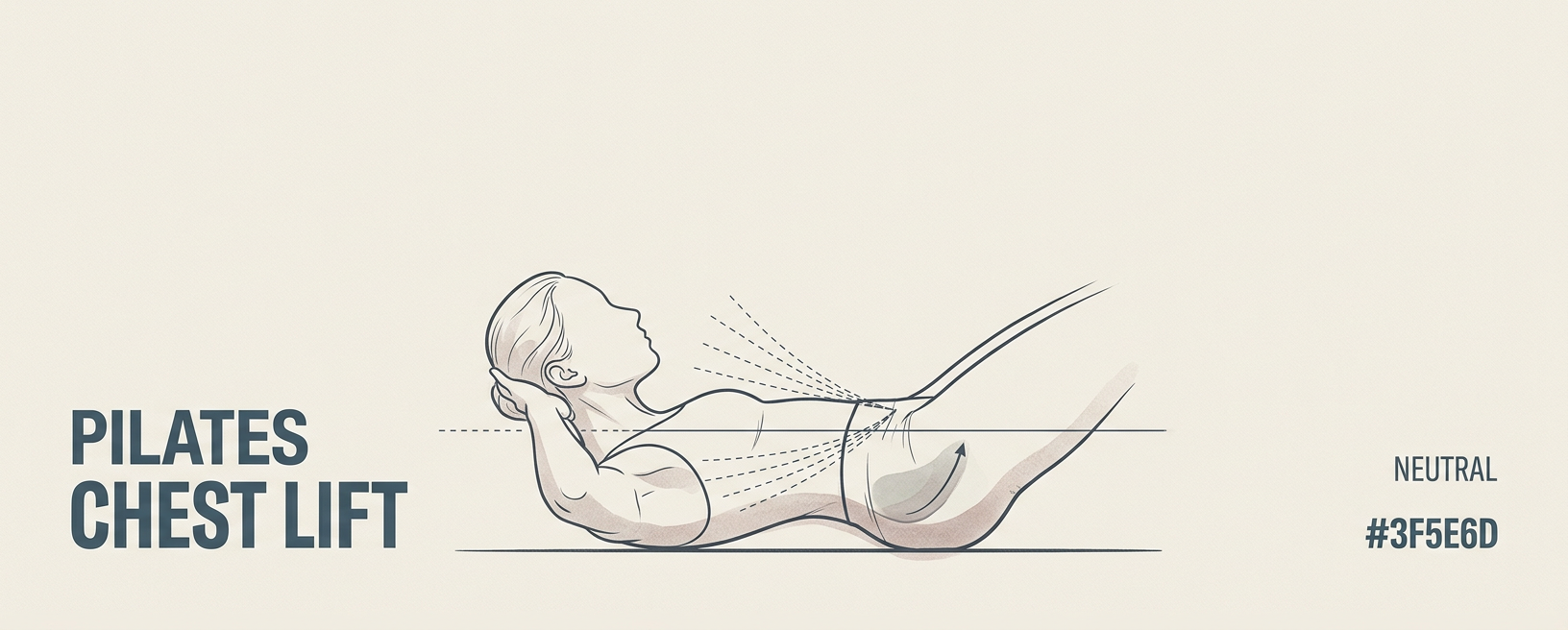
Integrate breath and targeted effort to cultivate foundational core strength and pelvic floor awareness.
Polestar Pilates · The Chest Lift is a foundational Pilates exercise, evolving from Joseph Pilates’ original work. This specific integration of pelvic floor engagement is often emphasized in contemporary Pilates lineages like Polestar Pilates, which focuses on biomechanics and rehabilitation principles. · This movement addresses the need for integrated core stability, breath coordination, and conscious pelvic floor activation, particularly beneficial for individuals seeking improved trunk support and efficient force transfer. · Perform 8-12 repetitions for 2-3 sets. Rest for 30-60 seconds between sets. Gradually increase repetitions or sets as control improves.
Why it works
The Chest Lift, when executed with mindful breath and pelvic floor engagement, works by co-activating the rectus abdominis, obliques, and transverse abdominis. The exhalation during the lift facilitates the natural upward and inward movement of the pelvic floor muscles (levator ani group), creating a synergistic contraction that stabilizes the lumbopelvic region. This coordinated effort enhances proprioception, strengthens the deep core unit, and improves intra-abdominal pressure regulation, crucial for spinal health and functional movement.
How to practice
Preparation
- Lie supine (on your back) with knees bent, feet flat on the floor, hip-width apart. Ensure your spine maintains its natural curves.
- Place hands lightly behind your head, elbows wide.
Execution
- Inhale: Prepare to initiate the movement, allowing the breath to expand the rib cage three-dimensionally.
- Exhale: As you gently draw your ribs towards your hips, lift your head, neck, and shoulders off the mat. Simultaneously, gently draw your pelvic floor upwards and inwards, as if lifting a blueberry with your perineum. Maintain a stable pelvis.
- Inhale: Hold the lifted position, maintaining the pelvic floor engagement, and allow a subtle expansion of the back and sides of the rib cage.
- Exhale: Slowly articulate your spine back down onto the mat, releasing the pelvic floor engagement as your head returns to the mat.
Progression
To increase intensity, maintain the chest lift and pelvic floor engagement for 2-3 breaths before lowering. Focus on sustaining the subtle lift of the pelvic floor throughout the holding phase without gripping.
Preparation
- Lie supine (on your back) with knees bent, feet flat on the floor, hip-width apart. Ensure your spine maintains its natural curves.
- Place hands lightly behind your head, elbows wide.
Execution
- Inhale: Prepare to initiate the movement, allowing the breath to expand the rib cage three-dimensionally.
- Exhale: As you gently draw your ribs towards your hips, lift your head, neck, and shoulders off the mat. Simultaneously, gently draw your pelvic floor upwards and inwards, as if lifting a blueberry with your perineum. Maintain a stable pelvis.
- Inhale: Hold the lifted position, maintaining the pelvic floor engagement, and allow a subtle expansion of the back and sides of the rib cage.
- Exhale: Slowly articulate your spine back down onto the mat, releasing the pelvic floor engagement as your head returns to the mat.
Progression
To increase intensity, maintain the chest lift and pelvic floor engagement for 2-3 breaths before lowering. Focus on sustaining the subtle lift of the pelvic floor throughout the holding phase without gripping.